

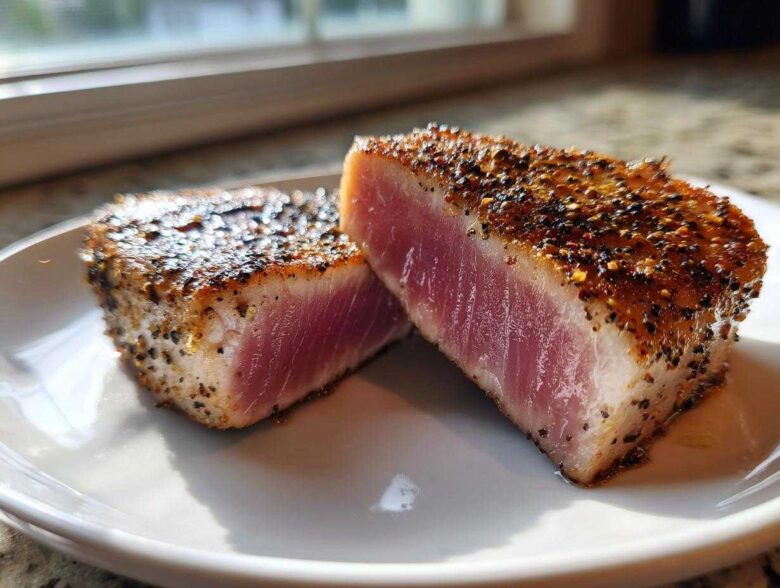
You know how sometimes you order seared tuna at a fancy restaurant and you just wonder, “How do they get that perfect, almost black crust but keep the inside bright pink and cool?” I struggled with that forever! I used to get soggy disasters or, worse, dry hockey pucks. Seriously, my kitchen looked like a seafood tragedy scene more than once.
But then I figured out the holy grail: a screaming hot **tuna steaks cast iron skillet**. That heavy iron holds the heat like nothing else, and once you nail the preheating—oh my goodness—you get that restaurant-style sear instantly. It’s fast, it’s easy, and honestly, it changed how I look at cooking seafood at home. Trust me, once you see that crust form in under two minutes, you’ll never go back!
Why You Will Make Perfect Tuna Steaks Cast Iron Skillet Every Time
Listen, this *cast iron tuna steaks* method isn’t just good, it’s foolproof once you follow the steps. I know people get nervous about searing fish, but the skillet does most of the hard work for you! Here’s why this technique beats everything else:
- Instant Restaurant Quality: Seriously, the flavor contrast between that dark, savory crust and the cool, almost raw center is pure magic. You’re basically bringing the chef experience home.
- Lightning Fast: We’re talking about 1-inch thick steaks being done in under four minutes total cooking time. Dinner on the table faster than you can decide what show to binge-watch.
- Perfect Texture Guaranteed: Because the cast iron is so fiercely hot, the outside gets that satisfying sear before the heat can penetrate too far, ensuring you get beautiful **perfect tuna steaks** every single time.
- Cleanup is Easier Than You Think: Once the steaks are out and rested, I just wipe the skillet down quickly. A little secret, though? If you make that quick pan sauce I mention later, the hot water/butter actually cleans the skillet for you! You can read more about my general kitchen adventures over on my blog page, too!
Essential Ingredients for Your Cast Iron Tuna Steaks
Okay, for this quick meal, we don’t need a huge grocery list. That’s one of the best parts of mastering the **skillet tuna steak recipe**! But every single ingredient counts because there’s nowhere for weak flavors to hide when you’re cooking this fast.
Here is what you absolutely need for two people:
- 2 tuna steaks (They must be about 1 inch thick—this is key for the rare center!)
- 1 tablespoon olive oil (We need an oil that laughs in the face of high heat.)
- 1 teaspoon coarse salt (Don’t reach for that fine table salt; we want texture here!)
- 1/2 teaspoon black pepper
- 1/2 teaspoon garlic powder
- 1/4 teaspoon paprika (Just a touch for color and depth.)
Remember, before anything touches the pan, you have to pat those beautiful steaks completely dry with paper towels. I mean bone dry! If they’re moist, they steam, and we want a sear, not steamed fish!
Ingredient Notes and Substitutions for Skillet Tuna Steak Recipe
Let’s talk specifics because this is where the “restaurant style tuna” magic starts. For the oil, you need something with a high smoke point. I always grab olive oil, but avocado oil works just as well if you have it on hand. You want that shimmer, not a cloud of smoke telling you it’s decomposing!
About that seasoning rub—this blend is what creates that dark, flavorful crust. I insist on coarse salt (like kosher or sea salt) because it sticks better to the damp seasoning surface and helps pull out that last tiny bit of surface moisture before searing. Finer salts dissolve too quickly. Don’t mess with the spice ratios too much, though! That simple mix is what balances the richness of the fish perfectly.
The Secret to Restaurant Style Tuna Steaks Cast Iron Skillet Success
If you want to stop serving sad, grayish fish and start making authentic **restaurant style tuna**, you have to respect the prep work. Honestly, this part takes five minutes and determines 90% of your success. First things first: water is the enemy of a good crust! Grab a stack of paper towels and pat those steaks until they feel almost squeaky dry on all sides. I press down several times; you cannot skip this step!
Next, apply that spice blend we mixed up. Rub it in firmly all over. My biggest expert tip, which I learned after burning batch after batch, is to let the seasoned steaks sit on the counter for about 15 to 20 minutes before they hit that hot pan. Let them come up slightly closer to room temperature ensures they cook more evenly from edge to center. If you’re curious about other ways to flavor your fish, I’ve got a great article on flavoring and marinating tuna, but for this sear, simple seasoning right before cooking is best!) Just make sure that pan is getting hot while your steaks chill out!
Step-by-Step Instructions for Pan Seared Tuna Steaks in Cast Iron Skillet
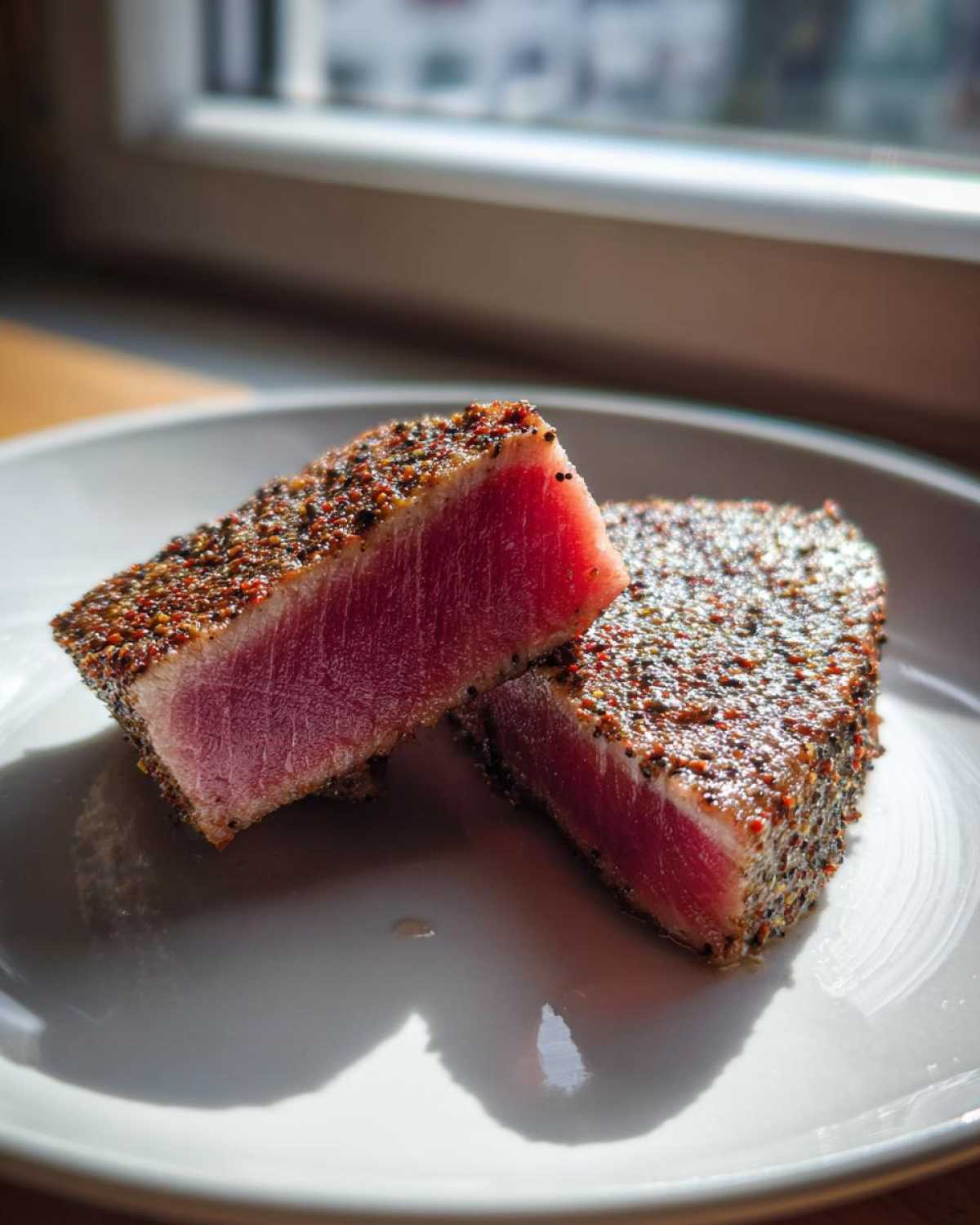
Alright, here is where the action happens! Get ready to hear that satisfying sizzle that means you are moments away from the best **pan seared tuna steaks** you’ve ever made. The absolute most important part of this entire process is heat—your cast iron skillet needs to be angry hot, not just warm.
First thing: place that heavy skillet over high heat. I seriously mean high. Let it sit there for a minimum of five full minutes. You’re waiting for it to nearly smoke. If you try this too soon, guess what happens? The tuna steams, and we lose that gorgeous crust we worked so hard prepping for.
Once you think it’s ready, carefully pour in your tablespoon of olive oil. It should shimmer instantly and maybe swirl a little—that’s the sign! Immediately, gently place your seasoned tuna steaks into the hot fat. Don’t let them sit in that pan for long; we want quick action here!
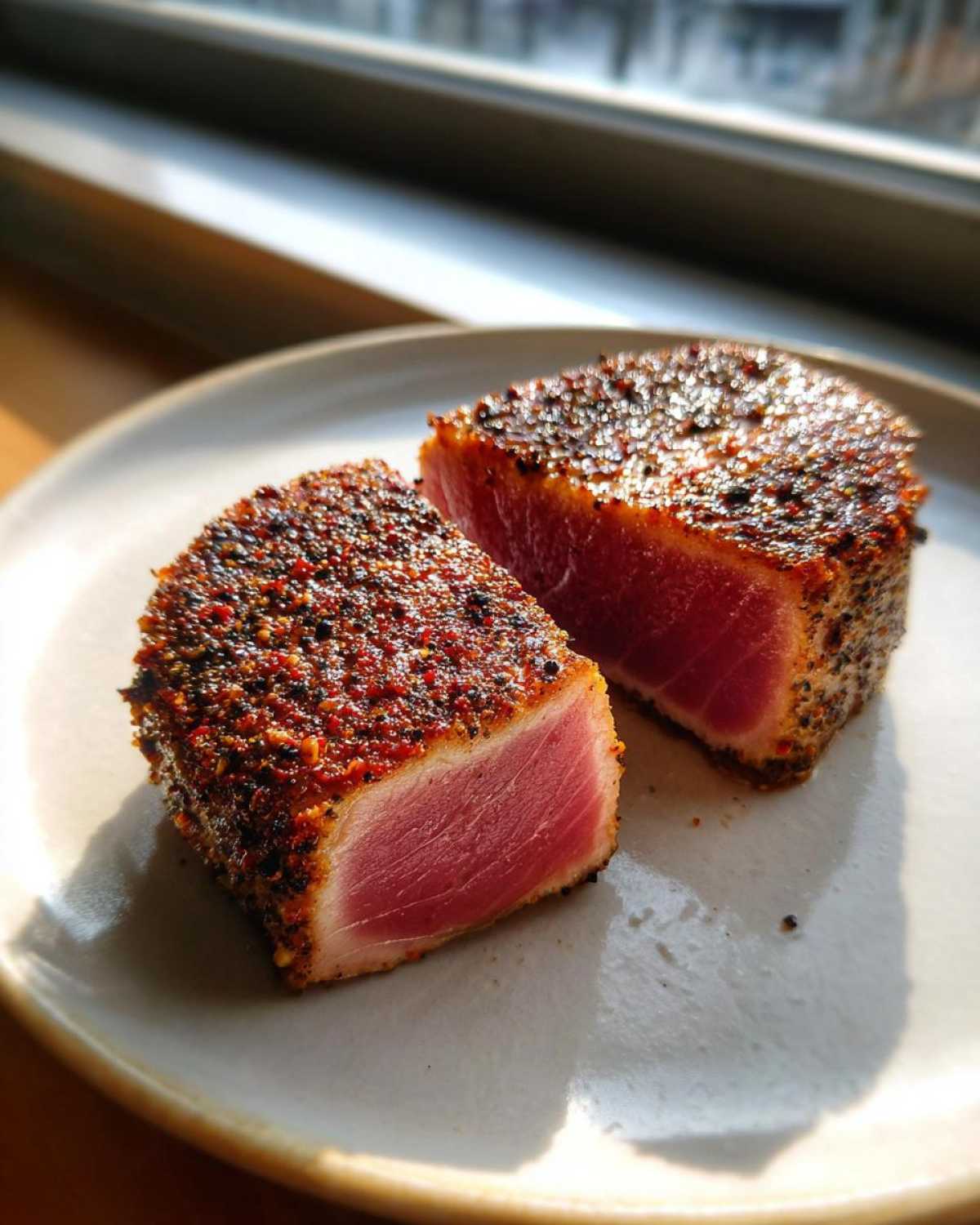
For how long? This is personal, but for that classic, slightly cool, pink center you see in pictures, I go for 1.5 to 2 minutes per side. Flip them gently and cook the second side for the exact same time. If you like yours a little more cooked, maybe go 2.5 minutes, but don’t push it past three minutes total per side unless you adore well-done fish. Quickly remove those beauties from the pan. If you want to see how I handle a related dish, check out this seared ahi tuna recipe setup for inspiration!
Crucial Tuna Steak Cooking Tips for the Perfect Sear
The first visual cue you’re looking for during the sear is color. You want deep brown, almost black edges popping up around the bottom third of the steak. If the oil starts smoking violently, pull the pan off the heat for ten seconds, let it calm down, and then put it back on. It happens!
When they come out of the skillet, they still have residual heat working their way inward, so we have to stop the cooking process. Place those **tuna steaks cast iron skillet** masterpieces on a clean cutting board. And this is non-negotiable: you must let them rest for five full minutes. Don’t slice them right away! Resting allows the juices to redistribute throughout the meat. If you cut immediately, all that wonderful moisture just floods onto the board, leaving you with dry slices.
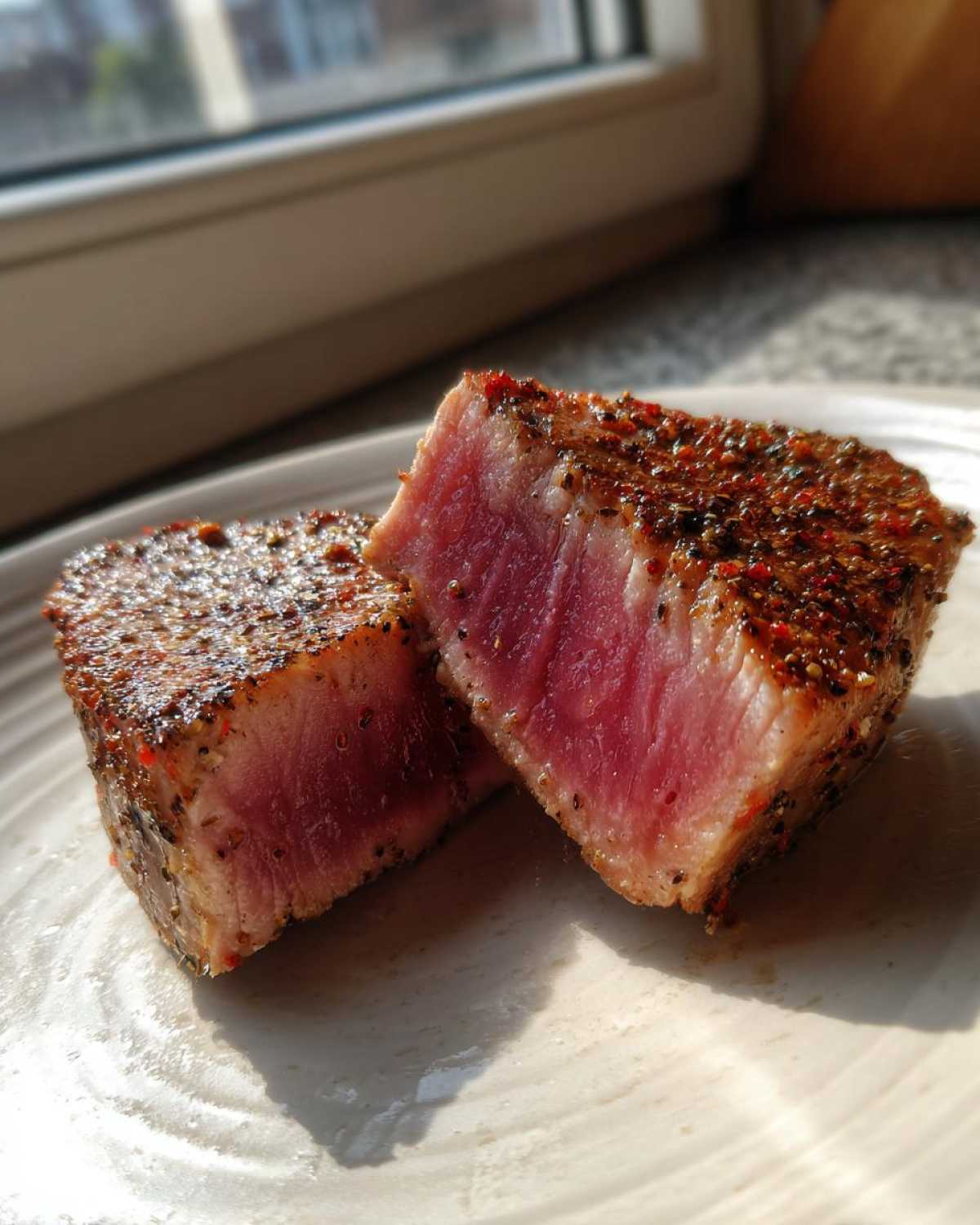
When you finally slice them, always go against the grain. You’ll see tiny, beautiful white lines running through the pink center—that’s how you guarantee your slices are tender and melt-in-your-mouth buttery!
Making a Quick Pan Sauce After Cooking Your Tuna Steaks Cast Iron Skillet
Don’t you dare wash that skillet yet! Seriously, some of the best flavor sits right there in the pan. Once you’ve rested your lovely **perfect tuna steaks**, turn the heat down to medium—we don’t want to burn anything now. This is how you turn a fantastic sear into a truly special meal.
Just drop two tablespoons of cold butter right into the hot pan along with a splash of soy sauce. That will instantly sizzle and scrape up all those beautiful brown bits—that’s called ‘fond,’ and it’s pure gold flavor! Swirl it around until it melts into a quick, savory **pan sauce**. If you want to see how I use similar techniques for creamy sauces, check out this creamy alfredo recipe for ideas!
Drizzle that quick sauce lovingly over your sliced tuna. It takes thirty seconds, and suddenly, your **skillet tuna steak recipe** tastes like you spent hours tinkering!
Serving Suggestions for Your Skillet Tuna Steak Recipe
Since this meal comes together so unbelievably fast, you don’t want to complicate the sides, right? We want something fresh that lets the perfectly crusted tuna be the star of the show. Honestly, my favorite thing to do is keep the vegetable cooking separate, or even just serve it raw!
For a truly simple, healthy meal, grab yourself some steamed asparagus. A little lemon zest sprinkled on top, and you are done. The bright green looks beautiful next to that pink inside, and it cooks faster than the tuna rests! If you’re feeling ambitious but still want quick, you should absolutely try making my Chinese green beans recipe. They have a nice bite to them that goes surprisingly well with the clean flavor of the seared fish.
Another option that requires zero cooking is serving it over a bed of peppery arugula with a light vinaigrette. The peppery kick wakes up the palate. Keep it light! Because the **tuna steaks cast iron skillet** method is so clean, heavy sides just weigh the whole plate down. Keep it quick, keep it fresh, and enjoy how quickly you made something so impressive!
Storage and Reheating Instructions for Leftover Tuna Steaks Cast Iron Skillet
Okay, first things first: you probably won’t have leftovers because this meal is designed to be eaten the minute it comes off the heat! But hey, life happens, and sometimes you end up with an extra piece of beautifully seared fish. How do you handle it? You need to respect the sear!
For storage, wrap that leftover **tuna steak** tightly in plastic wrap or aluminum foil and pop it into the fridge. It keeps really well for about two days, if you can resist it that long. Remember, when you cook tuna, you’re aiming for rare or medium-rare. That means the leftovers are already cooked! Trying to reheat them in the skillet or microwave is a recipe for tough, dry disappointment.
If you absolutely must warm it up, use the gentlest heat possible—maybe just let it sit for five minutes in a warm (not hot!) spot, but my honest recommendation is to eat it cold.
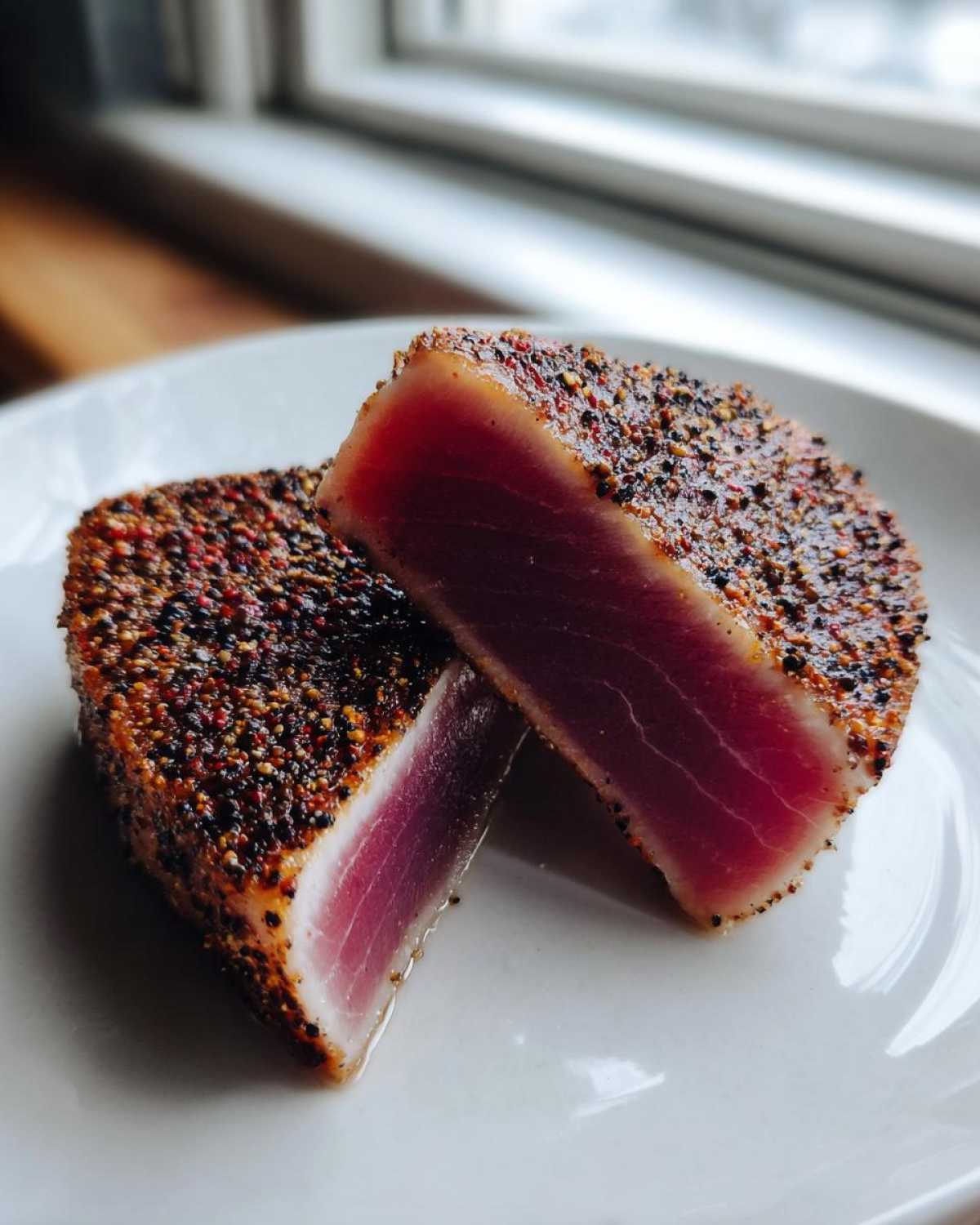
Seriously, leftover **cast iron tuna steaks** are fantastic served cold over a salad the next day. Just slice it thin (against the grain, just like before) and toss it with some crisp greens and a bright vinaigrette. It tastes almost like high-end smoked fish! Anything to maintain that lovely texture we worked so hard for when searing in the **tuna steaks cast iron skillet**!
Troubleshooting Common Issues with Cast Iron Tuna Steaks
Even when you know the secret handshake—hot pan, dry fish—things sometimes go sideways, right? Don’t sweat it! Almost every mistake that happens when making **cast iron tuna steaks** comes down to timing or temperature, and once you know what red flag to look for, you’re golden.
If you’re finding that your beautifully spiced tuna is sticking stubbornly to the skillet, I can tell you exactly why that happened. It’s almost always because the pan wasn’t hot enough when the fish went in. Think of it like this: if the pan is truly screaming hot, the thin layer of oil immediately vaporizes and creates a barrier, essentially separating the steak from the iron. If the pan is just warm, the oil heats up slowly, and the proteins in the fish just fuse into the metal instead of searing. Next time, wait those full five minutes for the preheat!
Another huge issue I hear about is overcooking. Remember, we are aiming for rare in the middle. You need to set a timer and stick to it! If you wander off to check emails or answer the phone, those extra 30 seconds on each side move you right past “perfect” and into “dry.” It happens to the best of us when we’re distracted!
If your crust is burnt but the inside is still cold, that means your heat was *too* high, forcing the outside to carbonize instantly while the center remained untouched. You need to find that sweet spot where the oil glistens but doesn’t start spitting everywhere right away. It takes practice, but learning these nuances is what separates a good cook from someone who consistently pulls off **perfect tuna steaks**.
If you ever run into a problem and just need to chat about technique, or maybe you want to swap out that paprika for something wild, feel free to reach out to me via the contact page—I love hearing what you’re cooking up!
Frequently Asked Questions About Tuna Steak Cooking Tips
I get so many messages asking about the finer details of getting those **perfect tuna steaks**, so I figured I’d compile the most common queries right here. Mastering these little **tuna steak cooking tips** is really what pushes this dish over the edge from good to incredible!
How do I know when my tuna steaks are done?
This is the million-dollar question! For that textbook rare center—which is what I always aim for with quality tuna—you are looking at 1.5 to 2 minutes per side, max, on screaming hot cast iron. When you flip them, you should see a nice opaque brown band maybe a quarter-inch deep, with lots of pink remaining.
If you are nervous about timing, gently press the side of the steak with your finger. If it feels soft and yielding, it’s rare. If it has just a *little* spring back, it’s medium-rare. If it feels firm all the way through, well, you’ve gone too far, honey! But don’t worry, we all overcook fish sometimes. Just slice thinly and serve it on a salad!
Can I use a regular frying pan instead of a cast iron skillet for this recipe?
Look, I get it. Not everyone has a favorite seasoned skillet in the cupboard ready to go. You *can* use a stainless steel skillet, but here’s the catch: you need to preheat it longer, probably closer to 8 or 9 minutes, and you have to be incredibly disciplined about keeping that heat high. Stainless steel loses heat much faster than cast iron when you drop in cold fish.
Why is cast iron superior? Retention! It holds onto that intense, searing temperature so that when the tuna hits, the energy transfer is immediate and powerful, guaranteeing that crust. If you must use stainless, just remember to be patient during the preheat! If you’re looking for more general cooking guidelines, you can check out my recipe usage disclaimer page for extra context on my kitchen philosophy!
PrintCast Iron Seared Tuna Steaks
Cook perfect, restaurant-style tuna steaks with a good crust using a hot cast iron skillet.
- Prep Time: 5 min
- Cook Time: 4 min
- Total Time: 9 min
- Yield: 2 servings
- Category: Main Course
- Method: Pan Searing
- Cuisine: American
- Diet: Low Fat
Ingredients
- 2 tuna steaks (about 6 oz each, 1 inch thick)
- 1 tablespoon olive oil
- 1 teaspoon coarse salt
- 1/2 teaspoon black pepper
- 1/2 teaspoon garlic powder
- 1/4 teaspoon paprika
Instructions
- Pat the tuna steaks completely dry with paper towels.
- In a small bowl, mix the salt, pepper, garlic powder, and paprika. Rub this mixture evenly over all sides of the tuna steaks.
- Place your cast iron skillet over high heat and let it preheat for 5 minutes until it is very hot.
- Add the olive oil to the hot skillet. It should shimmer immediately.
- Carefully place the seasoned tuna steaks in the hot skillet.
- Sear for 1.5 to 2 minutes per side for rare to medium-rare. Adjust time based on desired doneness.
- Remove the tuna steaks from the skillet and place them on a cutting board.
- Let the steaks rest for 5 minutes before slicing against the grain.
Notes
- For an easy pan sauce, remove the tuna, reduce the heat to medium, add 2 tablespoons of butter and 1 tablespoon of soy sauce to the skillet, and scrape up any browned bits.
- Serve with a side of steamed asparagus or a simple green salad.
Nutrition
- Serving Size: 1 steak
- Calories: 250
- Sugar: 0
- Sodium: 500
- Fat: 10
- Saturated Fat: 2
- Unsaturated Fat: 8
- Trans Fat: 0
- Carbohydrates: 1
- Fiber: 0
- Protein: 38
- Cholesterol: 80