

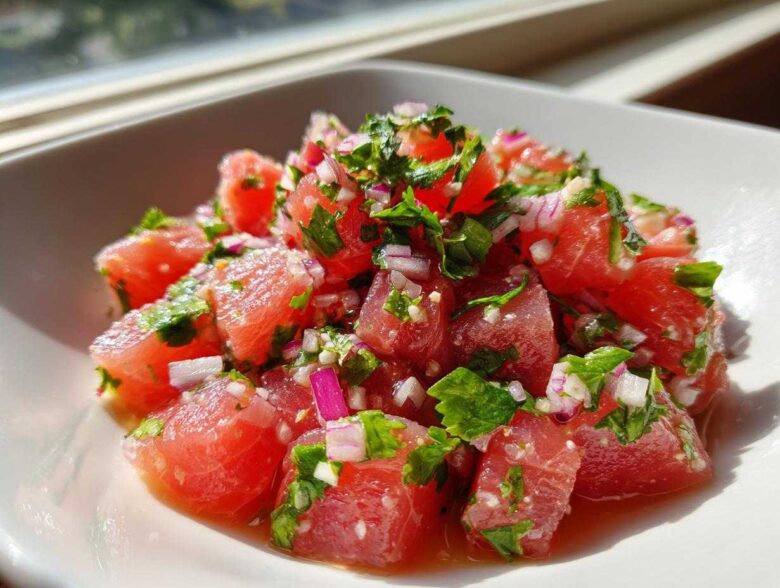
Oh my gosh, if you’re looking for a dish that screams summer, sunshine, and pure, vibrant freshness, stop everything! We are talking about the ultimate quick seafood fix, and believe me when I say this tuna ceviche recipe is my absolute go-to when I want something fancy without actually cooking. Seriously, the whole thing comes together faster than ordering takeout.
My secret passion is finding the absolute freshest ahi tuna—I always make sure I’m buying it from the fish counter where they know me! That quality makes all the difference! This isn’t some watery, weak fish salad; this is a bright, tangy, and beautifully textured dish where the lime does all the hard work. It’s spicy, it’s zesty, and it’s the perfect fresh tuna appetizer for any patio gathering. If you love these bright flavors, you have to check out my recipe for fresh mango salsa too!
I remember the first time I made this properly—we were having a huge cookout, and I needed something light that wouldn’t weigh everyone down. This citrus marinated tuna blew everyone away. I think it was the combination of the sharp lime and that little kick of jalapeño. Once you try making it this way, you’ll never go back to pre-made stuff, trust me on this one!
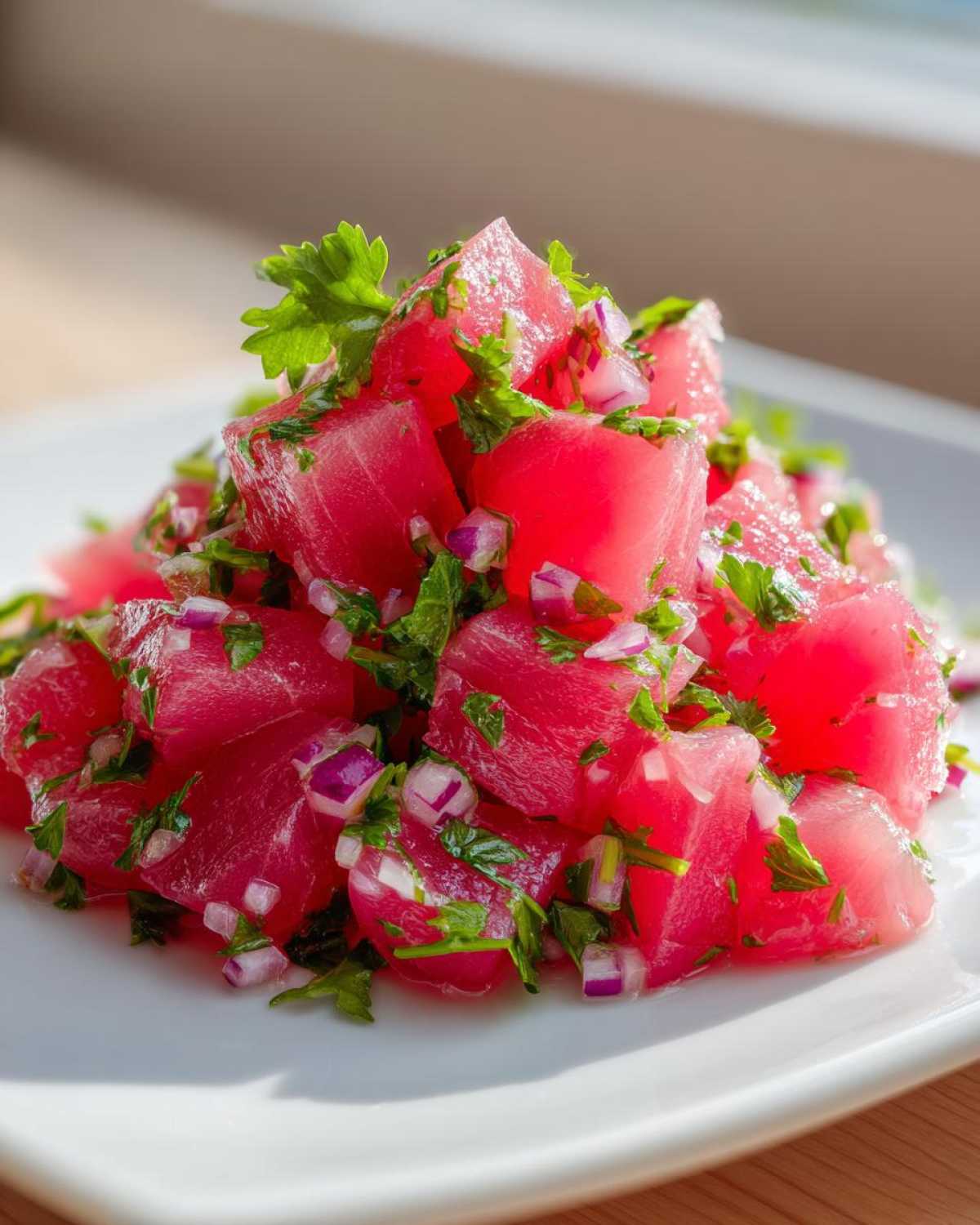
Why This Tuna Ceviche Recipe Works So Well
If you’re looking for a showstopper that requires zero actual stove time, this is it! Honestly, this tuna ceviche recipe is about maximizing fresh flavor while keeping things incredibly simple. It just hits different when you use top-quality fish and let the acid do the work. It’s truly one of the best ways to make a light yet incredibly satisfying appetizer.
What’s not to love? It’s fast, it’s bright, and it tastes like sunshine. If you are watching your diet but still want something super flavorful, check out my guide on healthy ceviche options!
Quick Prep Time for Your Tuna Ceviche
Seriously, the total time on this is barely anything! We are talking 15 minutes of prep time, which means you can whip this up right before guests walk in the door. Because there’s no heat involved, you’re locking in all the natural, vibrant flavors of the fish and the lime. It instantly elevates your spread, making it the perfect fresh tuna appetizer for any occasion.
Achieving Perfect Citrus Marinated Tuna Texture
This is the bit that trips people up, but don’t worry! The acid in the lime juice chemically ‘cooks’ the fish, turning it opaque. But here’s the trick: You absolutely cannot leave it to sit for hours. Leaving this precious citrus marinated tuna too long makes it tough and rubbery. We want firm, tender bites, not fish jerky! Trust me, 30 to 60 minutes is the sweet spot to get that perfect texture.
Essential Ingredients for Authentic Tuna Ceviche
Okay, you can’t fake quality in ceviche. Because we aren’t actually cooking the fish with heat, every single ingredient has to be the freshest you can find. This is what separates a good tuna ceviche from one that just tastes okay. We need high-quality acid, awesome aromatics, and of course, that star: the tuna!
Gather everything up before you start prepping. It makes the whole citrus marinating process way smoother when you’re ready to go. If you want to check out some other amazing light dishes, my guide for healthy ceviche variations is a great place to look!
Sourcing and Preparing Your Sushi-Grade Tuna
This is non-negotiable, folks. You absolutely must use fish labeled “sushi-grade” or “sashimi-grade.” This means it’s been handled and often flash-frozen specifically to kill any potential nasties. Never, ever use regular raw tuna from the grocery counter for this unless it specifically says it’s safe to eat raw. I dice my pound of tuna into uniform little cubes—think about half an inch. Uniformity ensures every piece ‘cooks’ evenly in the lime bath. You want those cubes to stay intact and nice!
Flavor Builders for Spicy Tuna Ceviche
This is where the party starts! We need about a cup of freshly squeezed lime juice—no bottled stuff, please, or you lose half the brightness. For that essential kick, you’ll mince up one jalapeño. If you aren’t huge on heat, cut the jalapeño open and scoop out all those white seeds and ribs; that takes most of the fire away, leaving just the pepper flavor for your spicy tuna ceviche! Then you need plenty of fresh cilantro and some sharp red onion, both chopped fine. Those three—lime, heat, and herb—are the backbone of any great ceviche.
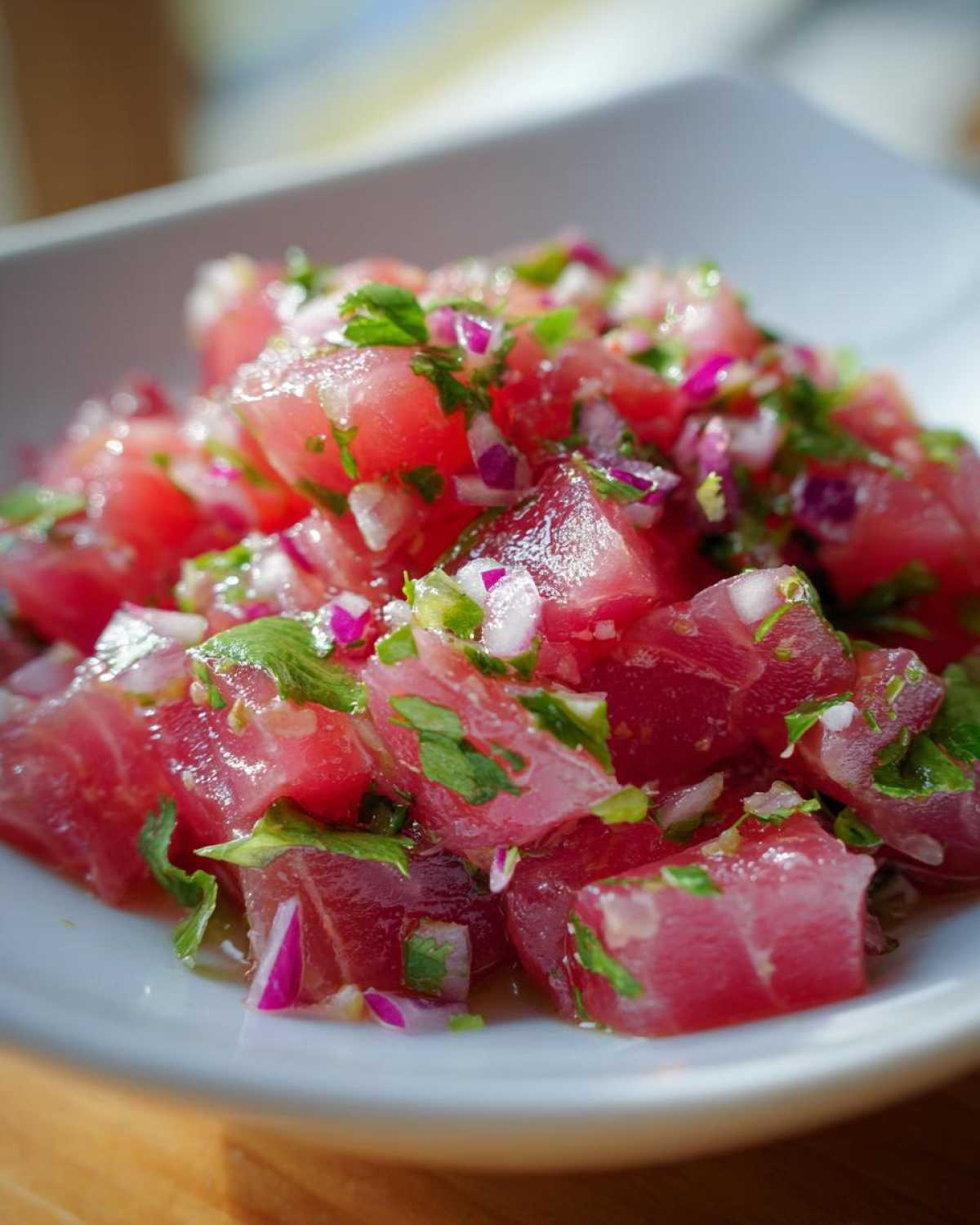
Step-by-Step Instructions for Perfect Tuna Ceviche
Okay, we’ve got our gorgeous, diced tuna and our mountain of fresh lime juice. Now it’s time to get this amazing tuna ceviche assembled! I always keep my stirring spoon handy because you want to be intentional about how you mix things, but not so frantic that you beat the delicate structure out of the fish. Just follow these steps, and you’ll have the best bowl of marinated goodness ready in no time.
My favorite part is watching the transformation happen in the fridge. It’s food magic, really! If you’re looking for other recipes where acid does the work, you might want to peek at my post about a simple citrus garlic marinade—it uses a similar principle!
The Marination Process for Ahi Tuna Ceviche
First thing: you must use a glass or ceramic bowl—something non-reactive! Don’t even think about metal, or you’ll get a weird metallic flavor. Gently place your diced tuna into that clean bowl and pour that fresh lime juice right over the top. Make sure every single piece of your ahi tuna ceviche is swimming! Pop the lid on and slide it into the fridge. Now, you wait. I set a mental timer for 45 minutes, but you’re checking the visual cue. You want the fish to turn opaque on the outside but still be slightly tender inside. Trust me, don’t let it go past an hour, or you’ll have hard little cubes!
Finishing and Folding in the Fresh Add-ins
Once it looks just right—that beautiful matte color—it’s time to change gears! Using a slotted spoon or strainer, drain off *most* of that marinade. You don’t want it swimming in liquid when you eat it. Leave just about two tablespoons behind; that little bit of moisture helps carry the flavor. Now, stir in your chopped red onions, your minced jalapeño, and your cilantro vigorously. Season it with salt—taste as you go! If you are using the avocado or mango, fold those in super gently right at the end. You want those creamy chunks or sweet cubes to stay distinct, not smash into mush!
Tips for Success with Your Raw Tuna Salad
Making a fantastic raw tuna salad, which is what ceviche really is at its heart, comes down to just a couple of golden rules that I learned the hard way—usually involving throwing out some perfectly good fish! Safety first, always, but texture control is a super close second. If you follow these tips, your ceviche will be amazing every single time.
The biggest mistake I see people make when they try this is thinking that the longer the fish sits, the better it gets. Wrong! That acid keeps working, and eventually, it turns beautiful, tender tuna into something chewy. We want it tender, right? Also, since this is technically a raw dish, giving it the respect it deserves in terms of sourcing is key to putting out a truly wonderful and safe fresh tuna appetizer.
If you’re looking for other crowd-pleasing appetizers that are easy to manage, you have to try my recipe for classic deviled eggs. But for ceviche, keep these texture notes close!
The Golden Rule: Don’t Over-Marinate
I mentioned this before, but it bears repeating because it’s so important for texture. Think of the lime juice as a gentle tenderizer, not a marinade that deeply soaks in flavor like it would for chicken. You need to keep an eye on it! If you let your diced tuna sit in that lime bath for much longer than an hour, the proteins tighten up too much. You’ll poke it with your fork hoping for a soft give, and it’ll be firm. It’s safer—and tastes way better—to serve it slightly less done than overdone.
Safety Through Sourcing
Listen, whenever you are eating seafood raw, you have to trust your source. Always ask your fishmonger specifically, “Is this safe to eat raw?” If they hesitate or say they aren’t sure, walk away. You need that guarantee. Sticking to reputable markets that move a lot of product is your best defense against anything questionable. We want bright, clean flavors in our raw tuna salad, not a food safety scare!
Serve Immediately for Best Results
Ceviche is designed to be eaten right away. Once you start folding in the onions and peppers, the clock is ticking on that perfect balance. It’s not like a stew that tastes better the next day; this dish gets wetter and the texture degrades quickly after the last ingredients are added. If you have leftovers (which is rare in my house!), they are best consumed within 24 hours, but honestly, try to make just what you need. It’s that quick to put together!
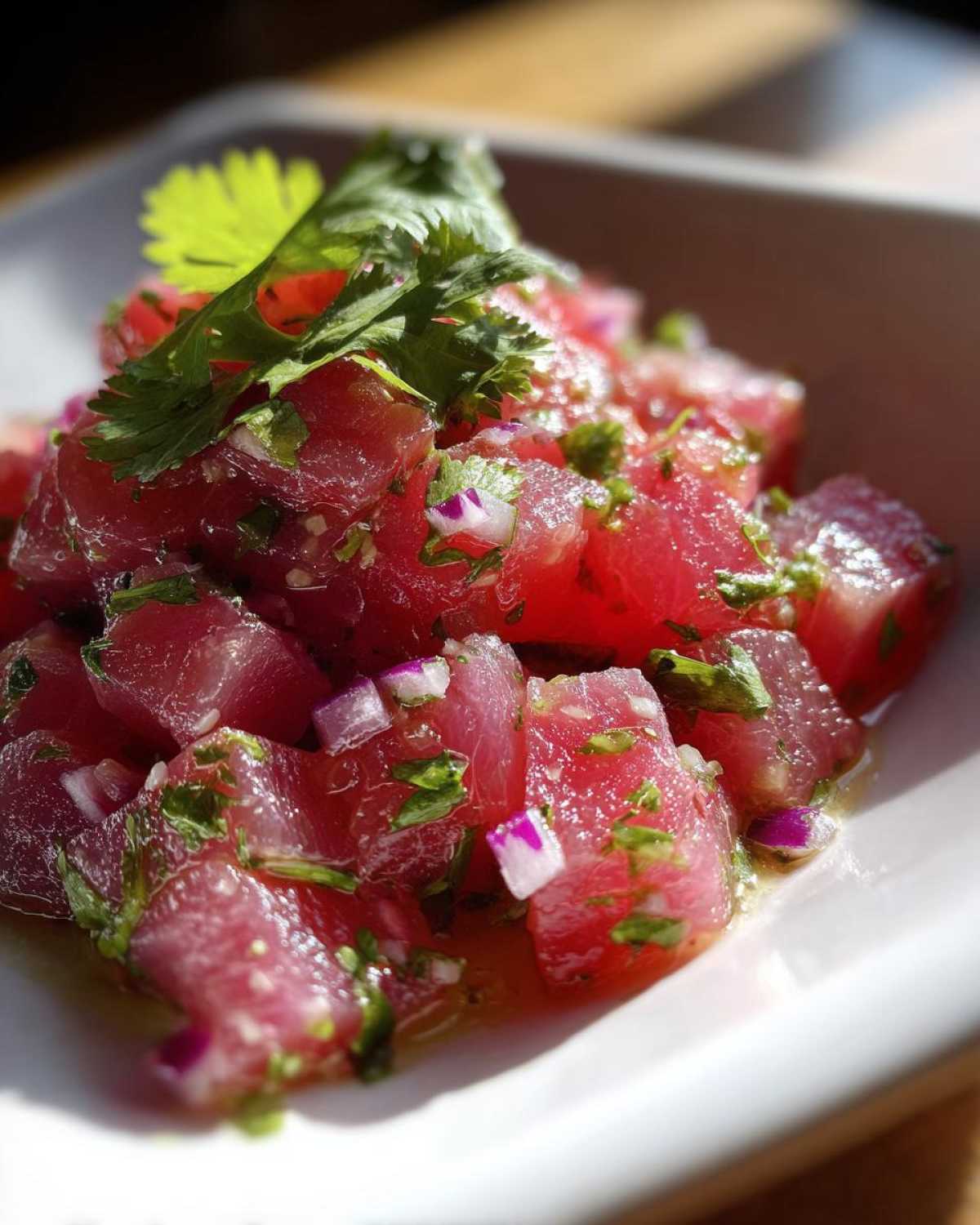
Variations on Classic Tuna Ceviche
While the classic lime, onion, and jalapeño base for tuna ceviche is sacred, I love playing around when I make a big batch! Sometimes you just need a little twist to keep things interesting, right? This is where those optional ingredients come in handy, but we can push it even further. Think of this as your base for culinary experimentation!
I always have leftover mango salsa in the fridge, so I often add that in. If you haven’t tried a great salsa yet, you absolutely have to look at my go-to recipe for fresh mango salsa—it pairs perfectly here! But don’t stop there; you can really customize your flavor profile.
Boosting Sweetness and Creaminess
Remember those optional add-ins? The ripe mango adds an incredible burst of tropical sweetness that cuts through the sharpness of the lime. It keeps the dish feeling light and indulgent. If you use avocado—and I almost always do—it adds a lovely, creamy texture. You have to fold those in right at the end, nice and gentle, so you get pockets of cool richness against the bright, acidic fish.
Another little trick I use? A tiny splash of orange juice mixed in with the lime juice. It softens the acidity just a hair and adds a sweeter background note that complements the fish perfectly. It’s optional, but wow, it makes a difference!
Getting Extra Heat and Crunch
If you want a more complex heat than just the jalapeño, try swapping in a small amount of serrano pepper instead—they pack a little more punch. You can also add thinly sliced bell peppers—I prefer the yellow or orange ones for color contrast! Just make sure they are sliced paper-thin so they don’t overwhelm the delicate fish.
For herbs, cilantro is king, but mix in a little bit of finely chopped oregano if you want to lean into a slightly more traditional South American profile. Just remember, whatever you add, you’re aiming to complement the main event: the perfectly marinated tuna!
Serving Suggestions for This Fresh Tuna Appetizer
Now that you have this gorgeous, bright, and zesty fresh tuna appetizer ready to go, the fun part is deciding how to serve it! Ceviche is so versatile, but the key is providing something sturdy on the side to scoop up that delicious citrusy marinade mixed with the peppers and onions. You want to show this beauty off, too!
Seriously, presentation matters just as much as the taste here. If you set out a big bowl of this vibrant color, people will flock to it! For other appetizers that always disappear fast on my snack table, you have to check out the recipe for my Million Dollar Dip; it’s a total classic!
The Perfect Scoops and Carriers
You need something crisp to contrast with the soft, tender texture of the tuna. My number one favorite choice is crisp tortilla chips—especially the sturdy, thick-cut kind that won’t snap when you load them up with the mixture. Plantain chips are also amazing if you can find them; they add a slightly sweeter, earthier note that plays so nicely with the lime.
If you are going low-carb or hosting a lighter luncheon, forget the chips! Serve the tuna ceviche right on top of butter lettuce cups or even scooped into endive spears. They act like little edible boats, and it looks incredibly elegant running down a platter. Just make sure whatever carrier you choose is super fresh and crisp!
Presentation Tips for Maximum Wow Factor
Presentation is everything when you’re serving something this colorful! Don’t just dump it in a bowl. I like to serve mine in a large, chilled glass bowl—the cold helps keep the fish fresh while it sits out. If you added avocado, make sure you fold that in right before serving so the cubes stay vibrant green and don’t brown on you.
Garnish is your friend here! Sprinkle a final, generous pinch of brightly colored cilantro leaves right over the top to make that green pop against the paler pink of the tuna. If you have one of those little limes that are practically glowing green, slice them up thinly and arrange a few wedges around the rim of the serving dish. It looks professional, tastes amazing, and makes sure everyone knows exactly what fresh, zesty flavors they are about to enjoy!
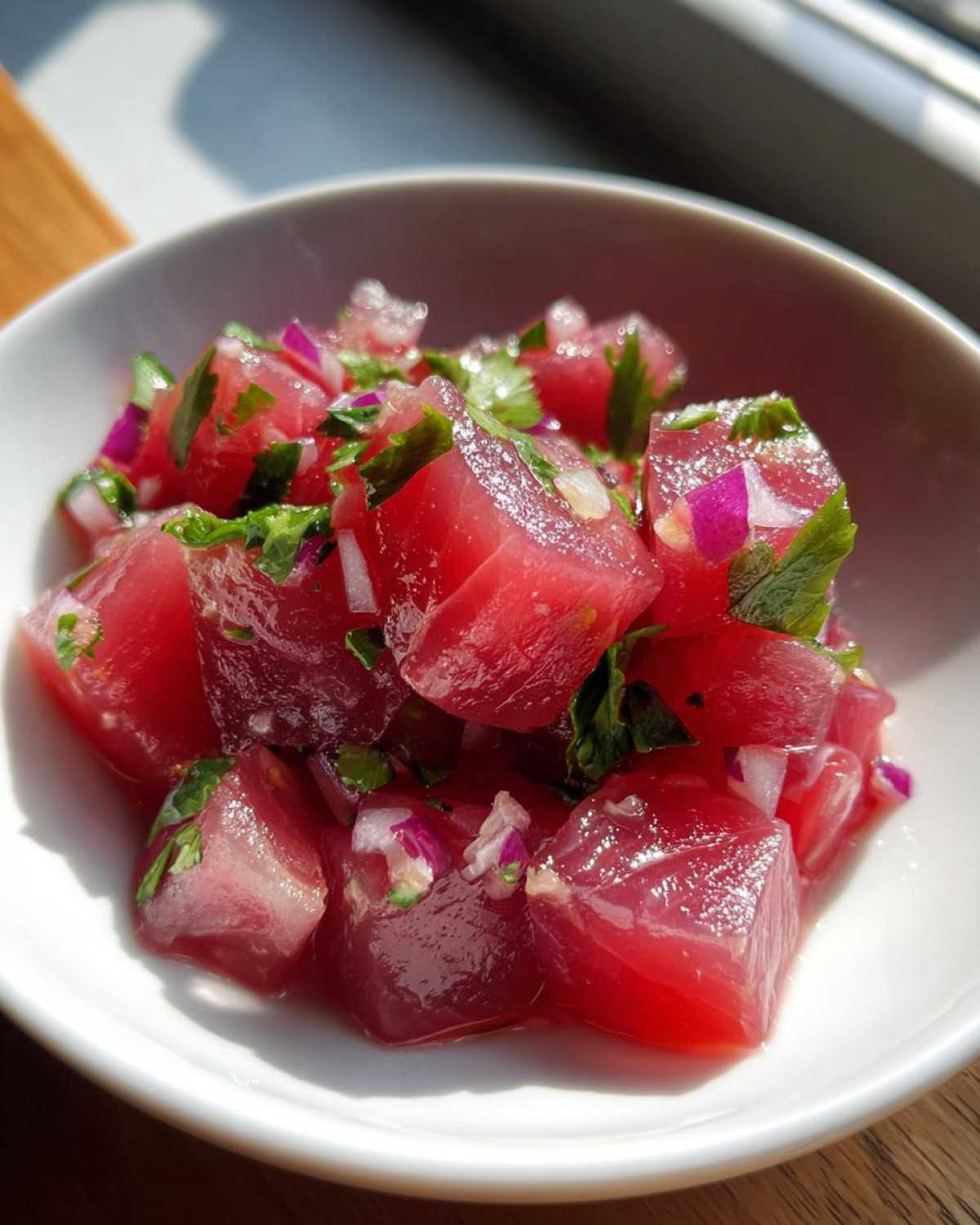
Storage and Reheating Instructions for Tuna Ceviche
Now, let’s talk about leftovers. And here’s the hard truth: There really shouldn’t be any! This beautiful, bright tuna ceviche is at its peak intensity the second you finish folding in those final ingredients. The lime juice is still actively firming up those bits of fish, and the cilantro is still practically screaming with freshness. Seriously, plan your serving size so you don’t have much leftover.
But life happens, right? Maybe you made a huge batch for a party and you want to save some for lunch tomorrow. If you do have leftovers, you need to handle them correctly because we are dealing with raw fish here. The safety aspect is totally non-negotiable.
The Safety Factor: Immediate Consumption is Key
Look, once that lime juice hits the tuna, the “cooking” process starts, and then slowly, the texture degrades. For the best, safest taste, you really want to eat this within an hour or two after you’ve finished mixing all the vegetables in. If you absolutely must save it, get it into an airtight container immediately. Keep it super cold in the coldest part of your fridge.
I would honestly say that anything left after about 12 hours isn’t worth eating. By 24 hours, the fish will likely have gone from firm to mushy, and you risk bacteria growth even though it’s been chilling in acid. If in doubt, throw it out! It’s just not worth it when you’re dealing with fresh fish.
Why You Absolutely Cannot Reheat Ceviche
This is important: Do not try to reheat ceviche! I know, I know, some people try to warm up their leftovers gently, but that defeats the entire purpose of this dish. Ceviche is served cold, relying on that sharp, citrusy chill. If you apply heat, you are just left with warm, slightly tough fish swimming in lime juice—it’s not pleasant.
If you find you have some leftover that’s been sitting for a day, I recommend using it in a different way, almost like a very wet raw tuna salad base. Chop up avocado and cucumber, drain off most of the existing liquid, and mix that in to firm up the texture. Then serve that mixture over greens, not with chips, because those chips will be soggy by the next day anyway!
Frequently Asked Questions About Tuna Ceviche
I get so many questions about this recipe, especially around the safety aspect, which is totally understandable! Ceviche is one of those dishes that seems intimidating until you realize it just requires respect for fresh ingredients. I’ve rounded up the few things folks ask me most often. If you have a question I didn’t cover, feel free to reach out via my contact page—I love hearing from you!
Can I use canned tuna instead of raw tuna for ceviche?
Oh, bless your heart for asking, but no, you really can’t! If you use canned tuna, you are essentially making a basic raw tuna salad that has been soaking in lime juice. The whole point of ceviche is that beautiful, delicate firmness you get when fresh, sushi-grade fish chemically cooks in the acid. Canned tuna is already cooked and packed; it doesn’t absorb the brightness or change texture in that fantastic way. Stick to the fresh stuff for the true experience!
How do I know my tuna is safe for this healthy ceviche?
This is the most important question! Safety is paramount when you’re not using heat. You must buy high-quality fish labeled specifically as “sushi-grade” or “sashimi-grade.” This designation tells you it’s been handled under strict conditions, often including freezing protocols designed to eliminate parasites. Always buy this from a fish counter you trust—one you can ask direct questions to! If the fish smells remotely “fishy,” it’s not fresh enough for raw consumption. We want a clean, almost neutral scent. That’s how you ensure your amazing healthy ceviche is also super safe!
What if I can’t find lime juice? Can I substitute lemon juice for my ahi tuna ceviche?
You can substitute lemon juice, yes, but I have to warn you, it gives a slightly different character to your ahi tuna ceviche. Limes are sharp, slightly sweeter, and have that perfect tropical tang that pairs with the cilantro. Lemon juice is much more purely acidic and can sometimes taste a little bit harsh or thin on the finish. If you must substitute, use lemon, but try to use a little less, or maybe add a tiny pinch of sugar to balance the flavor back out. For the best results, though, just go for the full immersion in fresh lime juice!
Can I make this ahead of time?
To keep that perfect texture, no, you really can’t make the whole thing ahead! Remember how I keep stressing not to over-marinate? Well, the fish keeps ‘cooking’ even after you drain the juice. If you want to be prepared, do all your chopping—the tuna, the onions, the jalapeño—the night before, but keep them completely separate and strictly refrigerated. Mix everything together right before you plan to serve it. That way, you guarantee the best texture and flavor profile when everyone is ready to eat your gorgeous appetizer!
Estimated Nutritional Snapshot of This Tuna Ceviche Recipe
I always try to keep things light and fresh when I make my tuna ceviche, and I’m happy to report that this recipe comes out incredibly lean and packed with protein! But listen to me on this: these numbers are just estimates. I’m using my best guess based on the fresh ingredients I use, and remember, the nutrition can shift wildly depending on if you use that creamy avocado or skip it!
Think of this as your general guide, especially if you’re tracking macros. Since this entire recipe is low in fat and heavy on lean protein, it checks all the boxes for a truly satisfying and healthy ceviche option. For the full rundown and my legal disclaimer on these numbers, you can always check out the site’s nutritional information page here: nutritional disclaimer.
Here is what you can generally expect per serving (remember, this recipe yields four servings):
- Calories: Around 200 per serving—that’s fantastic for an appetizer!
- Protein: This is the star! We are looking at about 30 grams of lean protein to keep you full.
- Fat: Super low, usually around 5 grams total fat.
- Carbohydrates: Mostly coming from the vegetables and any optional mango, sitting at roughly 10 grams.
- Sugar: The natural sugars from the lime and any fruit keep this under 5 grams.
See? It’s practically guilt-free! Enjoy that incredible flavor knowing you’re eating something supremely fresh and good for you. Now go make yourself a batch!
PrintSimple Tuna Ceviche
A recipe for raw tuna marinated in citrus juice with lime, jalapeño, and cilantro.
- Prep Time: 15 min
- Cook Time: 0 min
- Total Time: 15 min
- Yield: 4 servings
- Category: Appetizer
- Method: Marinating
- Cuisine: Latin American
- Diet: Low Fat
Ingredients
- 1 pound sushi-grade tuna, diced
- 1 cup fresh lime juice
- 1/4 cup red onion, finely chopped
- 1 jalapeño pepper, seeded and minced
- 1/4 cup fresh cilantro, chopped
- 1 ripe mango, diced (optional)
- 1 avocado, diced (optional)
- Salt to taste
Instructions
- Place the diced tuna in a non-reactive bowl.
- Pour the lime juice over the tuna, ensuring it is fully submerged.
- Refrigerate for 30 minutes to 1 hour, or until the tuna becomes opaque.
- Drain off most of the lime juice, leaving about 2 tablespoons.
- Stir in the red onion, jalapeño, and cilantro.
- Add salt to taste.
- If using, gently fold in the diced mango and avocado just before serving.
Notes
- Use only fresh, sushi-grade tuna for safety.
- Do not over-marinate the tuna; it will become tough.
- Serve immediately with tortilla chips or crackers.
Nutrition
- Serving Size: 1/4 of recipe
- Calories: 200
- Sugar: 5
- Sodium: 150
- Fat: 5
- Saturated Fat: 1
- Unsaturated Fat: 4
- Trans Fat: 0
- Carbohydrates: 10
- Fiber: 3
- Protein: 30
- Cholesterol: 50