

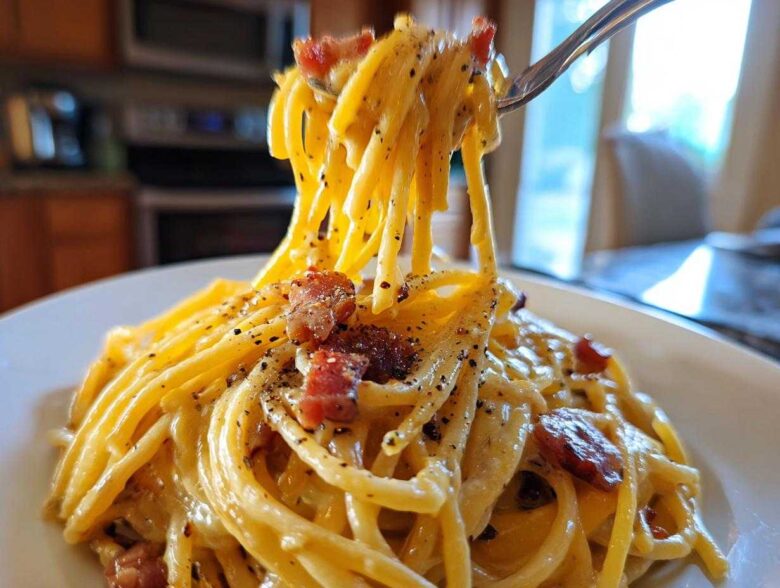
Listen, if there’s one dish I spent way too many years nervously making, it’s Pasta Carbonara. Because honestly, who hasn’t ended up with glorious, cheesy scrambled eggs instead of that silky, luxurious sauce? It’s heartbreaking, right? I’ve messed it up so many times I swear my kitchen started judging me! But after endless testing—and maybe one dramatic trip to the Rome airport duty-free for real Pecorino—I finally cracked the code. This isn’t just another recipe; this is the real, authentic Roman way. We’re using crispy guanciale and sharp Pecorino, and I promise you, by paying attention to just a few timing details, you will conquer the sauce. No cream needed! This technique is foolproof, even for nervous cooks, and it’s how you get that unbelievably creamy coating every single time.
Why This Authentic Pasta Carbonara Recipe Works Every Time
I want you to think of this recipe as your secret weapon against kitchen disasters. Seriously, we’ve ironed out all the tricky parts. When you follow these specific steps, you’re guaranteed results that taste like you’re eating dinner in Trastevere, not staring sadly at a dry, curdled mess! It’s all about respecting the ingredients and the heat management.
- It’s Truly Authentic: We are ditching the cream and using the traditional combo of yolks, whole egg, and Pecorino. That’s where the flavor lives!
- Guanciale Magic: Using guanciale (pork jowl) renders the most incredible, clean-tasting fat, which is the base of our entire sauce. If you need to check out how to prepare eggs perfectly for other dishes, you can look here, but for Carbonara, temperature is key!
- The Perfect Emulsion: The secret relies on the starchy pasta water meeting the egg mix *off* the heat. This ensures a silky, creamy coating instead of scrambling everything you just worked for. Trust me, this Classic Pasta Carbonara Recipe is worth mastering!
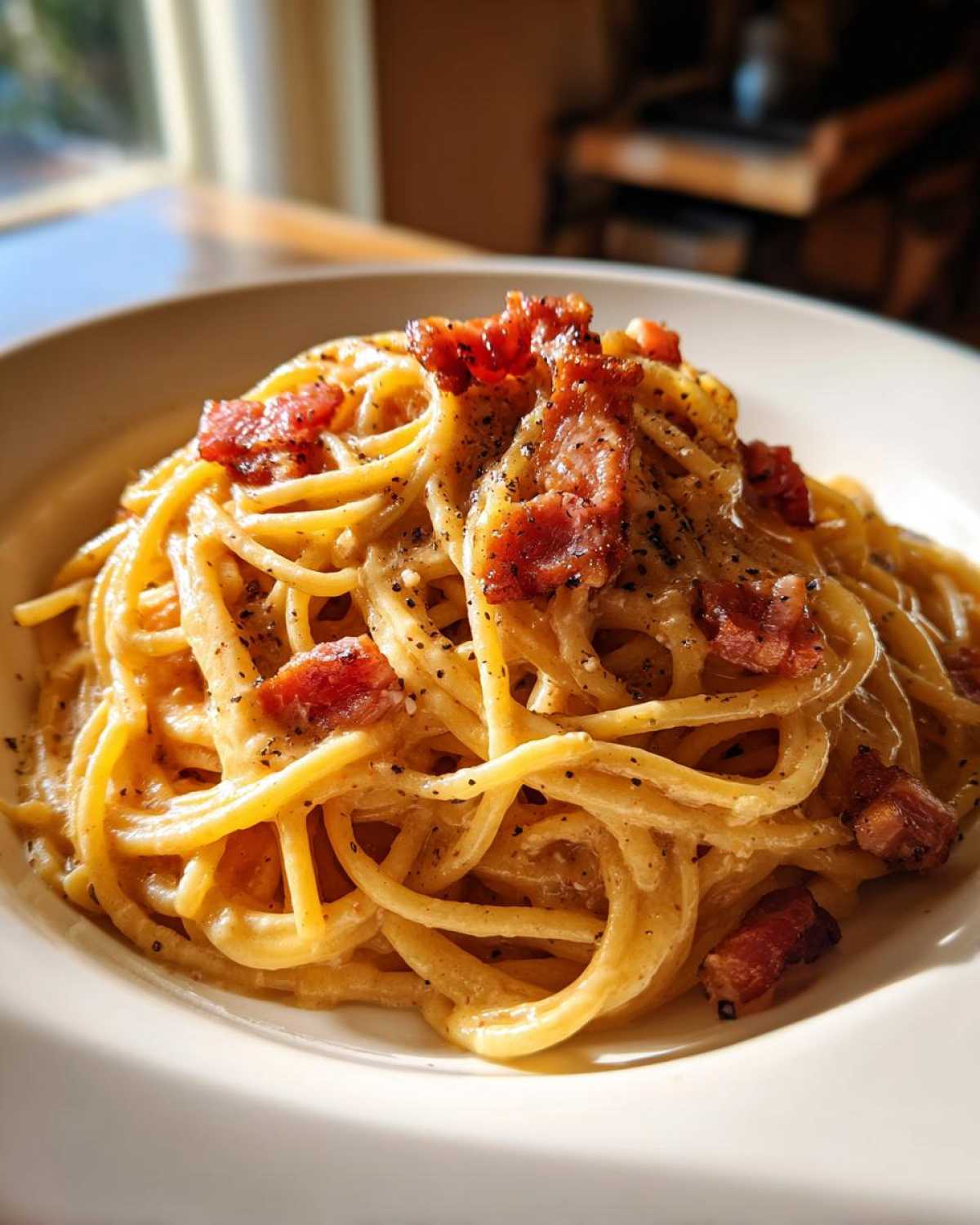
Essential Ingredients for Pasta Carbonara
Okay, look. With a recipe this simple, you can’t cheat on the ingredients. You just can’t. If you use the wrong stuff here, you’re making “pasta with egg and bacon,” not Authentic Italian Carbonara. I wrote down exactly what you need below. Don’t eyeball the cheese quantity, either—it’s important!
- 200 g spaghetti (or rigatoni if you like things chunky!)
- 100 g guanciale, cut into small strips or cubes
- 2 large egg yolks
- 1 large whole egg
- 50 g Pecorino Romano cheese, finely grated (and I mean *finely* grated!)
- Freshly ground black pepper, seriously, a generous amount
- Salt for the pasta water (but not too much salt!)
The Meat: Guanciale vs. Alternatives in Pasta Carbonara
This is where most people trip up before they even turn on the burner. You absolutely, positively want guanciale, which is cured pork jowl. It has a specific texture and fat composition that renders down into the most incredible, flavorful base for your sauce. The fat stays clean and liquidy.
If you’ve searched every specialty store and still can’t find it—and I know that struggle—go for pancetta. It’s the second-best option. Please, please avoid American smoked bacon. The smoke flavor completely overwhelms the delicate taste of the Pecorino and egg. The rendered fat? That’s pure liquid gold, so cook it low and slow to enjoy every bit of it.
Cheese and Egg Ratios for Perfect Pasta Carbonara Sauce
When it comes to the cheese, we are sticking to tradition: Pecorino Romano. Its sharp, uniquely salty bite is necessary to cut through the richness of the guanciale fat and the eggs. Parmesan is too mild, and frankly, it changes the entire Roman profile of the dish. You need that strong, salty tang!
For the eggs, notice I specified two yolks and one whole egg. That’s my personal trick for the Best Spaghetti Carbonara. The yolks add unbelievable richness and color, while the single whole egg provides just enough binding protein to help everything emulsify smoothly without being too heavy. And grate that cheese yourself! Pre-shredded cheese has anti-caking agents that absolutely spoil the smooth texture we are aiming for.
Equipment Needed for the Classic Pasta Carbonara Recipe
You don’t need a hundred fancy gadgets for this, which is part of the beauty of Traditional Roman Pasta! You’ll want a large skillet—big enough to hold all your pasta later—and a medium mixing bowl for whipping up the magic sauce base. Grab your sturdiest whisk for that egg bowl, and a decent set of tongs for tossing.
That’s really it! Having those three things ready to go makes the final, fast-paced assembly so much easier. Confidence in your tools equals confidence in your cooking!
Step-by-Step Instructions for Authentic Italian Carbonara
Alright, this is where we put it all together! Because the final stage happens so fast, you need everything prepped and ready to go. Think of this entire assembly phase as a well-rehearsed dance routine. If you rush one part, the whole show falls apart. We’re moving quickly, but carefully, especially when it comes to building that beautiful, glossy sauce without accidentally making an omelet!
Rendering Guanciale and Preparing the Pasta Water
First things first, get your water on a rolling boil and salt it lightly. Remember, the guanciale and Pecorino are already doing a lot of heavy lifting for salt content, so don’t oversalt the water! For the guanciale, put it into a cold, large skillet, and only then turn the heat on to medium-low. This slow rendering process is vital; it lets the fat melt out perfectly until the meat looks golden brown and crisp. Once it’s done, take the skillet off the heat entirely, but leave all those flavorful rendered bits and fat right there in the pan. Now, cook your spaghetti until it’s super *al dente*—like, 1 or 2 minutes less than the package says. Drain it, but do **not** dump that water! You need at least a cup of that starchy goodness reserved.
Carbonara Technique Secrets: Creating the Egg Mixture
While that pasta is cooking, get your ‘crema’ base whipped up in your mixing bowl. That means vigorously whisking those two yolks and the one whole egg together. Now, incorporate ALL your finely grated Pecorino Romano and a *ton* of black pepper. Don’t be shy with the pepper; it’s a key flavor component! Keep whisking until it looks like a thick, smooth, pale yellow paste. That’s your insurance policy against scrambling later; the cheese prevents the direct heat from cooking the eggs too fast. This mixture needs to be completely uniform.
The Crucial Step: Making the Creamy Pasta Carbonara No Cream Sauce
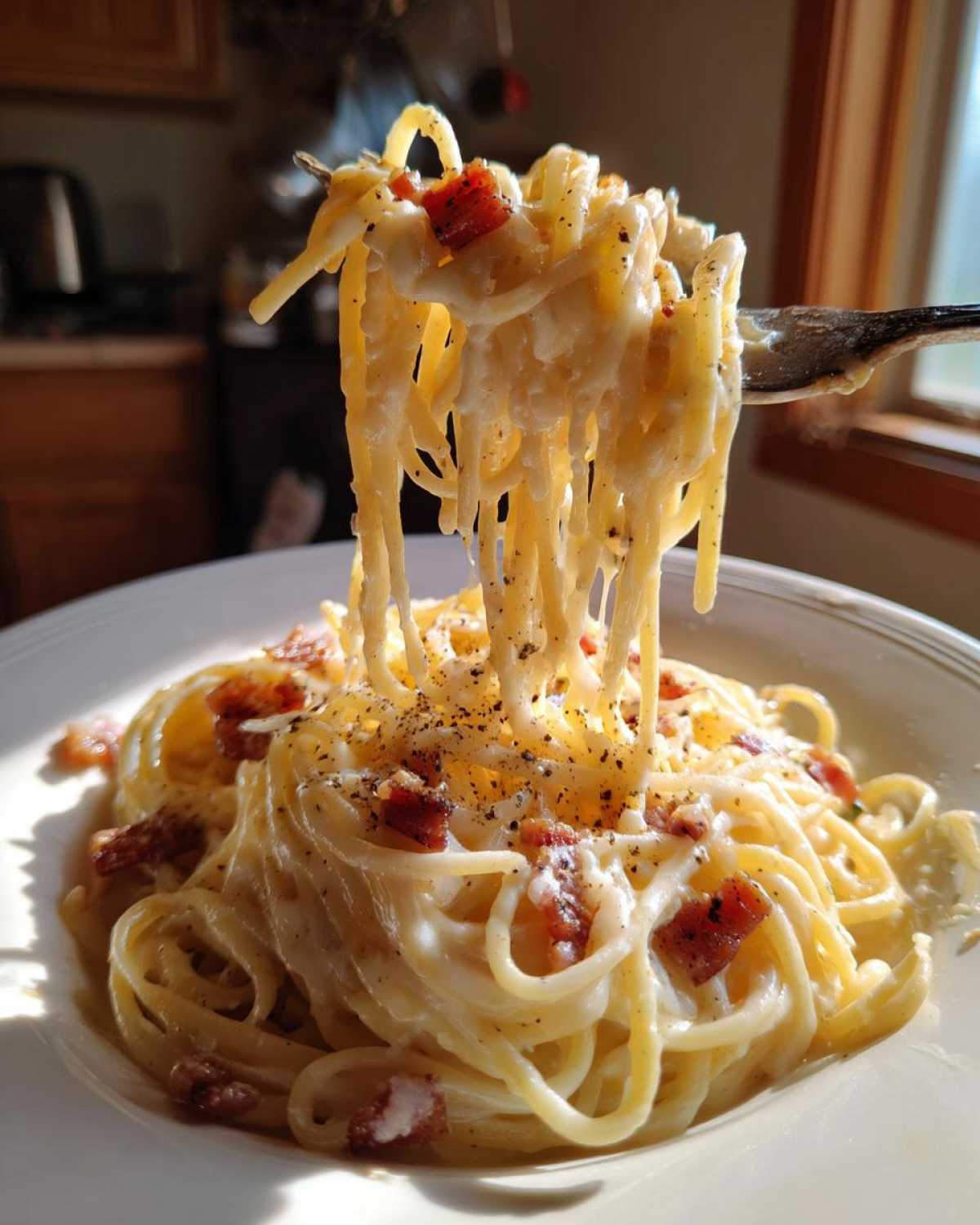
This is the moment of truth! Take your super-hot but drained pasta and toss it immediately into the skillet with the warm (not hot!) guanciale fat. Toss it just long enough to coat every strand. Now, the critical move: Remove the skillet from the burner completely. Wait about 30 seconds for the pan temperature to drop just a tiny bit. Then, pour that egg/cheese mix over the pasta while tossing constantly and quickly! You need that vigorous churning action to incorporate air. As you toss, add splashes of your reserved hot pasta water. This starchy water helps emulsify everything into that perfect, thick coating. If it looks too tight or dry, add another tablespoon of water, but keep that heat off! You’re looking for silk, not cement. Head over here for more depth on the emulsion guide.
Tips for Success with Your Guanciale Carbonara Tutorial
Okay, you’ve done the hard part by mastering the toss, but sometimes things still go sideways, especially under pressure. If your sauce looks like it’s starting to clump or break, don’t panic! Immediately take the pan totally off the heat. Grab a splash more of that reserved pasta water—it needs to be hot—and whisk it vigorously into the pan over low heat briefly, or even just off-heat using the residual warmth.
If you find yourself with a sauce that’s too dry or sticky, it means the heat was too high or you didn’t use enough water. Remember, the starch in that water is what carries the fat and egg together. If you want to see some other ways people approach this, check out this guide. But honestly, the golden rule remains: once the eggs hit the pan, the stove goes off. That’s your biggest protection in the Guanciale Carbonara Tutorial!
Serving Suggestions for Your Traditional Roman Pasta
You absolutely must serve this right away! Pasta Carbonara waits for no one; it stiffens up fast as it cools. Don’t bother trying to reheat leftovers in the microwave—it’s just sad pasta that way. Instead, plate it up piping hot, toss in most of those crispy guanciale pieces you saved, and finish it off with a mountain of freshly cracked black pepper and an extra snowstorm of Pecorino Romano. If you’re feeling fancy, I love pairing this with a super simple arugula salad dressed with just lemon and olive oil. It cuts right through the richness! For more quick Italian inspiration, peek at these dinner ideas for Italian nights.
Storage and Reheating Instructions for Pasta Carbonara
Here’s the tough-love truth about your beautiful, creamy batch of Pasta Carbonara: It’s a one-and-done meal. Seriously, eat it immediately! That emulsion is fragile, and trying to reheat it conventionally just turns it into a dense, cheesy block.
If you have leftovers, the best way to revive them is to toss them in a bowl with a tiny bit of reserved hot pasta water and maybe, maybe, a splash more raw, whisked egg yolk mixture. Reheat it gently in a non-stick pan over the lowest heat you can manage, tossing constantly until it loosens up slightly. It won’t be perfection, but it’ll be salvageable dinner!
Frequently Asked Questions About Pecorino Romano Pasta Dish
I know you’ve read all the steps, but sometimes you just need the quick answer about a specific sticking point! After answering questions about this recipe for years, some of these pop up constantly. Let’s tackle the last few roadblocks so you can cook this with full confidence.
Can I substitute Parmesan for Pecorino Romano in Pasta Carbonara?
You can, but should you? Honestly, no, if you are aiming for the authentic taste profile. Pecorino Romano is made from sheep’s milk and it brings an intense, salty sharpness that defines Roman food. Parmesan (Parmigiano Reggiano) is cow’s milk and it’s nutty and milder. If you mix them 50/50, you get closer, but for the pure, traditional experience of a Pecorino Romano Pasta Dish, go for the genuine article. Head over to this ingredient guide if you want to dive deep into the cheese debate!
How do I achieve a No Scrambled Egg Carbonara?
This is the million-dollar question, isn’t it? The secret is thermal shock management! You must, must, MUST take the pan completely off the heat source before adding your egg and cheese mixture. If the pan is sitting on the burner, the residual heat from the pasta and the hot fat is enough to gently cook the eggs into a velvety sauce. If you see any clumping happening, immediately add a splash of your hot, starchy pasta water while tossing aggressively to cool things down. That constant motion combined with the starch is what guarantees you a No Scrambled Egg Carbonara.
What if I can’t find guanciale and have to use bacon?
I addressed this earlier, but I’ll say it again: If you must use bacon, make sure it’s thick-cut and try to find the least smoky version available, though it still won’t be the same. The main difference is that bacon is often cured differently and can be much drier. Render the fat slowly until you have about two tablespoons left, then remove the bacon pieces and use that fat as your base. The flavor profile changes, but at least you still get that delicious rendered fat in your sauce!
Why is my sauce thick and pasty instead of glossy?
This happens when you don’t use enough liquid to temper the eggs and cheese. The starch in the pasta water is crucial because it’s slightly sticky and helps the fat and protein bind evenly. If your sauce is pasty, you need more hot pasta water added in small increments while tossing vigorously off the heat. Don’t be afraid of the water—it’s your best friend for making a perfect Creamy Pasta Carbonara No Cream.
Review and Share Your Best Spaghetti Carbonara Experience
So, there you have it! That’s my hard-won method for achieving that glossy, restaurant-quality finish on your Pasta Carbonara without ever burning the eggs. Seriously, I feel like I should be throwing confetti every time someone masters that off-heat toss. It’s a magical moment when you realize, ‘Wow, I actually made real, authentic Carbonara!’
Now, I want to hear from you! Did you stick to the guanciale, or did you have to use the pancetta substitute? Most importantly, how did you find that crucial moment of tossing the eggs and water together? Did you get that perfect, velvety coating?
Drop a comment below and let me know how your Best Spaghetti Carbonara turned out. I love seeing people conquer these classic Italian techniques! If you’ve got photos, share them on social media and tag me—I need to see the creamy results! And if you want to explore more simple, deeply satisfying Italian recipes, check out what else is cooking on the blog!
PrintAuthentic Roman Pasta Carbonara
Follow this guide to prepare a classic, creamy Pasta Carbonara using traditional ingredients like guanciale and Pecorino Romano, focusing on the technique to prevent scrambled eggs.
- Prep Time: 10 min
- Cook Time: 15 min
- Total Time: 25 min
- Yield: 2 servings
- Category: Dinner
- Method: Stovetop
- Cuisine: Italian
- Diet: Vegetarian
Ingredients
- 200 g spaghetti or rigatoni
- 100 g guanciale, cut into small strips or cubes
- 2 large egg yolks
- 1 large whole egg
- 50 g Pecorino Romano cheese, finely grated, plus extra for serving
- Freshly ground black pepper, generous amount
- Salt for pasta water
Instructions
- Bring a large pot of water to a boil and salt it lightly. Remember guanciale and Pecorino are salty.
- Place the guanciale in a cold, large skillet. Turn the heat to medium-low and cook slowly until the fat has rendered and the meat is crisp. Remove the skillet from the heat, leaving the rendered fat in the pan.
- While the guanciale cooks, cook the pasta according to package directions until very al dente (about 1-2 minutes less than recommended). Reserve at least 1 cup of the starchy pasta water before draining.
- In a medium bowl, whisk together the egg yolks, whole egg, grated Pecorino Romano, and a very generous amount of black pepper until smooth. This is your crema base.
- Drain the pasta and immediately add it to the skillet with the rendered guanciale fat. Toss quickly to coat the pasta.
- Wait about 30 seconds to allow the pan temperature to drop slightly. Then, pour the egg and cheese mixture over the pasta while tossing constantly and vigorously.
- Add a tablespoon or two of the reserved hot pasta water as you toss. Continue tossing rapidly off the heat until the sauce thickens into a smooth, creamy emulsion that coats the pasta. Add more pasta water, a splash at a time, if the sauce seems too thick or dry. Do not return the pan to direct heat.
- Stir in most of the crispy guanciale pieces. Serve immediately, topped with extra black pepper and grated Pecorino Romano.
Notes
- The key to avoiding scrambled eggs is removing the pan from the heat before adding the egg mixture and using the residual heat and starchy water to cook the sauce.
- If you cannot find guanciale, use pancetta. Avoid using bacon as the smoky flavor changes the traditional taste.
- Use only Pecorino Romano; Parmesan cheese will alter the flavor profile too much.
Nutrition
- Serving Size: 1 serving
- Calories: 650
- Sugar: 2
- Sodium: 750
- Fat: 35
- Saturated Fat: 15
- Unsaturated Fat: 20
- Trans Fat: 1
- Carbohydrates: 55
- Fiber: 3
- Protein: 30
- Cholesterol: 250