

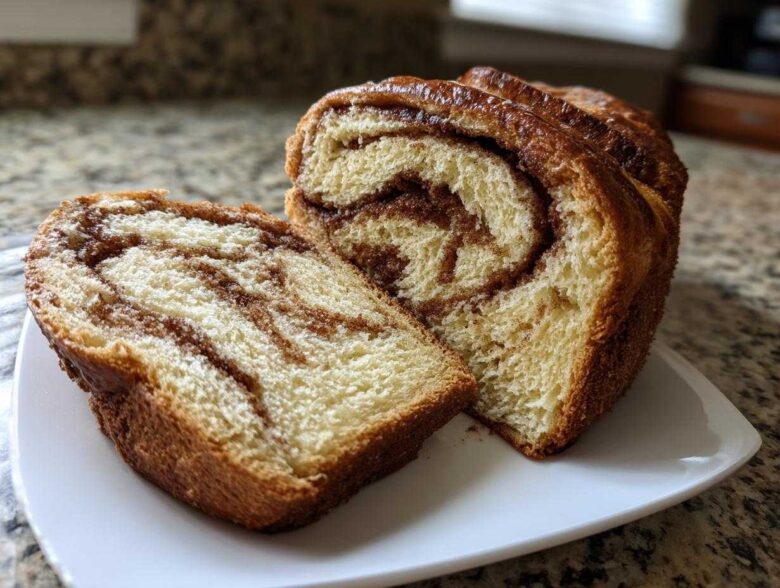
Oh, honey, I know that feeling! You sit down, you slice into what should be a pillowy, moist cinnamon bread, and what do you get? Something that tastes like a slightly spicy sponge. I’ve been there! I used to bake these beautiful loaves only to have them crumble into sad, dry piles by morning. It was deeply disappointing, especially when you just want that warm, melt-in-your-mouth experience. Well, stop worrying about dry bread! I finally nailed the formula. I’m here to show you exactly how to **Make The Softest Cinnamon Donut Bread Loaf Ever**. Trust me, this one tastes just like the inside of a fresh, yeasted donut, but baked right there on your counter!
Why This Recipe Lets You Make The Softest Cinnamon Donut Bread Loaf Ever (E-E-A-T)
You want soft, right? Not just ‘moist,’ but that genuine, tender crumb that sticks to your fingers a bit? That’s what we are achieving here. Making the Softest Cinnamon Donut Bread Loaf Ever isn’t luck; it’s about ingredient science and making sure those ingredients play nicely together. We’re building structure while sabotaging dryness at every turn.
-
The Secret Ingredients for Extreme Softness
See that sour cream or Greek yogurt in the list? That’s non-negotiable! The fat and acidity in those dairy items slightly tenderize the gluten network as we mix. It basically prevents the proteins from tightening up too much while baking. This is the main trick to getting that cloud-like texture that bakery loaves have. Without it, you just get bread; with it, you get a treat!
-
Achieving the Perfect Donut Bread Loaf Texture
Temperature is also huge here. You must use room-temperature eggs and warm (not hot!) milk. Cold eggs shock the melted butter we add later, making the entire mixture seize up and creating heavy pockets in your dough. Also, watch your kneading time! We’re aiming for smoothness, but stop as soon as it passes the windowpane test. Over-kneading makes bread chewy instead of fluffy. If you follow just those simple rules, you are already halfway to the perfect loaf you saw advertised on Buttermilk Pancakes recipes!
Gathering Ingredients to Make The Softest Cinnamon Donut Bread Loaf Ever
Alright, now that we know *why* this baby gets so fluffy, we need to gather our supplies. Remember, to genuinely **Make The Softest Cinnamon Donut Bread Loaf Ever**, every little detail matters, especially the stuff that goes straight into the dough. Don’t skimp on the butter or the sour cream; those are our secret weapons for tenderness!
-
Dough Components for Your Soft Loaf Bake
You need one cup of whole milk, but please make sure it’s warmed up—we’re talking 110°F so the yeast wakes up happy. Grab your sugar, two room temperature eggs (we talked about why temperature matters!), melted butter, and that essential sour cream or full-fat Greek yogurt. Don’t forget your salt and the flour, which should be about three and a half cups.
-
Cinnamon Filling and Optional Glaze Ingredients
For that incredible swirl, we use one whole stick of softened butter, packed light brown sugar, and two tablespoons of cinnamon. That’s it! Simple but potent. If you’re feeling decadent, the glaze is just powdered sugar mixed with a little milk and vanilla. If you’ve ever wondered about making a brilliant glaze, I have a great Cream Cheese Frosting Recipe you might try tweaking for this, too!
Step-by-Step Instructions to Make The Softest Cinnamon Donut Bread Loaf Ever
We’ve got our soft ingredients ready, so now it’s time to put in the effort! This yeast bread takes a little time, but remember, patience is what lets you **Make The Softest Cinnamon Donut Bread Loaf Ever**. Don’t rush those rising times; that’s where the fluffiness really develops. It’s more hands-on than a quick cake, but wow, the result is so worth it when you smell that cinnamon baking!
-
Activating Yeast and Mixing the Dough Base
First, we wake up the yeast. Combine your warm milk (it needs to be around 110°F—careful not to burn those little guys!), the yeast, and just a tablespoon of that granulated sugar in a big bowl. Let that sit there for about 5 to 10 minutes; you want a nice foamy top—that means your yeast is alive and ready to work!
Next, whisk in the rest of the sugar, your room temperature eggs, melted butter, sour cream, and vanilla. Whisk it really well until it’s all incorporated nice and smooth. Only then do you start adding your dry stuff.
-
Kneading, First Rise, and Filling Preparation
In a separate bowl, just whisk the flour and salt together. Now, add the dry mix gradually into your wet ingredients, mixing until you get what I call a ‘shaggy mess.’ Don’t panic! Turn that dough out onto a lightly floured surface and knead it. You really need to work it for about 8 to 10 minutes until it feels smooth and elastic. It might feel a little tacky, but it shouldn’t glue itself to your hands. Tuck it into an oiled bowl, cover it up, and let it double in size—that usually takes 1 to 1.5 hours.
While it’s puffing up, make the filling! Just mix the softened butter, brown sugar, and cinnamon until you have a spreadable paste, kind of like thick frosting.
-
Shaping, Second Rise, and Baking the Loaf
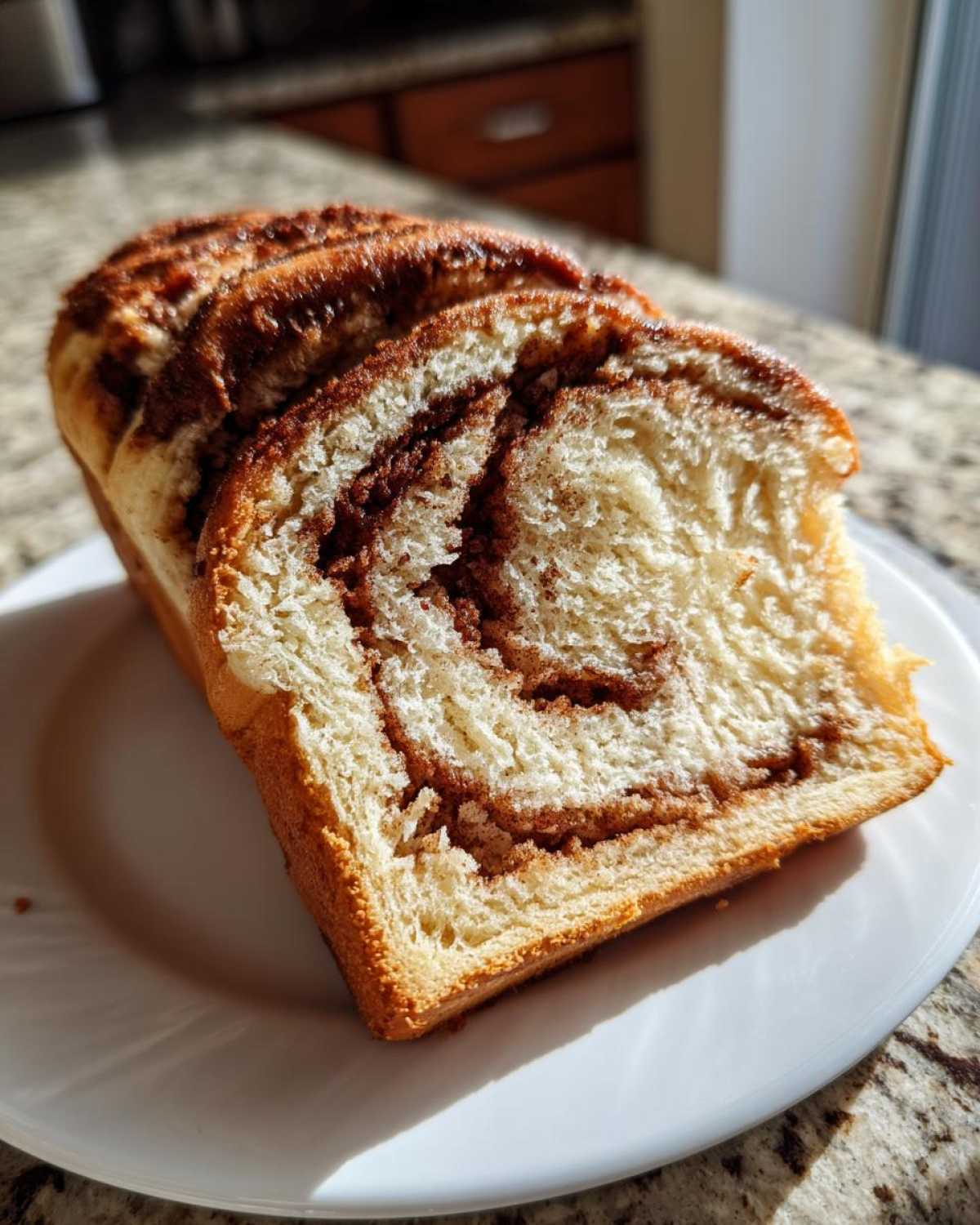
Once doubled, gently punch the dough down. Roll it out into a big 12 by 18-inch rectangle. Spread that gorgeous cinnamon mix all over, but leave a tiny border clean on one long side. Roll it up super tight, like a jelly roll, and make sure you pinch that seam closed! Tuck the ends under and place it seam-down into your greased 9×5 loaf pan. Cover it lightly and let it have a final nap for 30 to 45 minutes until it’s crowned nicely above the rim.
Now we bake! Preheat your oven to 350°F. Bake for 35 to 45 minutes. If you notice the top getting dark too fast, just tent some foil over it for the last ten minutes. You know it’s done when it hits 200°F internally. Don’t skip this part for perfect texture! Cool it completely before slicing, unlike those quick bread recipes. If you want some tips on making other fluffy doughs, check out my guide to Homemade Soft Fluffy Naan Bread.
Tips for Success When Baking Your Donut Bread Loaf
I know you’re eager to just tear into this masterpiece, but hold the phone! For this loaf to achieve that legendary, soft texture, a few of my grandmother’s rules still apply, even though we’re making a donut bread hybrid. Baking yeast bread is different than cake, and honoring the science will save you from getting that dense, sad crumb we talked about earlier. These little pointers are what separate a good loaf from the best loaf you’ll ever make.
-
Temperature Control for Yeast and Gluten
Let’s talk yeast activation again—it’s crucial! If that milk is too hot, you wipe out your yeast, and your loaf won’t rise at all, resulting in a flat brick. If it’s too cold, the yeast sleeps, and you get a slow, lackluster rise. Aim for that sweet spot, around 110°F. Also, when you’re kneading, put your timer on! I mentioned stopping after 8 to 10 minutes because we are trying to develop just enough gluten for structure, not toughness. You want elasticity, not resistance. Think of it like mixing up my fluffy buttermilk scones—just combine until it mixes, don’t overwork it!
-
Cooling Technique for Maximum Moisture Retention
This is where people often mess up yeast bread, and it’s critical for keeping that donut-like tenderness. As soon as it comes out of the oven at 200°F, you have to get it out of that hot metal loaf pan. Transfer it immediately to a wire rack. Why? If it stays in the pan, the bottom continues to steam and condenses, making that bottom slice soggy or dense. Then, and this is the hardest part, you have to wait. If you slice it while it’s hot, all that precious moisture—the very thing that makes it soft—escapes into the air. Give it at least an hour, preferably two, to set that structure before you slash into it.
Storage and Reheating to Keep Your Loaf Soft
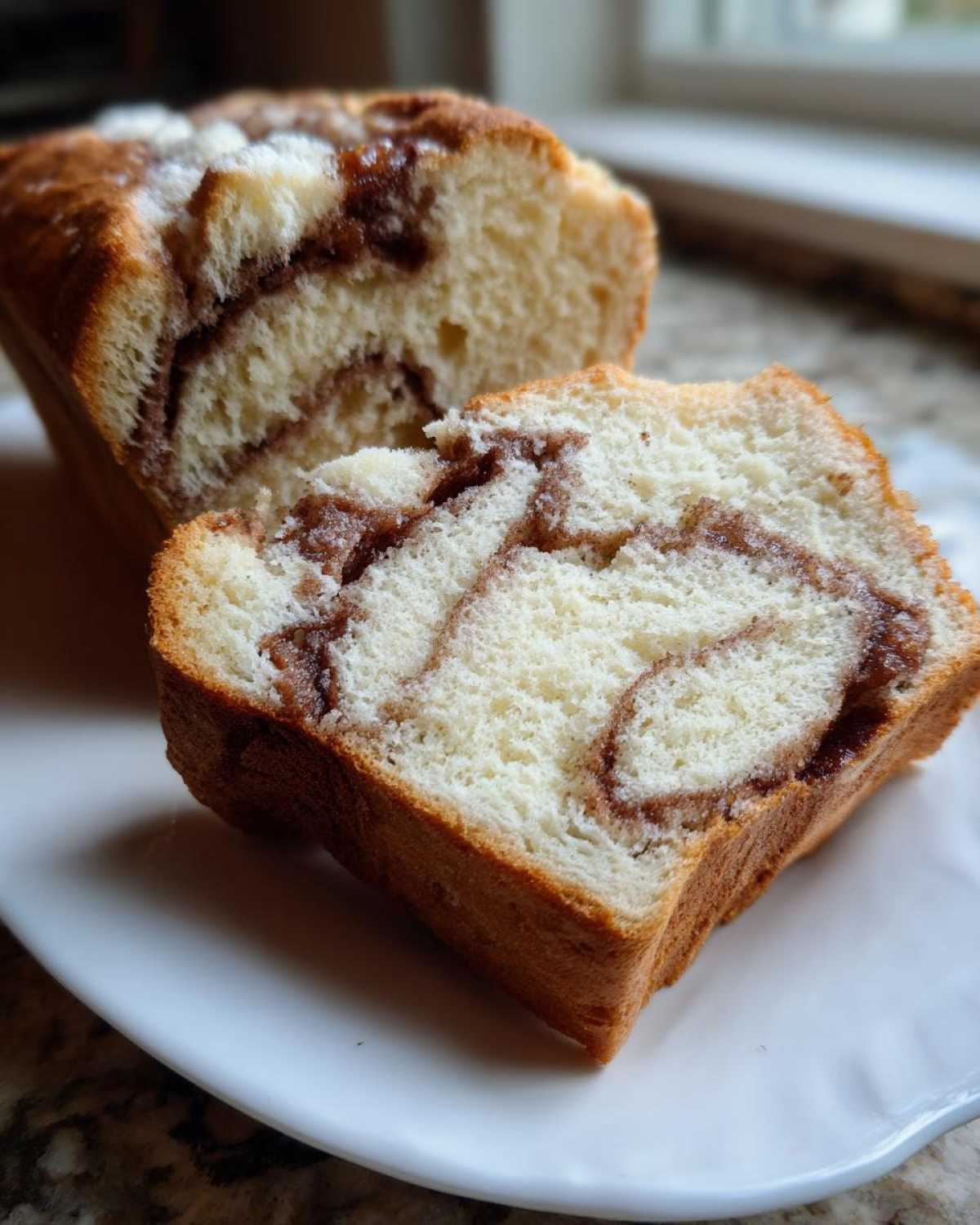
We put so much work into making sure you can **Make The Softest Cinnamon Donut Bread Loaf Ever**, so we absolutely cannot let it go dry sitting on the counter, right? Store your fully cooled bread tightly wrapped in plastic wrap at room temperature for up to three days. Don’t refrigerate it—that actually makes yeast bread go stale faster! If you want to bring back that incredible tenderness days later, place a slice briefly in the microwave, maybe 10 seconds, or wrap it in foil and warm it in a 300°F oven for just five minutes. It revives beautifully! For more tips on keeping baked goods moist, you can check out my guide for making Date Nut Bread.
Variations on the Homemade Cinnamon Donut Bread
Even though this recipe works magic as written, sometimes you just need to mix things up, right? You can keep that wonderful, soft texture while switching the flavor profile a little. Try adding half a teaspoon of ground cardamom or a pinch of fresh nutmeg right in with your dry flour mixture—it adds a lovely depth that pairs well with the cinnamon swirl. If you want to get truly creative with the dairy component, you could even try swapping the sour cream for mashed sweet potato for an ultra-moist flavor boost, similar to what makes my Sweet Potato Pound Cake so amazing.
Serving Suggestions for Your Ultimate Soft Cinnamon Loaf
Now that you’ve managed to Make The Softest Cinnamon Donut Bread Loaf Ever, the only question left is how to eat it! Honestly, it’s perfect all by itself—maybe just a slight drizzle of that optional glaze. But, if you want to elevate it for breakfast or brunch, try a thick smear of softened cream cheese or salted butter. And you absolutely must pair it with a fantastic hot drink. I highly suggest making a homemade Maple Cinnamon Latte alongside it!
Frequently Asked Questions About Your Softest Cinnamon Bread Recipe
I totally get it—baking yeast bread can sometimes feel like rocket science! Don’t fret if you have some questions about getting that Softest Cinnamon Bread Recipe just right. I’ve fielded these exact same concerns over the years of testing this loaf, so let’s clear up any confusion right now.
-
Can I use instant yeast instead of active dry yeast in this Donut Bread Loaf Baking Guide?
You absolutely can! That’s the beauty of easy recipes. If you use instant yeast, you can skip the whole milk blooming stage. Just mix the instant yeast right in with your dry ingredients (flour and salt). Then, proceed with adding the wet ingredients. It saves you about 10 minutes, but your rise times will be similar!
-
What is the best way to get a perfect Cinnamon Swirl Bread Texture?
The texture of the swirl is all down to that filling. You need the butter to be truly softened—like really soft, bendy butter, not melted. If the butter is too hard, you’ll tear the dough when you spread it. And when you roll it up, do it tightly. A loose roll means air pockets in the swirl instead of that delicious solid ribbon of cinnamon goodness.
-
My bread came out dense. What went wrong with my Best Soft Bread Loaf Recipe attempt?
Density usually means one of two things: either you killed your yeast with milk that was way too hot, or you kneaded it for too long! Remember, we want smooth, not overworked. If your dough felt really tough and wouldn’t stretch easily before the first rise, you kneaded too much. You can also get density if you didn’t let it rise long enough during that second proofing—it needs to look puffy before it goes in the oven. For more general tips on making wonderfully tender baked goods, you should check out my secret tips for Moist Southern Cornbread!
Estimated Nutritional Profile for the Softest Cinnamon Donut Bread Loaf Ever
I know some of you are watching the details, even while trying to Make The Softest Cinnamon Donut Bread Loaf Ever! Based on the full recipe, one slice comes out to roughly 320 calories, with about 22 grams of sugar. Keep in mind these numbers are estimates, especially if you decide to load up on that optional glaze we talked about. For more ideas on planning out your delicious meals, check out my quick guide to an Easy Egg Bake Recipe!
PrintThe Softest Cinnamon Donut Bread Loaf

A detailed recipe for a yeast-leavened bread loaf with a rich cinnamon swirl, designed to achieve a texture as soft and tender as a yeast donut.
- Prep Time: 30 min
- Cook Time: 45 min
- Total Time: 2 hr 30 min
- Yield: 1 loaf (10-12 slices)
- Category: Dessert
- Method: Baking
- Cuisine: American
- Diet: Vegetarian
Ingredients
- 1 cup whole milk, warmed to 110°F
- 2 1/4 teaspoons active dry yeast
- 1/2 cup granulated sugar, divided
- 2 large eggs, room temperature
- 1/4 cup unsalted butter, melted
- 1/4 cup sour cream or full-fat Greek yogurt
- 1 teaspoon vanilla extract
- 3 1/2 cups all-purpose flour, plus more for dusting
- 1 teaspoon salt
- For the Cinnamon Filling:
- 1/2 cup (1 stick) unsalted butter, softened
- 1/2 cup packed light brown sugar
- 2 tablespoons ground cinnamon
- For the Glaze (Optional):
- 1 cup powdered sugar
- 2 tablespoons milk or cream
- 1/2 teaspoon vanilla extract
Instructions
- Activate the yeast: In a large bowl, combine the warm milk, yeast, and 1 tablespoon of the granulated sugar. Let stand for 5 to 10 minutes until foamy.
- Mix wet ingredients: Whisk the remaining granulated sugar, eggs, melted butter, sour cream, and vanilla extract into the yeast mixture.
- Combine dry ingredients: In a separate bowl, whisk together the flour and salt. Gradually add the dry ingredients to the wet ingredients, mixing until a shaggy dough forms.
- Knead the dough: Turn the dough out onto a lightly floured surface. Knead for 8 to 10 minutes until the dough is smooth and elastic. It will feel slightly tacky but should not stick heavily to your hands.
- First rise: Place the dough in a lightly oiled bowl, turning to coat. Cover the bowl with plastic wrap and let it rise in a warm place for 1 to 1.5 hours, or until doubled in size.
- Prepare the filling: While the dough rises, mix the softened butter, brown sugar, and cinnamon together in a small bowl until well combined and spreadable.
- Shape the loaf: Gently punch down the risen dough. Roll it out on a lightly floured surface into a large rectangle, about 12 by 18 inches.
- Spread the filling: Evenly spread the cinnamon-butter mixture over the entire surface of the dough rectangle, leaving a small half-inch border along one long edge clean.
- Roll and seal: Starting from the long edge opposite the clean border, tightly roll the dough into a log. Pinch the seam closed firmly. Tuck the ends under slightly.
- Second rise: Place the dough log, seam-side down, into a greased 9×5 inch loaf pan. Cover loosely and let rise again for 30 to 45 minutes, or until the dough has crowned about 1 inch over the rim of the pan.
- Bake: Preheat your oven to 350°F (175°C). Bake for 35 to 45 minutes. If the top browns too quickly, loosely tent it with foil for the last 10 minutes. The internal temperature should register 200°F (93°C).
- Cool: Remove the loaf from the pan immediately after baking and cool completely on a wire rack before slicing.
- Make the glaze (optional): Whisk together the powdered sugar, milk, and vanilla extract until smooth. Drizzle over the cooled loaf.
Notes
- Using sour cream or yogurt adds fat and acidity, which tenderizes the gluten structure, resulting in a softer crumb.
- Do not over-knead; stop as soon as the dough is smooth to prevent toughness.
- For the softest result, ensure your milk temperature is correct for activating the yeast; too hot will kill it.
- Cooling the loaf completely before slicing prevents steam from escaping too fast, which keeps the interior moist.
Nutrition
- Serving Size: 1 slice
- Calories: 320
- Sugar: 22
- Sodium: 210
- Fat: 14
- Saturated Fat: 8
- Unsaturated Fat: 6
- Trans Fat: 0
- Carbohydrates: 45
- Fiber: 1
- Protein: 6
- Cholesterol: 55