
Introduction
Are you tired of the same old weeknight meals?
I know Zola and I were craving something new.
We wanted big flavor without the heavy noodles.
That’s how we landed on our favorite recent creation.
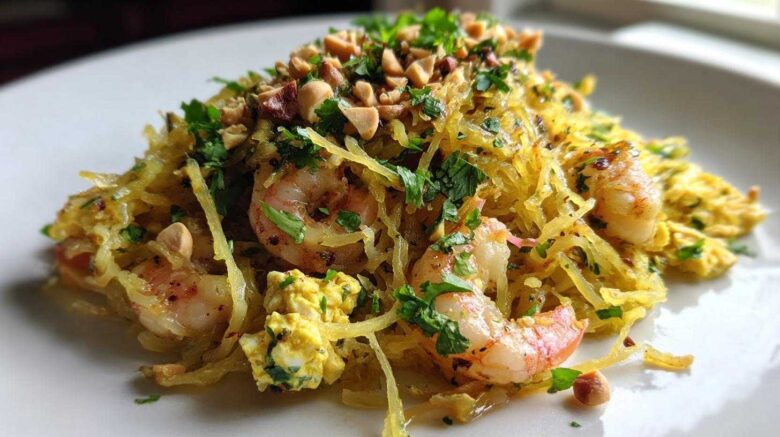
This Spaghetti Squash Pad Thai (Gluten-Free) is simply fantastic.
It gives you that authentic Thai taste you crave.
We use tender squash strands instead of rice noodles.
It’s a lighter, healthier dinner option for sure.
Zola always asks, “What if we make it ours?”
This recipe perfectly blends my structure with her vision.
It’s our signature ‘Taste Edition’ of a classic dish.
Get ready to remix your dinner routine tonight.
Why This Spaghetti Squash Pad Thai (Gluten-Free) Is Your New Go-To Dinner
When Zola first suggested swapping noodles, I was skeptical.
Now, this dish is our weeknight hero.
It hits all the marks for a satisfying meal.
It tastes amazing and fits right into a healthy lifestyle.
Here’s why you’ll love making this for dinner:
- It’s naturally gluten-free, which is a huge plus.
- The squash keeps the carb count much lower.
- We get huge flavor in under an hour total.
- It’s packed with fresh ingredients you recognize.
Quick Prep and Healthy Swaps
The best part is ditching the heavy starch.
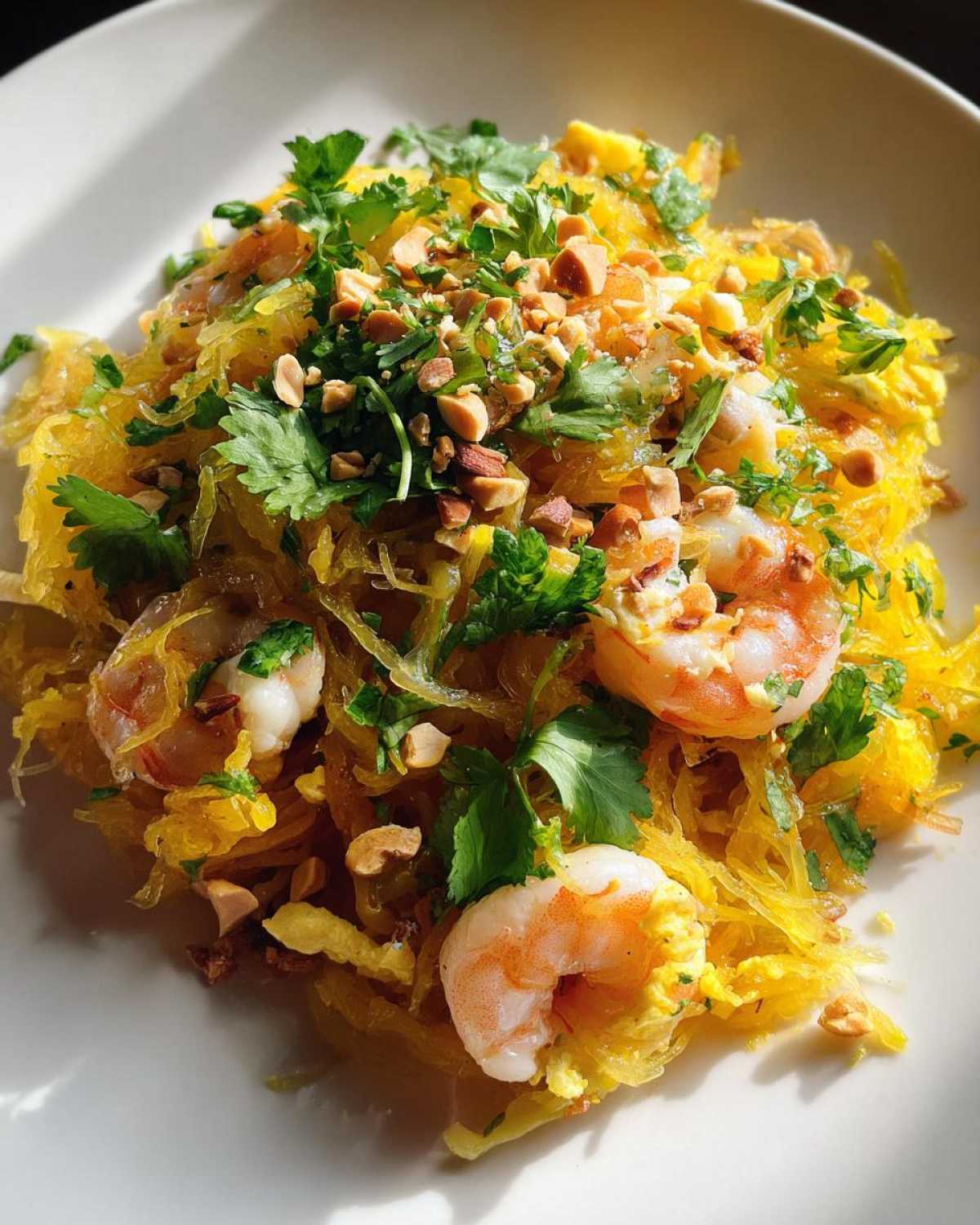
Spaghetti squash gives you that noodle feel.
It’s a fantastic low carb noodles option.
Roasting the squash takes most of the cook time.
Once it’s done, everything else moves really fast.
We stir-fry everything in just minutes after that.
Essential Equipment for Perfect Spaghetti Squash Pad Thai (Gluten-Free)
To make this dish shine, you need the right tools.
Good equipment makes the process much smoother.
I always grab my trusty baking sheet first.
You’ll need a sharp knife for cutting the squash.
A large skillet or wok is absolutely necessary.
This helps you toss everything evenly without a mess.
Don’t forget a sturdy whisk for that amazing sauce.
Gathering Your Ingredients for Spaghetti Squash Pad Thai (Gluten-Free)
Getting the ingredients ready is half the battle.
I always lay everything out first, mise en place style.
This keeps the stir-fry moving super quickly later on.
You need quality components for real Thai flavor.
It’s worth taking the time to measure precisely.
Here is exactly what you’ll need for this healthy dinner.
For the Squash and Stir-Fry Base
- One medium spaghetti squash is the star here.
- We need 8 ounces of shrimp, peeled and ready. (Chicken or tofu work too!)
- Use 2 tablespoons of coconut oil for cooking.
- Mince 2 cloves of fresh garlic very finely.
- Thinly slice 1/4 cup of shallots for sweetness.
- Beat 2 large eggs until they are just combined.
Remember, we roast the squash in a 400°F (200°C) preheated oven.
Crafting the Authentic Pad Thai Sauce
This sauce is where the magic really happens.
Whisk these items together in a small bowl:
- 3 tablespoons of good quality fish sauce.
- 3 tablespoons of smooth tamarind paste.
- 2 tablespoons of brown sugar (or coconut sugar).
- 1 tablespoon of fresh lime juice.
- 1 teaspoon of sriracha or chili garlic sauce.
Taste it! You can always add a bit more sugar if needed.
Garnishes and Serving Components
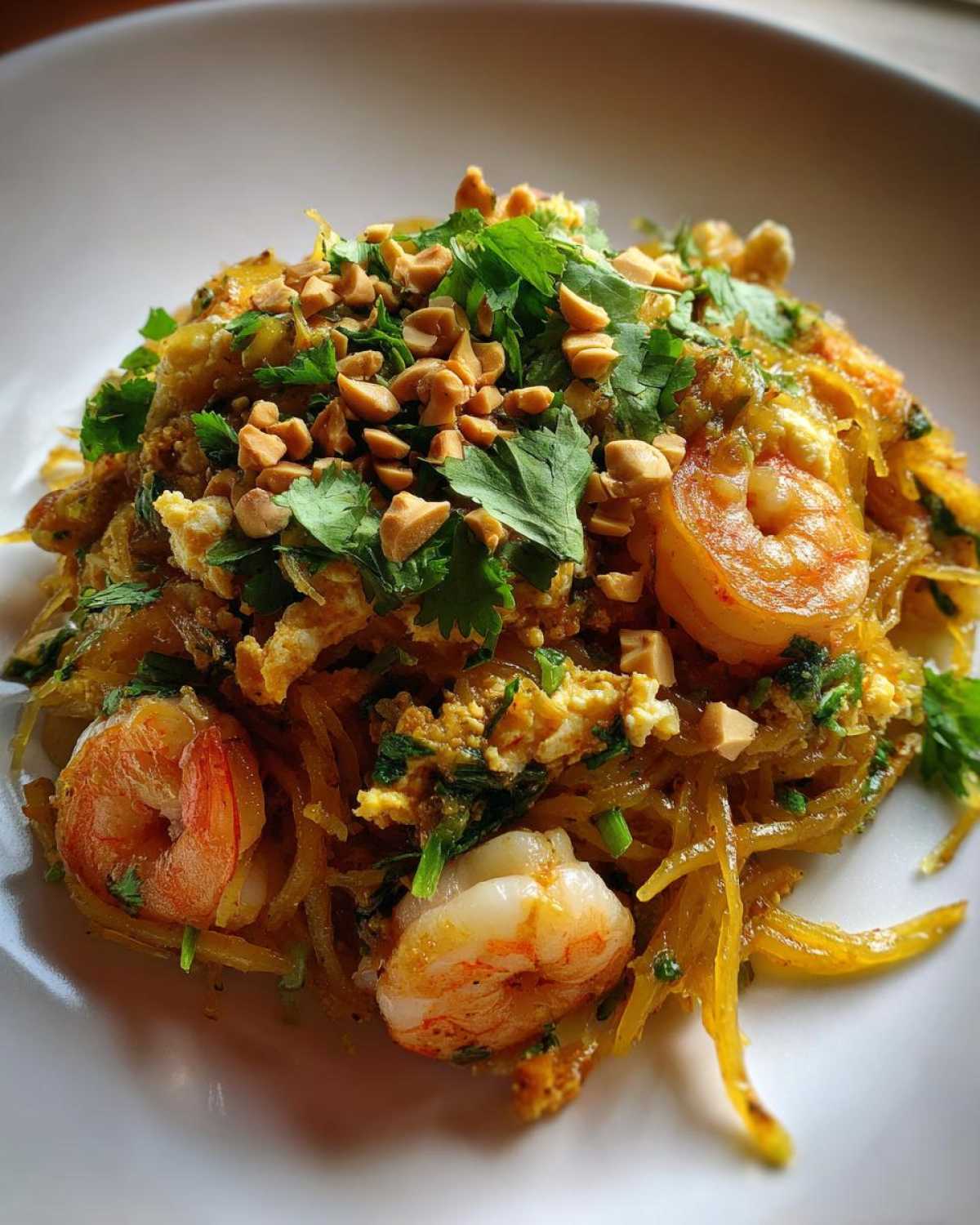
Don’t skip these final touches, they add texture.
- Chop 1/4 cup of peanuts for crunch.
- Fresh cilantro, chopped, about 2 tablespoons needed.
- One lime, cut into wedges for serving on the side.
Step-by-Step Instructions to Make Spaghetti Squash Pad Thai (Gluten-Free)
Now we move to the actual cooking part.
Follow these steps closely for the best result.
I promise this stir fry comes together fast.
It’s all about timing your components correctly.
Preparing the Spaghetti Squash Noodles
First, preheat your oven to 400°F (200°C).
Slice your spaghetti squash in half lengthwise now.
Scoop out all those stringy seeds right away.
Place the halves cut-side down on a baking sheet.
Roast them for 30 to 40 minutes until tender.
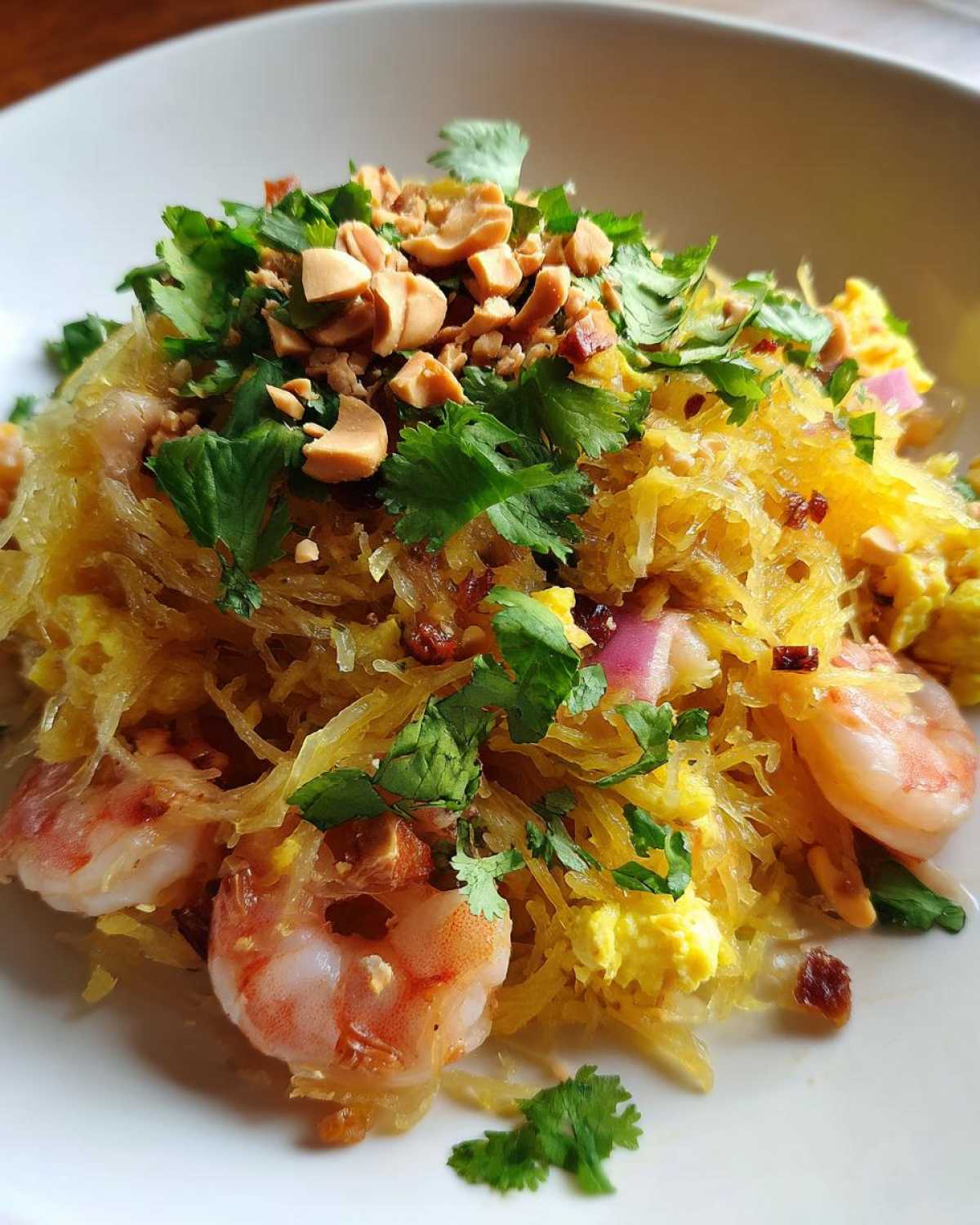
When cool, scrape out the flesh using a fork.
You should get about 3 to 4 cups of strands.
Mixing the Flavorful Pad Thai Sauce
While the squash roasts, make the sauce.
Whisk fish sauce, tamarind paste, and sugar.
Add the lime juice and your chili sauce now.
Mix until everything is completely dissolved.
Set this flavorful mixture well aside for later.
Cooking the Proteins and Eggs
Heat the coconut oil in your wok or skillet.
Cook the garlic and shallots for just one minute.
Add your shrimp and cook until they turn pink.
Remove the cooked shrimp and put it aside.
Pour the beaten eggs into the hot pan now.
Scramble them lightly until they are just set.
Break the eggs up into little pieces quickly.
Bringing the Spaghetti Squash Pad Thai (Gluten-Free) Together
Return the cooked shrimp to the skillet now.
Add the spaghetti squash strands to the pan.
Pour the prepared Pad Thai sauce over everything.
Toss everything gently but move very quickly.
You only need about two minutes to heat through.
Do not overcook or the squash gets mushy.
Serve this amazing dish right away for best texture.
Tips for Mastering Your Spaghetti Squash Pad Thai (Gluten-Free)
Even great recipes need a little personal touch.
That’s the Zola way, right? Making it truly ours.
A few small tweaks can make this dish perfect.
These tips help keep the texture just right.
Follow my advice for a truly memorable shrimp stir fry.
Ingredient Adjustments and Vegetable Additions
Do you like things sweeter, maybe even richer?
If so, add just one extra teaspoon of brown sugar.
This simple addition balances the tanginess well.
We love adding extra fresh vegetables too.
Try adding one cup of bean sprouts or carrots.
Toss them in when you add the squash strands.
Also, smooth tamarind paste mixes best into the sauce.
Lumpy paste makes for a grainy sauce texture.
Serving Suggestions and Storing Your Delicious Meal
The presentation matters almost as much as the taste.
We eat with our eyes first, don’t we?
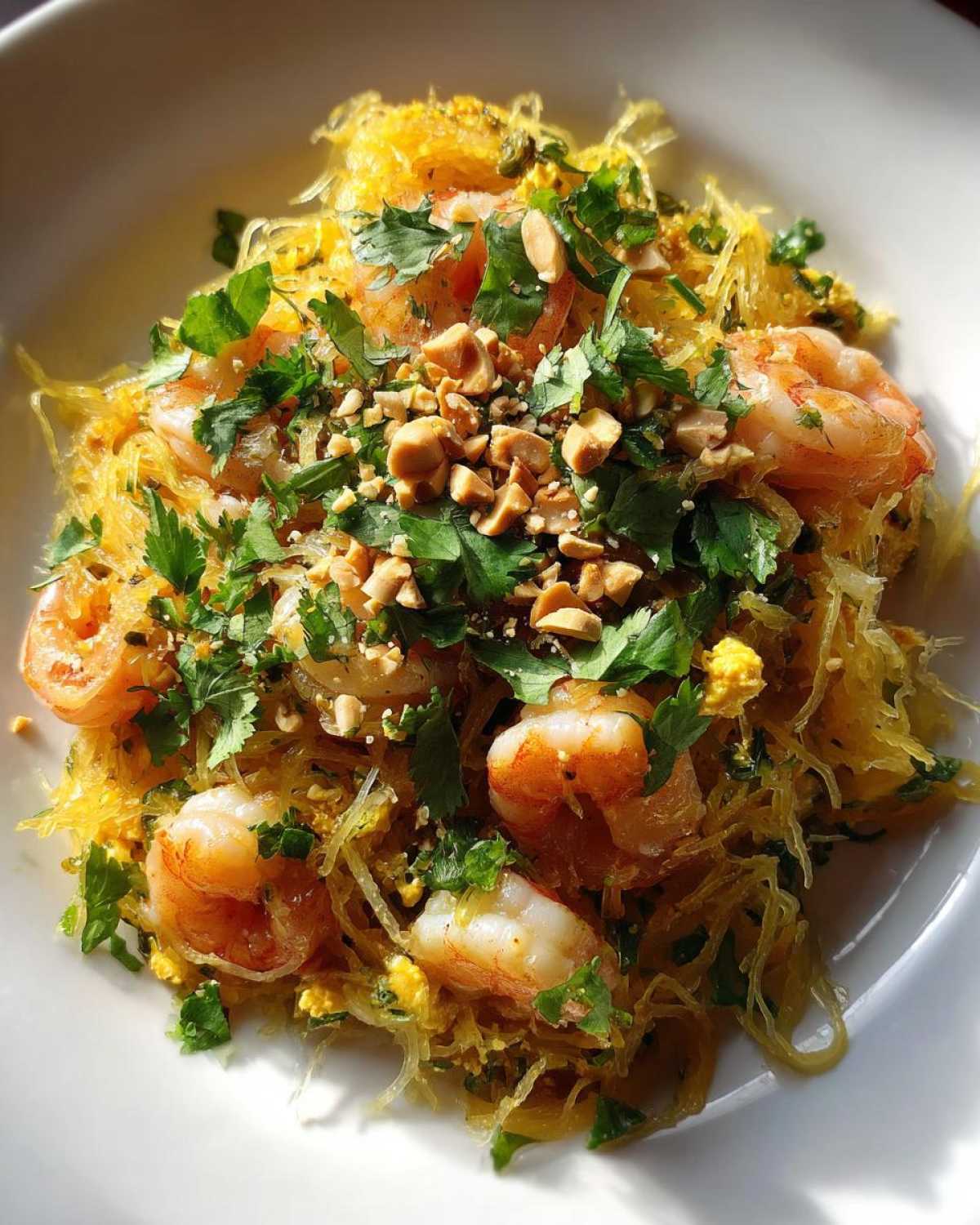
Serve your fresh dish immediately while it’s hot.
Top generously with those crunchy chopped peanuts.
Scatter the fresh cilantro over the top for color.
Always place lime wedges right on the side of each plate.
A squeeze of fresh lime juice brightens every bite.
It really wakes up the tamarind flavor.
Now, what about leftovers? That’s a good question.
This makes about two servings, so leftovers are possible.
Store any extra portion in an airtight container.
Keep it refrigerated for up to three days.
I find the squash texture softens a bit overnight.
Reheat gently on the stovetop over low heat.
Avoid the microwave if you can, honestly.
Microwaving can steam the squash strands too much.
Frequently Asked Questions About This Recipe
What if I don’t like shrimp in my healthy dinner?
That is totally fine, we all have preferences!
Chicken breast works wonderfully here instead of shrimp.
Cut the chicken into bite-sized pieces first.
Cook it until it reaches a safe internal temperature.
Firm tofu is another great vegetarian option.
Press the tofu well before you cube and cook it.
How do I keep my spaghetti squash from getting watery?
Watery squash is the enemy of good Pad Thai.
Make sure you roast it long enough initially.
The longer roast dries out the strands slightly.
Also, don’t let the squash sit too long after scraping.
Toss it quickly in the wok when everything is ready.
This quick cook time prevents steaming.
Can I make this recipe low sugar instead of low carb noodles?
Yes, you absolutely can adjust the sweetness level.
The recipe already uses brown sugar sparingly.
Try substituting the brown sugar with monk fruit sweetener.
Use the same amount called for in the sauce.
You still get the depth of flavor you need.
This keeps the dish very healthy for you.
Is this recipe truly gluten-free dinner friendly?
It is, provided you check your ingredients closely.
Fish sauce is naturally gluten-free usually.
Just confirm the brand you buy has no added wheat.
Tamarind paste is also naturally safe for you.
This makes a wonderful gluten-free dinner option.
PrintAstounding 2-Serving Spaghetti Squash Pad Thai (Gluten-Free)
Enjoy a fresh, gluten-free take on Pad Thai using spaghetti squash instead of traditional noodles. This recipe keeps the authentic flavors you love while making it a healthier dinner option.
- Prep Time: 15 minutes
- Cook Time: 40 minutes
- Total Time: 55 minutes
- Yield: 2 servings
- Category: Main Course
- Method: Stir-fry
- Cuisine: Thai
- Diet: Gluten Free
Ingredients
- 1 medium spaghetti squash
- 8 oz shrimp, peeled and deveined (or chicken/tofu)
- 2 tablespoons coconut oil
- 2 cloves garlic, minced
- 1/4 cup shallots, thinly sliced
- 2 large eggs, lightly beaten
- 1/4 cup chopped peanuts, for garnish
- 2 tablespoons fresh cilantro, chopped, for garnish
- 1 lime, cut into wedges, for serving
- For the Sauce:
- 3 tablespoons fish sauce
- 3 tablespoons tamarind paste
- 2 tablespoons brown sugar (or coconut sugar)
- 1 tablespoon lime juice
- 1 teaspoon sriracha or chili garlic sauce (adjust to taste)
Instructions
- Preheat your oven to 400°F (200°C). Cut the spaghetti squash in half lengthwise and scoop out the seeds.
- Place the squash halves cut-side down on a baking sheet and roast for 30-40 minutes, or until tender.
- While the squash roasts, prepare the sauce. Whisk together the fish sauce, tamarind paste, brown sugar, lime juice, and sriracha in a small bowl. Set aside.
- Once the squash is cool enough to handle, use a fork to scrape out the flesh into strands. You should have about 3-4 cups of squash strands.
- Heat the coconut oil in a large skillet or wok over medium-high heat. Add the garlic and shallots and cook for 1 minute until fragrant.
- Add the shrimp (or protein of choice) and cook until pink and cooked through, about 2-3 minutes per side. Remove the shrimp from the skillet and set aside.
- Pour the beaten eggs into the hot skillet. Scramble lightly until just set, then break them up into small pieces.
- Return the cooked shrimp to the skillet. Add the spaghetti squash strands and pour the prepared Pad Thai sauce over everything.
- Toss gently but quickly to coat the squash and heat through, about 2 minutes. Do not overcook, as you want the squash to retain some texture.
- Serve immediately. Top with chopped peanuts, fresh cilantro, and a wedge of lime for squeezing over your dish.
Notes
- If you prefer a sweeter sauce, add another teaspoon of brown sugar to the sauce mixture.
- For extra vegetables, add 1 cup of bean sprouts or sliced carrots when you add the spaghetti squash strands.
- Make sure your tamarind paste is smooth before mixing it into the sauce for the best texture.
Nutrition
- Serving Size: 1 serving
- Calories: Approx. 350
- Sugar: Approx. 18g
- Sodium: Approx. 850mg
- Fat: Approx. 15g
- Saturated Fat: Approx. 5g
- Unsaturated Fat: N/A
- Trans Fat: 0g
- Carbohydrates: Approx. 35g
- Fiber: Approx. 6g
- Protein: Approx. 25g
- Cholesterol: Approx. 180mg