

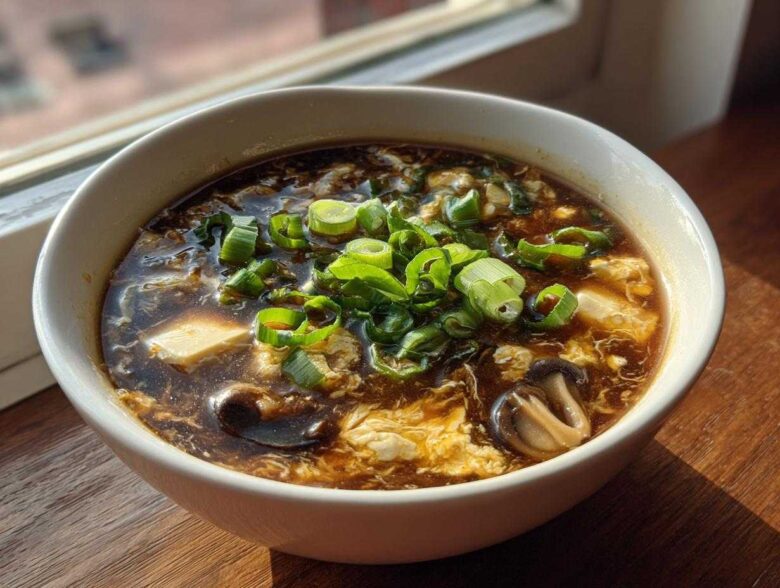
You know that craving? That specific, deep-seated yearning for a bowl of takeout soup that hits you right in the soul? Usually, when that happens, I end up ordering delivery, but honestly, it never tastes quite right—too thin, or way too sweet. Well, stop reaching for your phone right now! I finally perfected my very own **hot and sour soup recipe**, and trust me, it brings that authentic, punchy flavor right into your kitchen, faster than the delivery driver can find your house. This is the recipe that cracked the code on balancing that incredible spicy heat against the sour kick of vinegar, and it truly comes together in under 30 minutes. It’s truly my definition of comfort food.
Why This hot and sour soup recipe Beats Takeout
Honestly, the best part about making this at home is taking back control! When you order out, you get what they give you, usually a soup that leans too heavily one way or the other. But with my **hot and sour soup recipe**, you are the master of your bowl. We’re talking about achieving that perfect vibrancy that makes it a genuine **Spicy and Tangy Soup** experience, not just some murky broth.
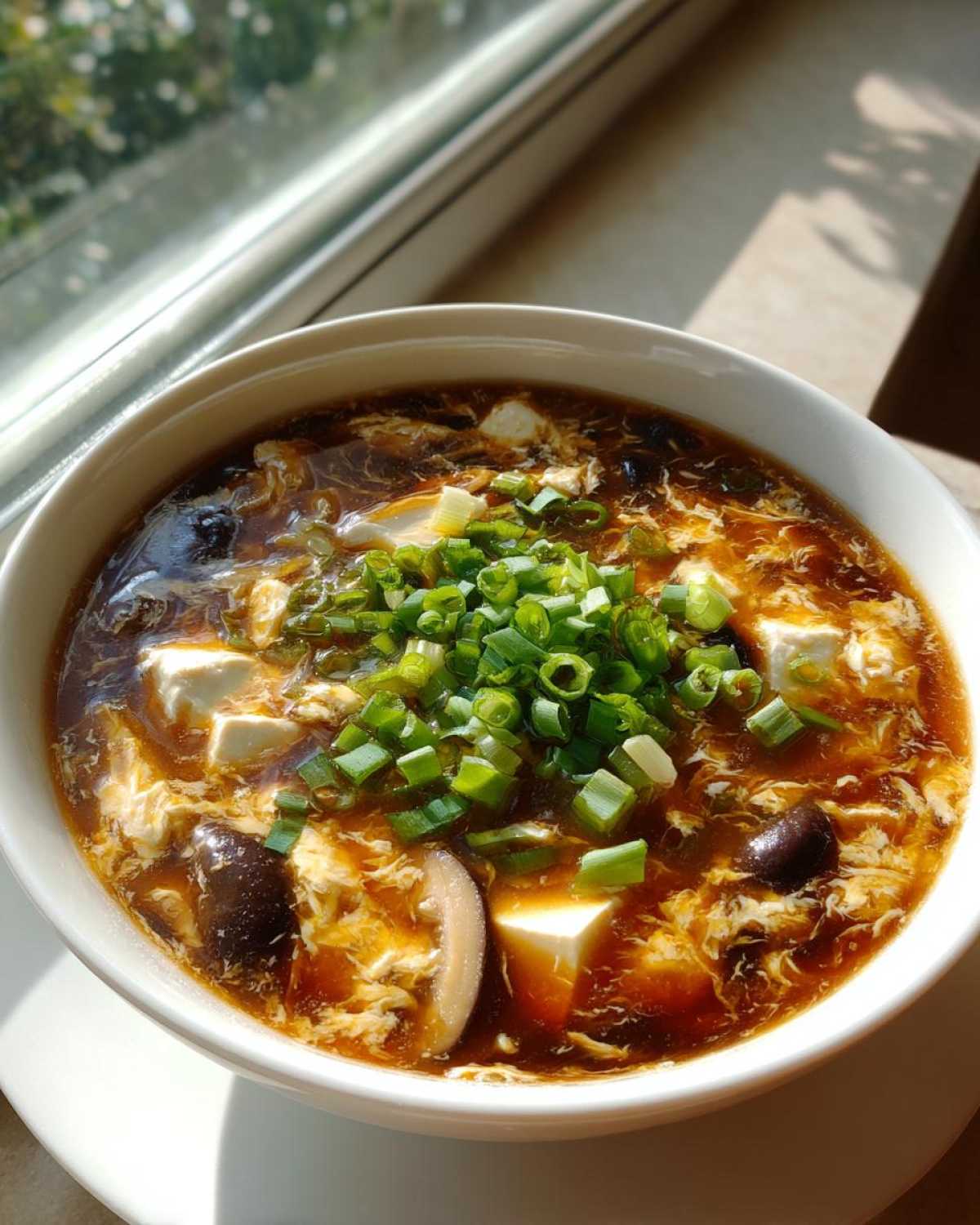
This is truly the **Takeout Style Soup** you dream about, only way faster. You won’t wait an hour for delivery, either. We nail the flavor profile and have hot bowls ready in about 25 minutes total. That means you get amazing flavor without sacrificing your whole evening!
Achieving the Perfect Tang and Heat Balance
This is where you get to choose your own adventure! That beautiful tartness comes from the combination of rice vinegar and white vinegar—don’t skip the white vinegar, it adds a sharper bite. If you like it fiery, just splash in a bit more of that chili garlic sauce right before you serve it. See? Total control over your **Spicy and Tangy Soup** level, every single time.
Speed: A True 20 Minute Soup Recipe
I know everyone says their recipe is fast, but I rigorously timed this one out, including the prep for chopping the mushrooms and tofu. If you have your ingredients ready to go, you’re looking at maybe 10 minutes of actual cooking time once that flavor base starts boiling. It’s seriously a lifesaver when you need something deeply flavorful but can’t wait for a slow simmer. It really earns its spot as a **Quick Asian Soup** for busy nights. You can check out some other quick ideas over at my main recipe index when you’ve got a sec!
Essential Ingredients for Your hot and sour soup recipe
Okay, let’s talk ingredients, because this is where we separate the watery, forgettable soups from that amazing **Homemade Hot and Sour** experience. Getting this **hot and sour soup recipe** right means using the sharp, authentic flavors that balance so well. I never skimp on the vinegars here; they are non-negotiable for that signature tang!
If you’re looking for other home-cooked comfort food ideas while you gather these things, I just posted my creamy mushroom stroganoff, which is surprisingly good if you need a side dish!
The Broth Base and Flavor Agents
For the base, you need 6 cups of good broth—chicken or vegetable, your call! Then we layer on the flavor bombs so it tastes like proper Chinese takeout. That means soy sauce, our essential duo of rice vinegar and white vinegar, and a drizzle of sesame oil. But here’s the secret handshake for an authentic taste: use *ground white pepper*. Don’t reach for the black stuff; white pepper has a unique, sharp heat that is crucial here. Finish the layering process with your chili garlic sauce, adjusting how much you use based on your heat tolerance.
Vegetables and Protein: Mushroom Tofu Soup Components
This is what gives the soup its body and texture, turning it into a satisfying meal. You’ll need about 4 ounces of firm tofu, which you should cut into those neat little strips—don’t make them too big! Slice up about half a cup of mushrooms; I usually go for cremini or if I’m feeling fancy, shiitake. Don’t forget the bamboo shoots, make sure they are well-drained, and a little bit of shredded carrot for color and sweetness.
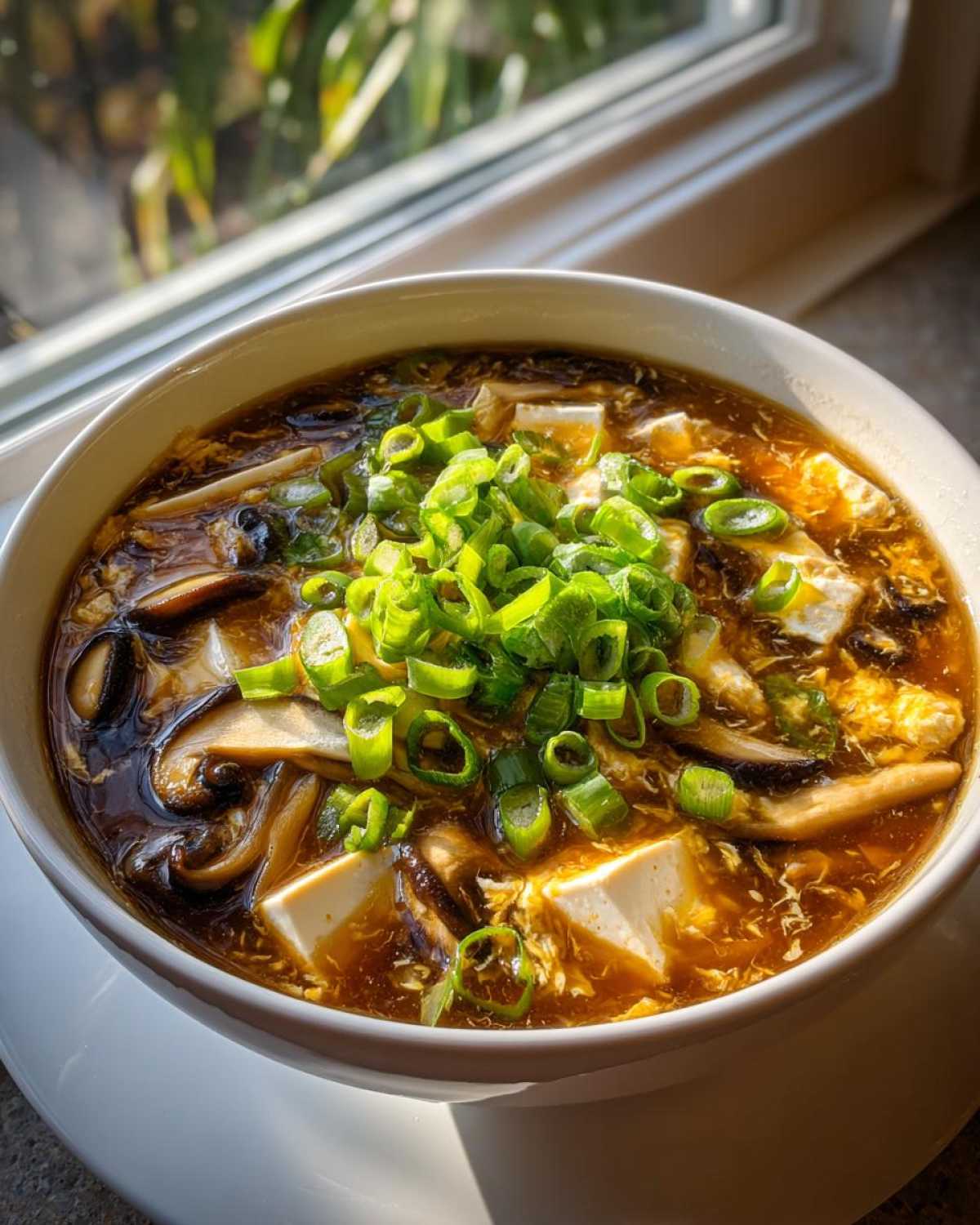
Speaking of dietary needs, remember one of the best things about this recipe is how adaptable it is. If you skip the chicken broth, you automatically have the start of a fantastic **Vegetarian Hot and Sour** version!
Thickening and Finishing Touches
We need this soup to cling beautifully to the tofu and mushrooms, right? So, for thickening, we use the classic cornstarch slurry. Mix 2 tablespoons of cornstarch with 3 tablespoons of cold water. I always measure this out first so it’s ready to go! You also need two large eggs, and this is important: lightly beat them beforehand. We’re not scrambling them in there; we want delicate ribbons, and that starts with how you prepare the egg.
Step-by-Step Instructions for the hot and sour soup recipe
Okay, you’ve got your ingredients ready—that’s half the battle won! Now we move fast because this is a true **Quick Asian Soup**, and we need to get that flavor built quickly so you can eat sooner. Remember what I said about the texture? The success is in the timing and how you introduce these elements. Just follow these steps closely, and you’ll be enjoying the **Best Hot and Sour Recipe** you’ve ever made.
Building the Flavorful Broth
Grab your largest pot! This is Step One for building the **Flavorful Asian Broth**. You’re going to combine absolutely everything that’s liquid or seasoning into the pot: the 6 cups of broth, both vinegars, the soy sauce, sesame oil, that crucial ground white pepper, and your chili garlic sauce. Put this over medium-high heat and bring it up to a rolling boil. Don’t be shy with the heat here; we want it hot so the flavors wake up right away before we start dropping things in.
Simmering the Solids
Once that broth is boiling nicely, it’s time to add the structure. Gently drop in your soy sauce-drained tofu strips, the sliced mushrooms, the bamboo shoots, and the shredded carrots. Reduce the heat just a tiny bit but keep it simmering happily. You need to let this mixture bubble away gently for exactly five minutes. This simmering time is super important—it allows the mushrooms and tofu to soak up all those salty and sour notes we just developed. Keep an eye on it!
Creating Egg Ribbons and Thickening
This next part is delicate. Take your lightly beaten eggs and slowly pour them in a thin stream all over the surface of the soup. As you pour, you *must* stir the soup gently and consistently in just one direction. This makes those beautiful, delicate egg ribbons that everyone loves. Let that cook for about a minute until the egg sets up. Next, whisk your cornstarch slurry one last time—it settles fast!—and pour it in slowly while you stir constantly until the soup thickens up just how you like it. Give it one final minute to cook out the starch, taste for your final seasoning adjustment, and you are done! Find some more great weeknight dinner ideas on my blog when you’re planning your next meal.
Expert Tips for the Best Homemade Hot and Sour
So, you’ve nailed the basic **hot and sour soup recipe**—that’s huge! But if you want to elevate it from great to absolutely legendary, you need to focus on the quality of your starting materials. This soup is simple, which means every single ingredient really has to pull its weight. Think of it this way: when you use the best stuff, you naturally create that incredible, deep flavor profile associated with **Authentic Chinese Comfort Food**.
Ingredient Sourcing for Authentic Chinese Soup Recipe Flavor
Mushrooms make such a difference here. If you can find decent dried shiitake mushrooms, soak them first! The soaking liquid is basically liquid gold and can be substituted partially for your broth to add a deep, earthy umami flavor. If you stick to fresh, choose cremini or baby bellas over plain white buttons for more depth. Don’t be tempted to use regular black pepper; that signature heat we are aiming for comes from that white pepper we talked about earlier. Trust me on this one; it makes that huge difference between a good soup and a spectacular one.
Adjusting Consistency and Acidity
When you taste-test right before serving, you might find you want it a bit thicker or maybe a bit more bite. If it seems too thin, that’s an easy fix! Just mix up a tiny bit more cornstarch slurry—maybe one teaspoon of cornstarch mixed with two teaspoons of cold water—and whisk it in over low heat until it thickens slightly more. If you want that extra kick that makes it a real treat for fans of **Tangy Vinegar Soup**, stir in another teaspoon of white vinegar right at the end. That final burst of acidity really brightens everything up. You can snag some other great tips for using complex flavors on my main index page!
Making Your hot and sour soup recipe Vegetarian or Gluten-Free
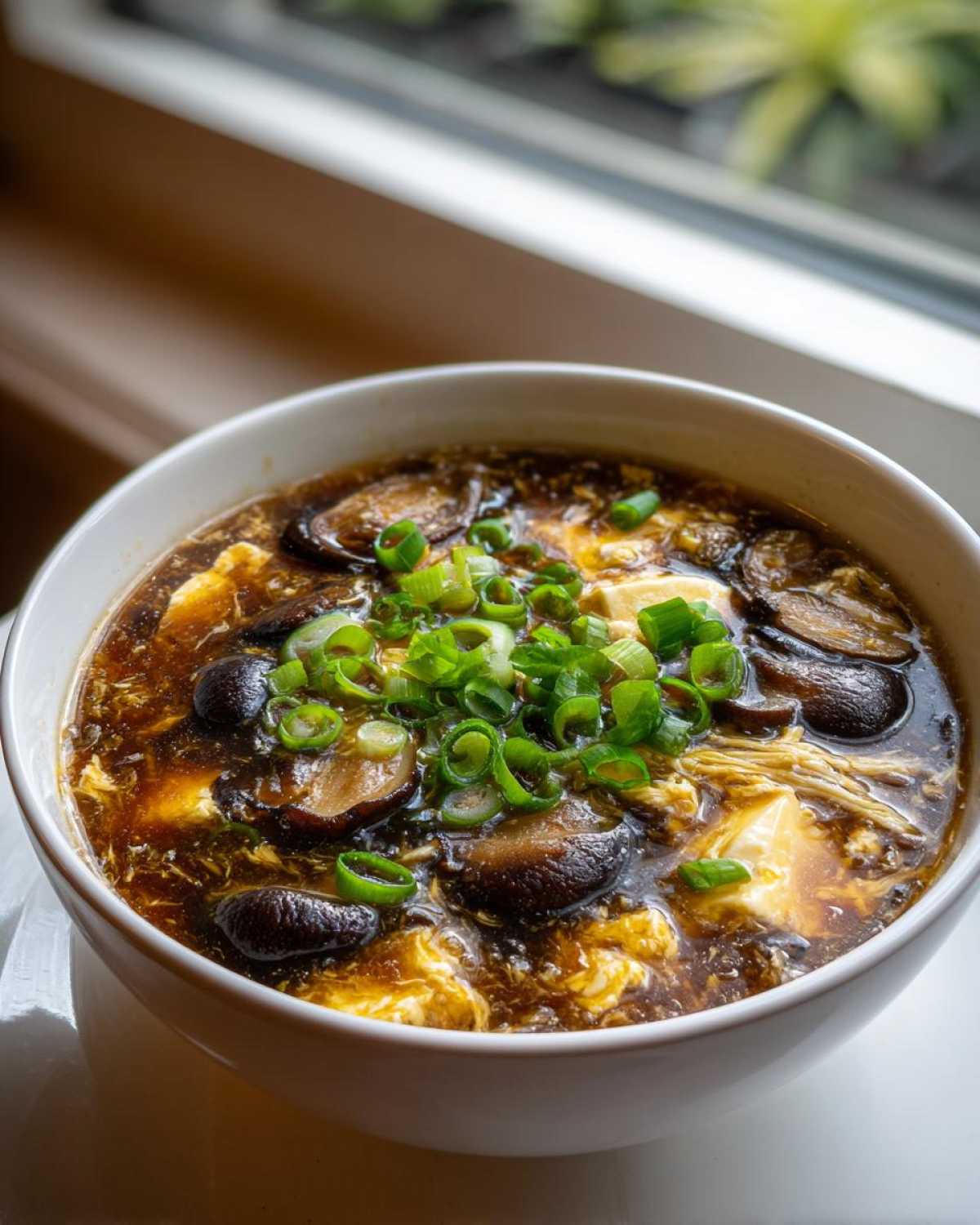
One of the things I absolutely love about this specific **hot and sour soup recipe** is how forgiving it is! It’s so adaptable, which means everyone at the table can enjoy that amazing, comforting flavor without feeling like they missed out on the real deal. I always get questions about how to switch things up, especially since so many of my friends are vegetarian or trying to cut back on gluten, and this recipe handles those swaps like a total pro.
It’s so rare to find a truly great **Chinese Soup Recipe** that naturally lends itself to dietary tweaks, but because the flavor foundation is so strong, these changes just enhance the experience without sacrificing the integrity of the spice or tang.
Making it Vegetarian
This is super simple, honestly. If you want to keep this soup meat-free, your main focus is the broth. Just swap out the standard chicken broth for a high-quality vegetable broth. That’s it! I keep a box of low-sodium vegetable broth on hand specifically for this purpose. Since the tofu is the main protein source anyway, swapping the broth keeps the texture and complexity intact. It’s an immediate win, and makes it a perfect **Mushroom Tofu Soup**!
If you want a deeper flavor profile in your **Healthy Chinese Soup**, try adding dried shiitake mushrooms to steep in hot water, and then use a cup of that mushroom soaking liquid along with your vegetable broth. It adds amazing umami that mimics the richness of chicken broth very well.
Going Gluten-Free with Your Tangy Vinegar Soup
Gluten usually sneaks its way into Asian recipes through soy sauce, so this swap is also really straightforward. Instead of regular soy sauce, just use Tamari. Tamari is basically a type of Japanese soy sauce that is brewed without wheat, so it keeps that necessary salty, savory anchor point of flavor for your **Tangy Vinegar Soup**.
The rest of the ingredients—the vinegars, the cornstarch, the vegetables, and the tofu—are naturally gluten-free, so you don’t need to stress about the rest of the list! If you’re cooking for someone with a severe allergy, just double-check that your chili garlic sauce doesn’t contain strange fillers, but most mainstream brands are fine.
If you are interested in more meatless, flavorful meals, you absolutely have to try my creamy coconut curry lentil soup! It’s another one of those dishes that tastes like it took all day but is actually a snap.
Storage and Reheating Your hot and sour soup recipe
Okay, so you made such a phenomenal **hot and sour soup recipe** that you ended up with leftovers—lucky you! Nobody wants flavor this good to go to waste, but soup with egg ribbons and cornstarch can be a little tricky to store. You really have to handle that texture with care if you want it to taste just as amazing the next day. This isn’t like storing leftover pasta; the egg component needs a gentle touch during reheating.
My rule of thumb is to always eat it the day you make it if you can, but if you must store it, here’s exactly how I handle the leftovers of this **Quick Asian Soup** so it regains its amazing flavor when you reheat it.
Storing Leftovers Safely and Quickly
First things first: cool it down fast! Don’t just stick a giant hot pot of soup directly into the fridge; that’s just asking for trouble and risking food safety. Ladle the soup into smaller, shallow containers once it’s cool enough to handle safely. This helps it chill down way quicker. Seal those containers tightly—I use snap-top glass ones—and tuck them into the fridge. It keeps really well like this for about three to four days. Any longer than that, and I’ve noticed the vinegar starts to get a bit harsh, and the moisture balance shifts too much.
The Gentle Art of Reheating Egg-Based Soup
When it comes time to reheat, patience is your best friend, especially because of those beautiful egg ribbons we worked hard to create. You absolutely cannot blast this in a microwave on high heat! The high heat can make the egg tough and almost rubbery, and the heat distribution is never even. Instead, use the stovetop. Pour the leftover soup into a saucepan over medium-low heat. You need to stir it constantly and gently as it warms up. This ensures the heat spreads evenly and keeps the ribbons soft, allowing them to fluff up again.
If you notice the soup is dramatically thicker than you remember—which often happens because the cornstarch works overtime in the fridge—you can thin it back out with just a splash of hot water or extra broth while it’s warming up. Taste it again when it’s hot, as the cold temperature dulls the flavor, so you might want a final sprinkle of white pepper or a tiny splash more vinegar to bring that zing back to your favorite **Chinese Soup Recipe**.
Serving Suggestions for this Quick Asian Soup
Now that you have conquered the kitchen and created this mind-blowing **hot and sour soup recipe**, the big question is: what do you serve it with? When you’ve put in the effort to make such a perfectly balanced, **Tangy Vinegar Soup**, you don’t want to ruin it by pairing it with something that clashes. Because this soup is loaded with tofu, mushrooms, and bamboo shoots, it’s already a complete meal on its own, especially if you’re looking for a lighter dinner option.
But if you’re serving this **Quick Asian Soup** for a bigger family gathering or if you’re just extra-hungry, I always lean toward things that provide a clean, neutral base to let the spice and tang truly shine through. Think of it as supporting actors that let the star (your soup!) take the spotlight.
The Importance of a Neutral Base
My absolute go-to is just plain white rice. Seriously, don’t try to get fancy here! If you’re having a colder night, the simple starch acts as the perfect sponge for any broth that escapes the bowl. It cools down the palate just enough between spoonfuls of that spicy broth. I’m talking straight-up steamed rice—no fuss, no butter, just pure carbohydrate comfort to keep things moving.
If rice feels too heavy for you, a side of simple, lightly seasoned steamed greens works beautifully. Think blanched bok choy or maybe some crisp snow peas tossed with just a tiny pinch of salt. These provide a great crunch factor that complements the soft tofu and mushrooms in the soup.
Pairing with Other Asian Flavors
If you’re building a full **Weeknight Chinese Dinner** spread, you want something that offers a different texture profile from the liquid soup. I often whip up a batch of my amazingly simple Asian Chicken Lettuce Wraps when I make the soup. The cool, crunchy lettuce cups filled with savory chicken offer a total contrast to the hot, vinegary soup, which keeps every bite interesting.
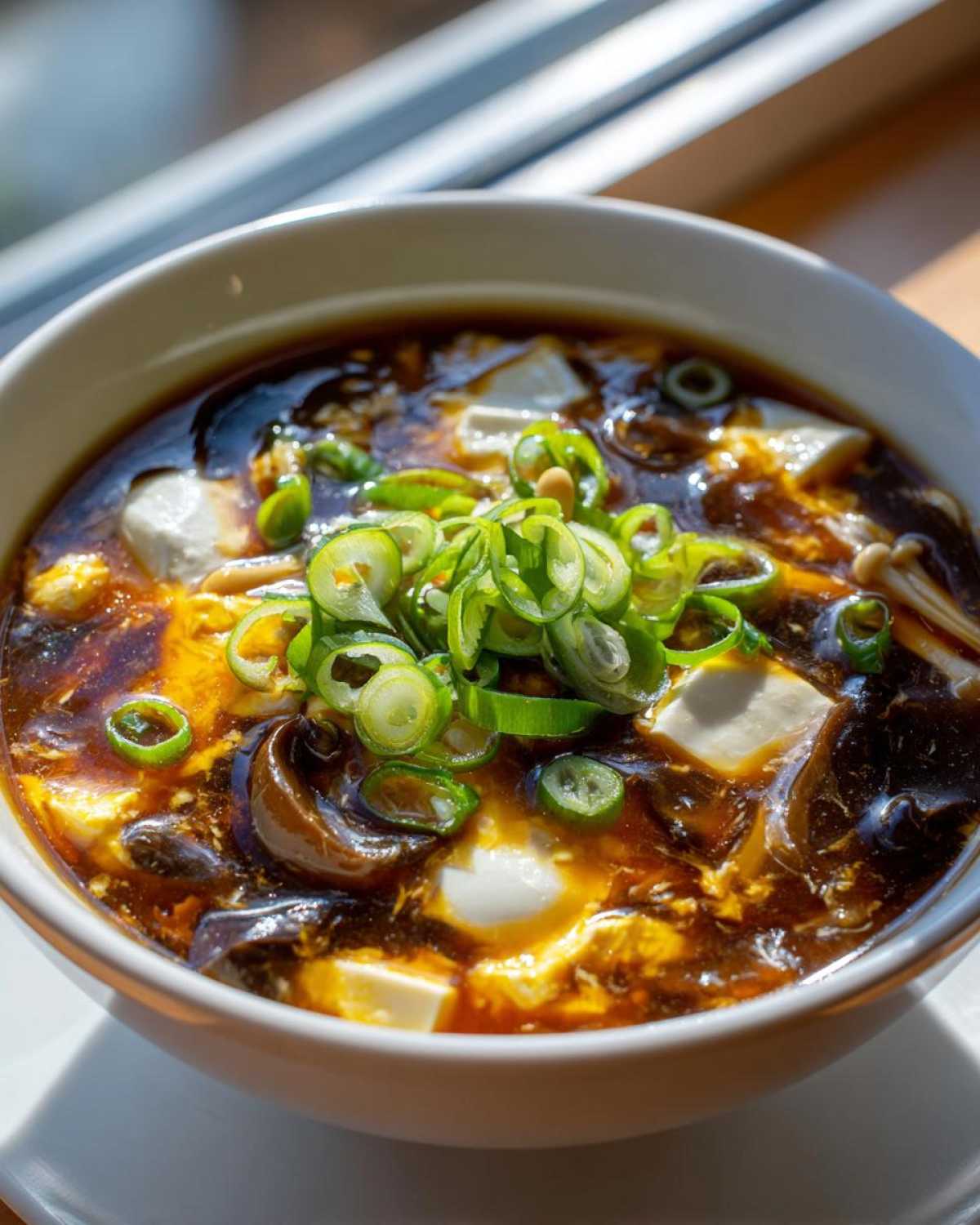
Another option that works well is simple steamed dumplings, but only if you go for a plain vegetable filling. That helps keep the focus on the **Flavorful Asian Broth** of the soup rather than introducing too many competing strong flavors on the table. It’s all about balance, remember?
Troubleshooting Common hot and sour soup recipe Issues
Even with the best intentions, sometimes things go a little sideways in the kitchen. That’s totally normal! My kitchen has seen its share of kitchen flops, but the beauty of a fast soup like this **hot and sour soup recipe** is you can usually fix most issues right on the stovetop in about two minutes. Don’t panic if your soup isn’t looking exactly right at first; we’re going to troubleshoot together so you still end up with the perfect bowl of **Homemade Hot and Sour** goodness. This quick fixing ability really builds confidence!
Why is my soup too thin?
This is the most common issue, especially if you slightly underestimated how much liquid the vegetables would release or if you didn’t fully dissolve your initial cornstarch mix. If your soup is more like broth than a clingy sauce, don’t worry! We fix this with more slurry. Take maybe one teaspoon of cornstarch and mix it completely with two teaspoons of *cold* water—it must be cold, or it will clump instantly. Whisk that tiny bit together really well. Then, while your soup is simmering gently, drizzle that fresh slurry in slowly, stirring constantly. You’ll see it thicken almost immediately! You might need to add a second tiny addition if it’s still too watery, but always add just a little bit at a time. You definitely want to avoid that gloppy texture, so never dump a big amount in at once.
How to fix soup that lacks punch?
This usually happens if you added your vinegars or white pepper too early, or if you were afraid to use enough of it initially. Because heat tends to mellow out those sharp, pungent flavors, the best time to boost the sour or spicy element is right at the very end, after you’ve already thickened the soup. If it tastes flat, try stirring in 1/2 teaspoon of white vinegar first. Taste it. Does it need more tang? Add another 1/2 teaspoon. You are tasting a true **Tangy Vinegar Soup** base now! If it needs more heat, a small dash of that chili garlic sauce stirred in will wake it right up. Remember, you can always add, but you can’t easily take away, so start small with these final flavor adjustments for maximum impact.
Nutritional Estimates for This Weeknight Chinese Dinner
When you’re whipping up a **Quick Asian Soup** that tastes this good, it’s easy to forget that you’re also making something relatively light for dinner. I always like to have a rough idea of what’s going into my bowl, especially since we are loading ours up with tofu and veggies for this **hot and sour soup recipe**. It’s good to know you can enjoy a big, satisfying bowl without feeling heavy afterward!
Keep in mind these numbers are just estimates based on the general ingredients listed. Since we are all using slightly different brands of broth or amounts of chili sauce, these figures are a great guideline, but they aren’t carved in stone. For a full breakdown of my full medical and scientific disclaimers, you can always check out the official statement right here on the site.
Here is a look at the general nutritional breakdown per serving (which we determined is about 1.5 cups of soup):
- Calories: Around 150
- Protein: A solid 11 grams! Great muscle support from the tofu.
- Fat: Roughly 7 grams total. Most of this is the healthy stuff from the sesame oil, which is why we use it!
- Carbohydrates: About 12 grams.
- Sugar: Surprisingly low at only 4 grams.
- Fiber: A nice 2 grams from all those mushrooms and bamboo shoots.
- Cholesterol: About 90mg, mostly from the eggs.
See? When you skip the deep frying and heavy starches of other takeout options, you end up with a genuinely satisfying and flavorful option for your **Weeknight Chinese Dinner** rotation. It’s proof that flavor doesn’t have to mean overloading on calories!
Share Your Homemade Hot and Sour Experience
I truly hope this **hot and sour soup recipe** becomes a staple in your rotation! Honestly, seeing you all recreate the magic in your own kitchens is the best part of sharing these recipes. This isn’t just about following steps; it’s about tasting that perfect balance between the spice and the tang, and I want to hear exactly how you landed on *your* perfect ratio!
Did you go full-throttle on the white pepper? Maybe you opted for a vegetarian broth base and were surprised by the depth of flavor? Don’t keep those victories a secret! Head down to the comments and tell me everything. A simple star rating really helps other cooks know that this is the real deal when they are searching for that perfect **Homemade Hot and Sour** bowl.
If you snap a picture of your beautiful egg ribbons or your final garnish of scallions, I would absolutely love to see it! Tag me if you post it online—it just makes my day to see my family’s favorites popping up in your dinner rotation. You can always reach out directly to me if you have any in-depth questions about substitutions or technique by visiting my contact page. Happy slurping!
PrintEasy Restaurant-Style Hot and Sour Soup
Make this quick, authentic Chinese Hot and Sour Soup at home. This recipe balances spicy heat and tangy vinegar for a takeout-quality meal in under 30 minutes.
- Prep Time: 10 min
- Cook Time: 15 min
- Total Time: 25 min
- Yield: 4 servings
- Category: Soup
- Method: Stovetop
- Cuisine: Chinese
- Diet: Vegetarian
Ingredients
- 6 cups Chicken or Vegetable Broth
- 1/4 cup Soy Sauce
- 2 tablespoons Rice Vinegar
- 2 tablespoons White Vinegar
- 1 tablespoon Sesame Oil
- 1 teaspoon Ground White Pepper
- 1/2 teaspoon Chili Garlic Sauce (or more to taste)
- 4 ounces Firm Tofu, cut into small strips
- 1/2 cup Sliced Fresh Mushrooms (Shiitake or Cremini)
- 1/2 cup Sliced Bamboo Shoots, drained
- 1/4 cup Shredded Carrot
- 2 large Eggs, lightly beaten
- 2 tablespoons Cornstarch mixed with 3 tablespoons Cold Water (slurry)
- 2 Scallions, thinly sliced for garnish
Instructions
- Combine the broth, soy sauce, rice vinegar, white vinegar, sesame oil, white pepper, and chili garlic sauce in a large pot. Bring the mixture to a boil over medium-high heat.
- Add the tofu strips, sliced mushrooms, bamboo shoots, and shredded carrot to the boiling broth. Reduce heat slightly and simmer for 5 minutes to allow flavors to meld.
- Slowly pour the beaten eggs into the simmering soup in a thin stream while gently stirring the soup in one direction to create ribbons. Cook for 1 minute until the egg is set.
- Stir the cornstarch slurry again and slowly pour it into the soup while stirring constantly until the soup thickens to your desired consistency. Simmer for 1 minute more.
- Taste the soup and adjust seasoning if needed, adding more vinegar for tang or chili sauce for heat.
- Ladle the hot and sour soup into bowls and garnish immediately with sliced scallions.
Notes
- For a vegetarian version, use vegetable broth and ensure your soy sauce is vegetarian.
- To make this gluten-free, substitute tamari for the soy sauce.
- If you prefer a thicker soup, increase the cornstarch slurry slightly.
Nutrition
- Serving Size: 1.5 cups
- Calories: 150
- Sugar: 4
- Sodium: 850
- Fat: 7
- Saturated Fat: 1.5
- Unsaturated Fat: 5.5
- Trans Fat: 0
- Carbohydrates: 12
- Fiber: 2
- Protein: 11
- Cholesterol: 90