

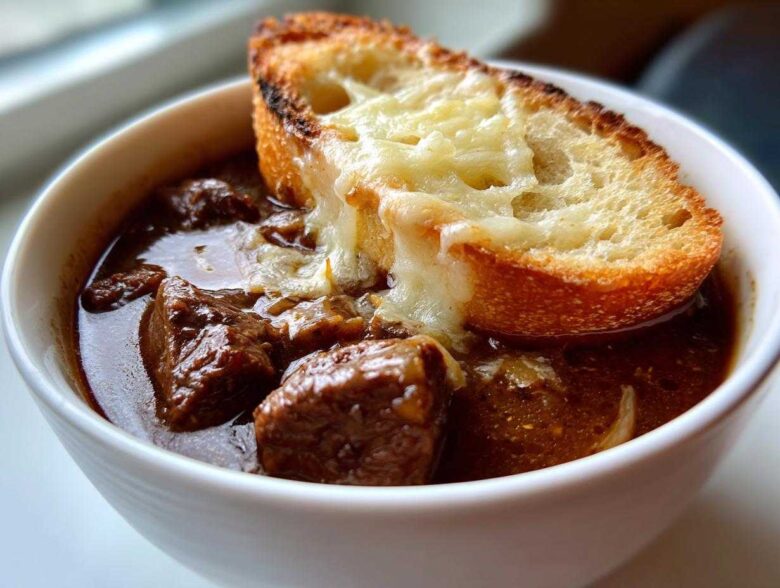
When the weather turns truly miserable, I don’t reach for soup, and I don’t just grab any old pot of beef stew. No, what I truly crave is the ultimate mashup of cozy perfection. That’s why I dedicated an entire winter to perfecting this french onion beef stew. It takes everything wonderful about that deeply savory, cheesy dipping experience from French Onion Soup—the deeply caramelized onions, the thyme, the rich broth that tastes like it simmered for three days—and stuffs it all around fork-tender chunks of beef. Trust me when I say, the secret is truly in the onions. If you rush that step, you end up with sweet onion soup, not this powerhouse of a meal. I’ve burned more batches than I care to admit, but now I know exactly how low and slow you have to go to get that glorious, molasses-dark flavor that makes this stew absolutely sing.
Why This french onion beef stew Recipe Delivers Deep Flavor
You are not just making a stew here; you are building layers of flavor that mimic that classic soup, but with the satisfying heft of a true main course. This combination is what elevates it into something truly special for a cold night. Every part of this dish has a job to do, from the flour dredge to the final cheese blanket.
- Tender Beef: We use chuck shoulder that breaks down beautifully with low, slow heat, giving you melt-in-your-mouth chunks, not chewy bits.
- Deep Onion Base: It’s all about patience with the onions—this sweet, savory foundation is non-negotiable.
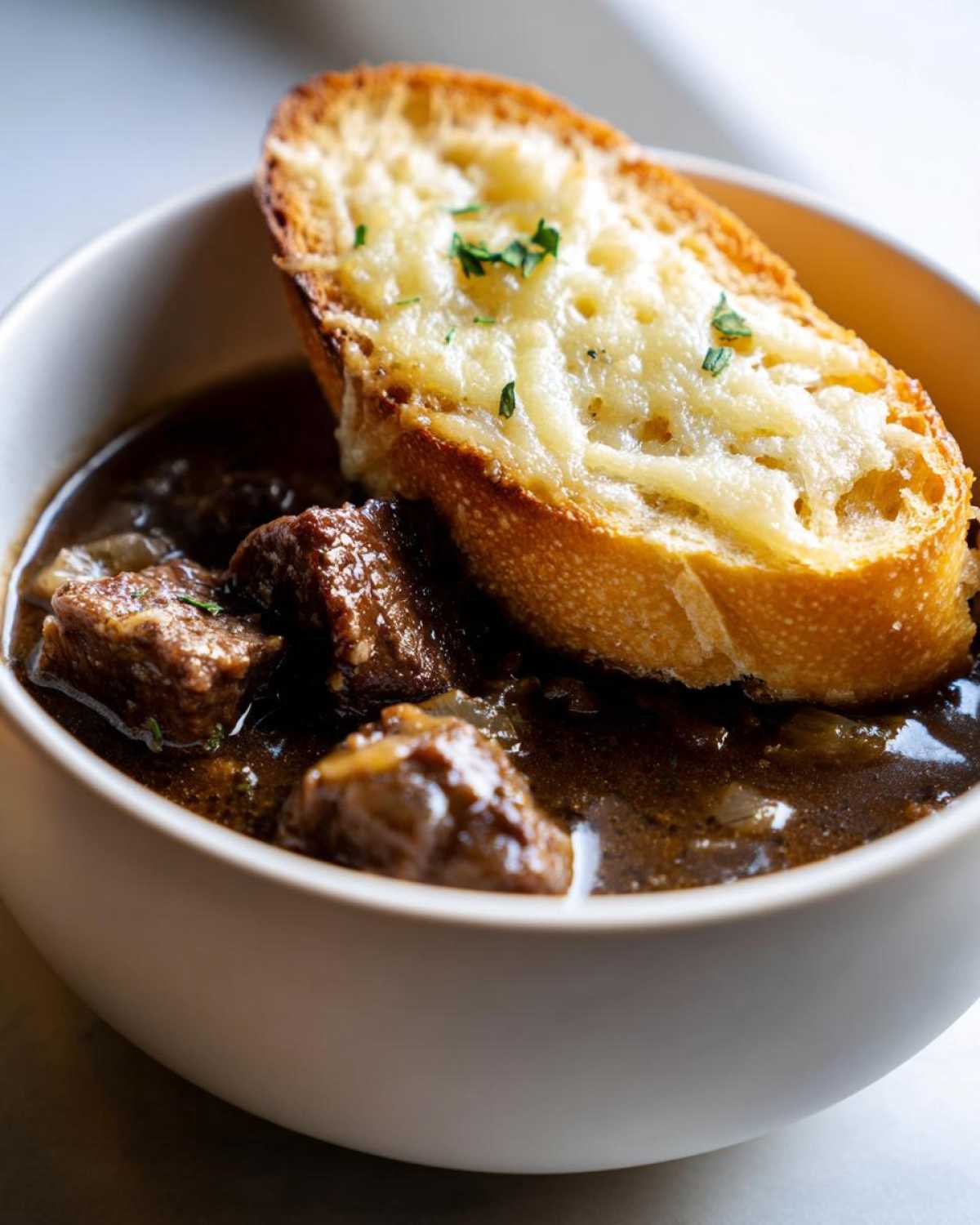
- Cheesy Topping: That final hit of Gruyère melts over a crusty slice of baguette right on top, giving you that authentic French Onion Soup finish.
If you’re looking for other ways to make your beef dishes truly shine, you should check out my guide on gourmet beef stew perfection—but trust me, this onion version is my favorite!
The Secret to Truly Caramelized Onions
Listen up, because this is where most people mess up the beautiful french onion beef stew. You cannot rush the onions! I mean it! We cook them low, usually medium-low heat, for at least 30 to 45 minutes. We add just a tiny pinch of sugar right at the beginning to encourage the browning process. You need to stir them gently every few minutes, scraping the bottom. If they start getting too dark too fast, turn the heat down immediately. You want them rich mahogany brown, not black and crispy! That slow transformation is the key to unlocking that incredible, savory depth.
Gathering Ingredients for Your french onion beef stew
Okay, now that we’ve obsessed over the onions, let’s talk about what else you need for this powerhouse of a stew. Since this recipe is an old family favorite, I’ve refined the ingredient list to make sure every component works hard. We aren’t adding a million things, but the things we include must be top-notch. Having everything ready before you start browning the meat makes the whole cooking process flow so much smoother!
Here is exactly what you’ll want to have on hand for six hearty servings. Remember, we are leaning into that rich, dark flavor so buy the best broth you can find!
- 3 lbs beef chuck, cut into 1.5-inch cubes (Don’t skimp on size!)
- 1/4 cup all-purpose flour (This is key for the thickening!)
- 1 teaspoon salt and 1/2 teaspoon black pepper
- 3 tablespoons olive oil, divided
- 3 lbs yellow onions, thinly sliced (This is a lot, but trust me, they cook down wonderfully!)
- 1 teaspoon sugar (The secret weapon for getting those onions dark)
- 2 cloves garlic, minced
- 1/2 cup dry red wine (I usually grab a cheap Merlot—it works great!)
- 6 cups beef broth, low sodium (Low sodium gives us control over the final salinity.)
- 2 tablespoons tomato paste
- 2 bay leaves
- 1 teaspoon dried thyme
- 1 tablespoon Worcestershire sauce
- 1 baguette, sliced 1 inch thick (For those cheesy hats later!)
- 8 ounces Gruyère cheese, shredded (The star melting cheese!)
Selecting the Best Cut for Tender Beef Stew
If you use the wrong beef, you end up with tough, chewy stew, and nobody wants that. For this slow-cooked favorite, you absolutely need to reach for beef chuck roast. Chuck contains connective tissue and fat that break down over the 3-hour simmer time, turning silky and tender. It’s perfect because it holds up structurally throughout the long cooking period.
You could try short ribs, but chuck is just easier and more economical for a big pot. Definitely skip stew meat sold pre-cut—it’s usually trimmed from tougher parts of the animal. You want that nice, marbled chunk you cut yourself. If you want to delve deeper before you shop, I wrote a whole piece on the best cuts for stew, which might help you feel confident at the butcher counter!
Ingredient Notes and Gruyère Substitutions
A couple of quick notes on the other essentials. First, that flour coating on the beef? That’s how we naturally thicken our stew base without adding flour later or making a sloppy slurry. It clings to the meat as it browns, adding body to the broth after the long simmer.
As for the cheese, Gruyère is non-negotiable for that authentic flavor profile, but I know it can be pricey, or sometimes your grocery store is sadly out. If you have to swap, go for an excellent Swiss cheese, like Emmentaler. It melts beautifully and has that necessary nutty sharpness. Avoid anything too soft or mild!
Step-by-Step Instructions for the Ultimate french onion beef stew
Alright, let’s get cooking! Since we are building deep flavor, just remember that Dutch oven is your best friend here. We’re tackling this in logical stages: prep, sear, caramelize, simmer, and finish. Don’t try to rush the browning or the onions; those are two non-negotiable moments where flavor is built. The total time looks long, but most of that is hands-off simmering time where you can put your feet up!
Browning the Beef and Building the Deep Flavor Stew Base
First things first, you’ve got to get that beef ready. Pat your cubes dry with paper towels—this is important because wet meat steams instead of searing! In a bowl, toss the dried beef vigorously with your flour, salt, and pepper until every piece has a light, even coating. That flour is going to help create our rich, savory stew base later on.
Heat up 2 tablespoons of olive oil in your big Dutch oven over medium-high heat. You want it nice and hot, showing just a little shimmer. Now, here’s the crucial part: brown the beef in batches. And I mean *batches*. If you crowd the pot, the temperature drops, and you get gray, steamed meat. We want deep brown crusts! Sear each side until you get those dark, flavorful brown bits—that fond—stuck to the bottom. This fond is pure gold, and it’s what makes the base of our Deep Flavor Stew Base. Once browned, take the beef out and set it aside.
Simmering and Achieving Thick and Tender Beef Stew
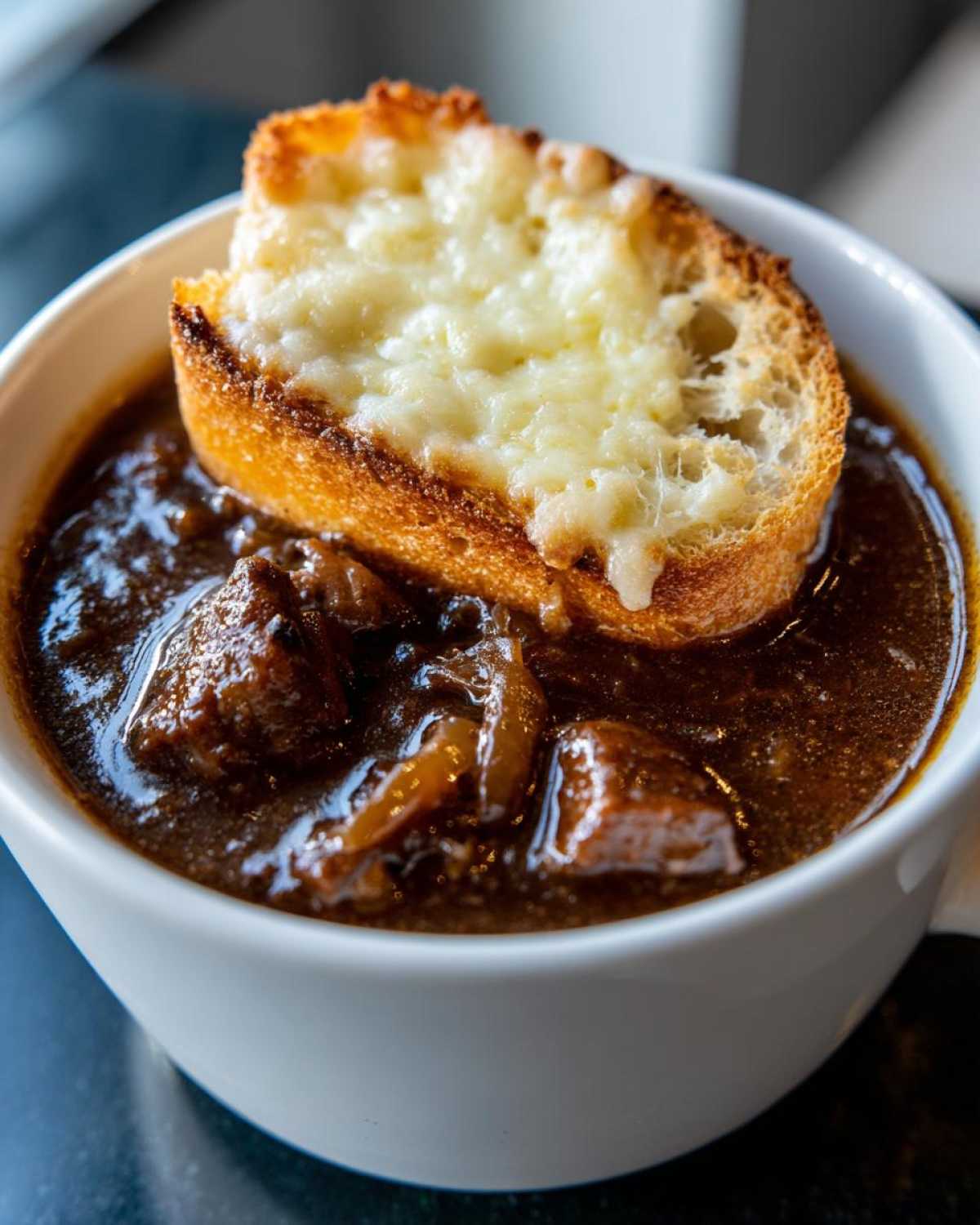
Now we tackle the onions following the 30-to-45-minute cooking process we discussed. Once those onions are perfectly caramelized and rich brown, toss in the garlic for just 60 seconds until you can smell it. If you’re using that luxurious red wine, pour it in now and use a wooden spoon to scrape up all those browned bits from the bottom of the pot—woohoo, more flavor extracted! Let that wine bubble down until it’s almost gone. You can read up on exactly how I manage that slow cook time over at how to caramelize onions for stew.
Stir in the tomato paste, and then bring that beautifully browned beef back into the pot. Pour in your beef broth until everything is submerged. Add your bay leaves and thyme. Bring the whole glorious mixture up to a gentle simmer. Once it’s bubbling softly, drop the heat way down to low, cover the pot tight, and let it do its magic. We want this to cook for 2.5 to 3 hours. Check it around the 2.5-hour mark; when that beef is so tender you can easily shred it with a fork, you’ll know it’s ready for the next stage. Before serving, make sure you fish out those bay leaves—we don’t want anyone accidentally crunching on those!
Finishing Touches: The Cheesy Gruyère Topping for Your french onion beef stew
This is the moment we’ve been waiting for! We’ve got this incredibly deep, savory, Thick and Tender Beef Stew base, but we have to give it the classic French Onion Soup crown. You absolutely cannot serve this french onion beef stew without that glorious, melted, bubbly cheese blanket on top. It turns a great meal into a showstopper.
We’re going to use those baguette slices we talked about. Lay them out on a sturdy baking sheet. Don’t overload them, or they get soggy before they melt! Pile a generous handful of that shredded Gruyère right onto each slice. Now, slide this sheet under your oven broiler. This is where you cannot walk away! Broilers are fast and furious; they can go from perfect to black charcoal in about ten seconds, I swear. Keep the door slightly ajar so you can watch it like a hawk.
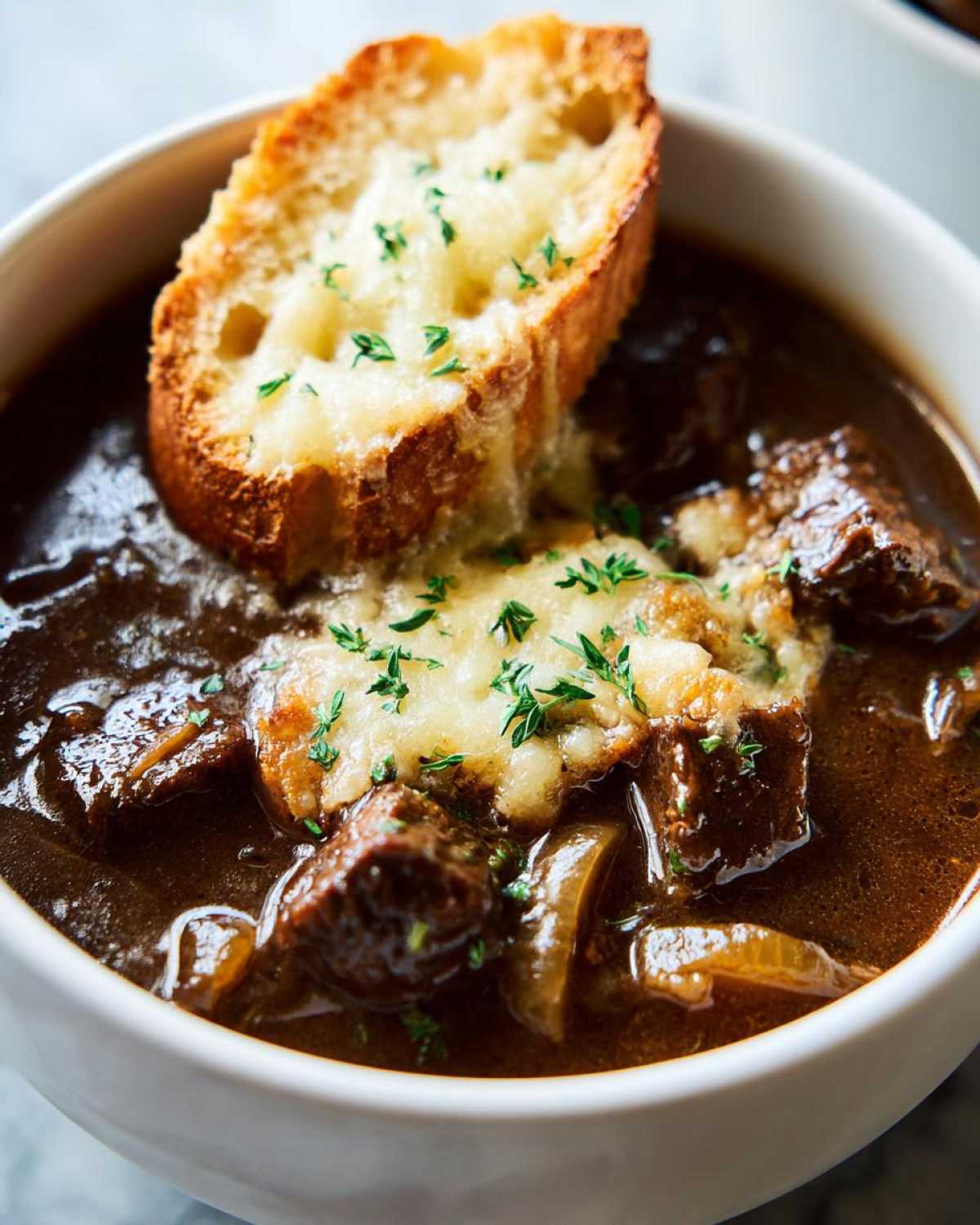
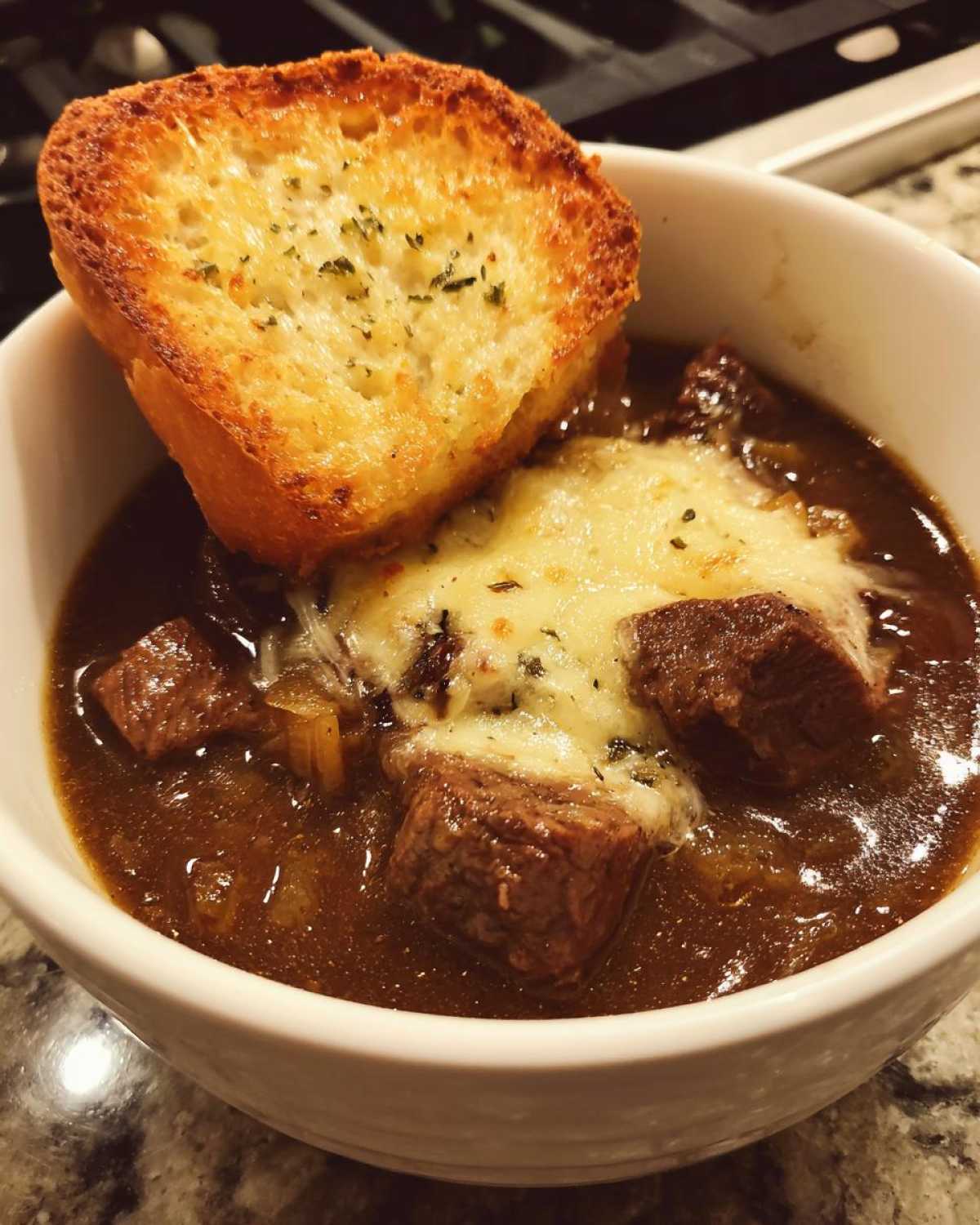 You only need 1 to 3 minutes for the cheese to get completely melted, bubbly, and develop those gorgeous little golden-brown spots. That nutty flavor from the Gruyère reacting to the heat is just heavenly. Once they look perfect, pull them out right away. Ladle the piping hot stew into deep bowls, and then carefully place one or two of those cheesy croutons right on top of each serving. They’ll sink just a tiny bit into the broth, softening slightly, but still holding their cheesy glory until the very last bite. It’s the perfect texture contrast for this rich dish. If you love meals finished this beautifully, you might want to check out my tips on other Gruyere Cheese Topped Meals!
Alternative Cooking Methods: Slow Cooker French Onion Stew and Instant Pot Beef Stew Recipe
I know not everyone has three hours to hover over a Dutch oven, even if that long simmer really makes the beef sing. That’s why I made sure this french onion beef stew translates beautifully to the newer gadgets we all have sitting on the counter! The key thing to remember, no matter which machine you use, is that you *must* still brown the beef and caramelize those onions on the stovetop first. If you skip those two steps and just toss everything in raw, you’re going to end up with stew that tastes like boiled beef and raw onions. We want complexity!
If you’re looking for more details on setting up those methods, I’ve got specialized guides, but here’s the quick rundown on how to adapt your ingredients:
Making it in the Slow Cooker French Onion Stew Method
After you’ve seared your beef and taken the time to get those onions perfectly caramelized and scraped the wine/fond bits up, just combine everything—the beef, the onions, broth, herbs, and Worcestershire sauce—right into your slow cooker insert. Make sure everything that needs to be submerged is covered by the broth!
Then, you just set the timer. You have two great options here. For a cozy weekend project, put it on low for about 7 to 8 hours. If you are desperate to have it ready after work, high heat will get the job done in about 3 to 4 hours. One thing to watch for: slow cookers don’t allow as much liquid evaporation as the open Dutch oven, so your Rich Beef Stew Recipe might be a touch thinner. If it is, just whip up a quick cornstarch slurry (a tablespoon of cornstarch mixed with cold water) and stir it in during the last 30 minutes of cooking. Check out my full Slow Cooker French Onion Stew guide for all my appliance tips!
Adapting for the Instant Pot Beef Stew Recipe
The Instant Pot is fantastic for speed, but speed means less flavor concentration unless you manage it right. You still need to do the browning and the onion caramelization right in the pot using the Sauté function first. Don’t be afraid to let those onions sit and brown properly on the sauté setting!
Once everything is mixed, seal it up and pressure cook it. Cooking chuck meat under pressure tenderizes it way faster than simmering. For 1.5-inch cubes, you’re usually looking at about 45 to 55 minutes on high pressure, followed by a natural pressure release (NPR) for at least 15 minutes. That NPR is my non-negotiable step for tender beef! If you want to dive deep into timings and liquid ratios for this specific dish, my Instant Pot Beef Stew Recipe article has the precise details you’d need!
Make Ahead Stew Recipes: Storing Your french onion beef stew
This is fantastic news for anyone who needs a solid weeknight dinner plan: This french onion beef stew is one of those glorious meals that tastes even better the next day! Honestly, I think it approaches perfection when I make it on Tuesday and serve it for dinner on Wednesday. All those deep, rich savory flavors from the caramelized onions and the beef finally get time to really marry together in the broth.
The key here is how you handle the cooling and storing process. You can’t just shove a steaming hot pot of stew into the fridge—that’s not safe and it won’t cool down quickly enough. You need to let it cool on the counter for maybe an hour until it’s just warm to the touch. Then, transfer your stew into airtight containers. If you’re just making the stew portion (without the bread or cheese), it lasts wonderfully in the fridge for three to four days. I actually find the flavors deepen even more by day three!
For reheating, always use the stovetop if you can. Don’t zap the whole thing in the microwave; it tends to cook the meat unevenly. Pour the stew into a heavy-bottomed pot over low to medium-low heat. Let it warm up slowly, stirring occasionally, until it’s steaming hot all the way through. You want that beautiful broth gently simmering.
But remember my golden rule of make ahead stew recipes: NEVER store the stew with the cheesy croutons on top! Those are strictly for the moment before you eat. The bread will turn into a soggy, flavorless mess sitting in the liquid overnight. When you are ready to serve those incredible leftovers, just make a fresh batch of cheesy bread under the broiler, ladle the hot stew into bowls, and top immediately. It’s basically a second, brand new gourmet dinner without any extra cooking time!
Serving Suggestions for This Hearty Winter Stews
When you pull this unbelievably rich french onion beef stew out of the kitchen, you’re done, right? Well, mostly! Since this is such a decadent, heavy dish—thanks to that beef, the concentrated onions, and that glorious cheesy topping—it actually pairs best with something really light on the side. You don’t want to weigh down the table with more heavy carbs or creamy sides, because the stew does all the heavy lifting!
My first suggestion is always a crisp, acidic counterpoint. Think thinly sliced cucumber salad with a light vinegar dressing, or maybe just some simple butter lettuce with a sharp Dijon vinaigrette. The brightness cuts right through the richness of the Gruyère and the dark, savory broth. It cleanses your palate between those deeply flavored spoonfuls.
 Now, while the cheesy baguette crouton is technically bread—and it’s fantastic—sometimes you need a little extra something to sop up the last smears of gravy from the bottom of your bowl. Since we already used a baguette, I sometimes switch things up and serve a side of something fluffy, like homemade Naan. I know, I know, it’s totally not French, but I promise you, a piece of warm soft, fluffy naan dipped into that last bit of broth is heaven. Just make sure you serve the Naan plain or with just a tiny brush of butter—no heavy garlic butter!
Ultimately, this dish stands alone as a complete meal, but a crisp salad on the side makes the whole experience feel balanced. It’s the perfect pairing for a truly hearty winter stew!
Frequently Asked Questions About french onion beef stew
It’s so easy to get caught up in the details when making a recipe as rich as this french onion beef stew, so I figured I’d tackle a few things folks often ask me after they’ve tried it! Sometimes the smallest ingredient swap or technique adjustment can make a big difference, so let’s make sure you feel totally confident before you start slicing onions.
Can I skip browning the beef for this Rich Beef Stew Recipe?
Oh, honey, please don’t! I know you might be tempted to skip that step if you’re trying to make it an Easy Weeknight Stew, but for this particular dish, browning the beef is absolutely critical. Remember all that brown stuff we scraped up from the bottom of the pot—the fond? That’s where the deep, complex flavor comes from. If you skip searing, you end up with flavorless, grayish meat swimming in broth instead of a rich base for this Rich Beef Stew Recipe.
The flour coating needs that dry, high heat chance to toast slightly, too. It prevents the stew from being watery later on. If you’re really strapped for time, at least sear those cubes in batches on high heat until you get a good crust on all sides. It’s worth the extra ten minutes, I promise!
How do I adjust the thickness if my stew is too thin?
This shouldn’t happen often if you used the flour dredge on the beef, as that usually thickens things up perfectly during that long, slow simmer. But hey, sometimes the broth is just thinner than we expect, especially if you used extra-lean beef or maybe diluted the broth a little too much.
If you find your stew isn’t coming out as thick as you’d like when it’s done simmering, don’t panic! You don’t want to add dry flour directly to the hot liquid, or you’ll get lumps—yuck! My trick is always to make a simple cornstarch slurry. Just take 1 tablespoon of cornstarch and mix it really well into about 2 tablespoons of *cold* water until it looks like thin milk. Then, stir that mixture right into your simmering stew during the last 15 minutes of cooking. Whisk gently, and you’ll watch it thicken right up into that perfect coating for your beef!
Is this considered a Savory French Dinner Idea?
Absolutely, 100%! This isn’t just a standard weeknight hamburger stew; this is definitely a showstopper. Combining the elegance of French Onion Soup with the rustic heartiness of a full stew makes this a truly special Savory French Dinner Idea.
It feels fancy because of the Gruyère and the deep, oniony complexity, but it’s really straightforward cooking because it’s mostly hands-off once you get those initial steps done. I usually pull this out when we have guests over in the fall or winter because it smells incredible simmering away on the stove all afternoon. It carries that impressive, gourmet weight without requiring fussy techniques!
Estimated Nutritional Values
Now, I want to be super clear about these numbers! Since we are dealing with a huge cut of beef chuck and tons of caramelized onions, the nutritional breakdown can wiggle around a bit depending on exactly how much broth you use or if you sneak an extra crouton when nobody is looking. These figures are my best best estimate based on standard portions for the recipe. This is certainly a more indulgent meal, but hey, it’s worth every single comforting bite!
This information is provided as a general guideline for one serving (which includes one bowl of stew and one cheesy crouton):
- Serving Size: 1 bowl stew with 1 crouton
- Calories: 650
- Sugar: 12 grams
- Sodium: 450 mg (This is relatively low because we started with low-sodium broth!)
- Fat: 30 grams
- Saturated Fat: 14 grams
- Unsaturated Fat: 16 grams
- Trans Fat: 0 grams
- Carbohydrates: 55 grams
- Fiber: 5 grams
- Protein: 45 grams
- Cholesterol: 130 mg
Since this is a very rich dish, I always make sure to serve it with a big, light green salad on the side to balance things out. Enjoy your absolutely incredible, beefy, cheesy creation!
PrintFrench Onion Beef Stew with Gruyère Crouton Topping

A hearty beef stew combining the deep, savory flavors of French Onion Soup with tender chunks of beef.
- Prep Time: 30 min
- Cook Time: 3 hr 15 min
- Total Time: 3 hr 45 min
- Yield: 6 servings
- Category: Dinner
- Method: Stovetop/Dutch Oven
- Cuisine: French
- Diet: Low Fat
Ingredients
- 3 lbs beef chuck, cut into 1.5-inch cubes
- 1/4 cup all-purpose flour
- 1 teaspoon salt
- 1/2 teaspoon black pepper
- 3 tablespoons olive oil, divided
- 3 lbs yellow onions, thinly sliced
- 1 teaspoon sugar
- 2 cloves garlic, minced
- 1/2 cup dry red wine (optional)
- 6 cups beef broth, low sodium
- 2 tablespoons tomato paste
- 2 bay leaves
- 1 teaspoon dried thyme
- 1 tablespoon Worcestershire sauce
- 1 baguette, sliced 1 inch thick
- 8 ounces Gruyère cheese, shredded
Instructions
- Pat the beef cubes dry. Toss the beef with flour, salt, and pepper until lightly coated.
- Heat 2 tablespoons of olive oil in a large Dutch oven over medium-high heat. Brown the beef in batches, ensuring not to overcrowd the pot. Remove the browned beef and set aside.
- Reduce the heat to medium-low. Add the remaining 1 tablespoon of olive oil to the pot. Add the sliced onions and sugar. Cook slowly, stirring occasionally, for 30 to 45 minutes until the onions are deep brown and fully caramelized. Do not rush this step; low and slow heat prevents burning and develops deep flavor.
- Add the minced garlic to the onions and cook for 1 minute until fragrant.
- If using wine, pour it in and scrape up any browned bits from the bottom of the pot. Let the wine reduce by half, about 3 minutes.
- Stir in the tomato paste. Return the browned beef to the pot.
- Pour in the beef broth. Add the bay leaves and thyme. Bring the mixture to a simmer, then reduce the heat to low, cover the pot, and cook for 2.5 to 3 hours, or until the beef is fork-tender.
- Remove the bay leaves. Taste and adjust seasoning if needed. The stew should be naturally thickened by the flour coating on the beef and the reduced onions.
- Preheat your oven broiler. Arrange the baguette slices on a baking sheet. Top each slice generously with shredded Gruyère cheese. Broil for 1 to 3 minutes until the cheese is melted and bubbly brown. Watch closely to prevent burning.
- Ladle the hot stew into individual bowls. Top each serving with one or two cheesy baguette slices immediately before serving.
Notes
- For slow cooker preparation, brown the beef and caramelize the onions on the stovetop first. Combine all ingredients except the bread and cheese in the slow cooker. Cook on low for 7 to 8 hours or high for 3 to 4 hours. Thicken with a cornstarch slurry if necessary before serving.
- This stew tastes better the next day. Cool completely, refrigerate overnight, and reheat gently on the stovetop. Add the cheesy croutons just before serving.
- Chuck roast is the best cut for this stew as it breaks down beautifully during long, slow cooking.
Nutrition
- Serving Size: 1 bowl stew with 1 crouton
- Calories: 650
- Sugar: 12
- Sodium: 450
- Fat: 30
- Saturated Fat: 14
- Unsaturated Fat: 16
- Trans Fat: 0
- Carbohydrates: 55
- Fiber: 5
- Protein: 45
- Cholesterol: 130