

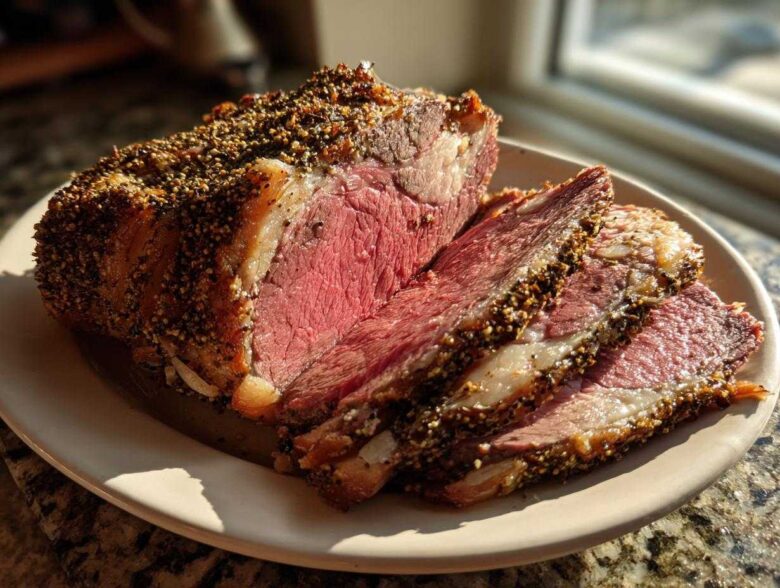
Listen, if you need a showstopper for Christmas, or frankly, any Sunday where you want to feel like the king or queen of the kitchen, you HAVE to master the **rib roast**. I remember being totally intimidated by these huge cuts of beef. Seriously, they look fancy, but I promise you, once you get the hang of this, it’s easier than chasing down a good sale on parsley.
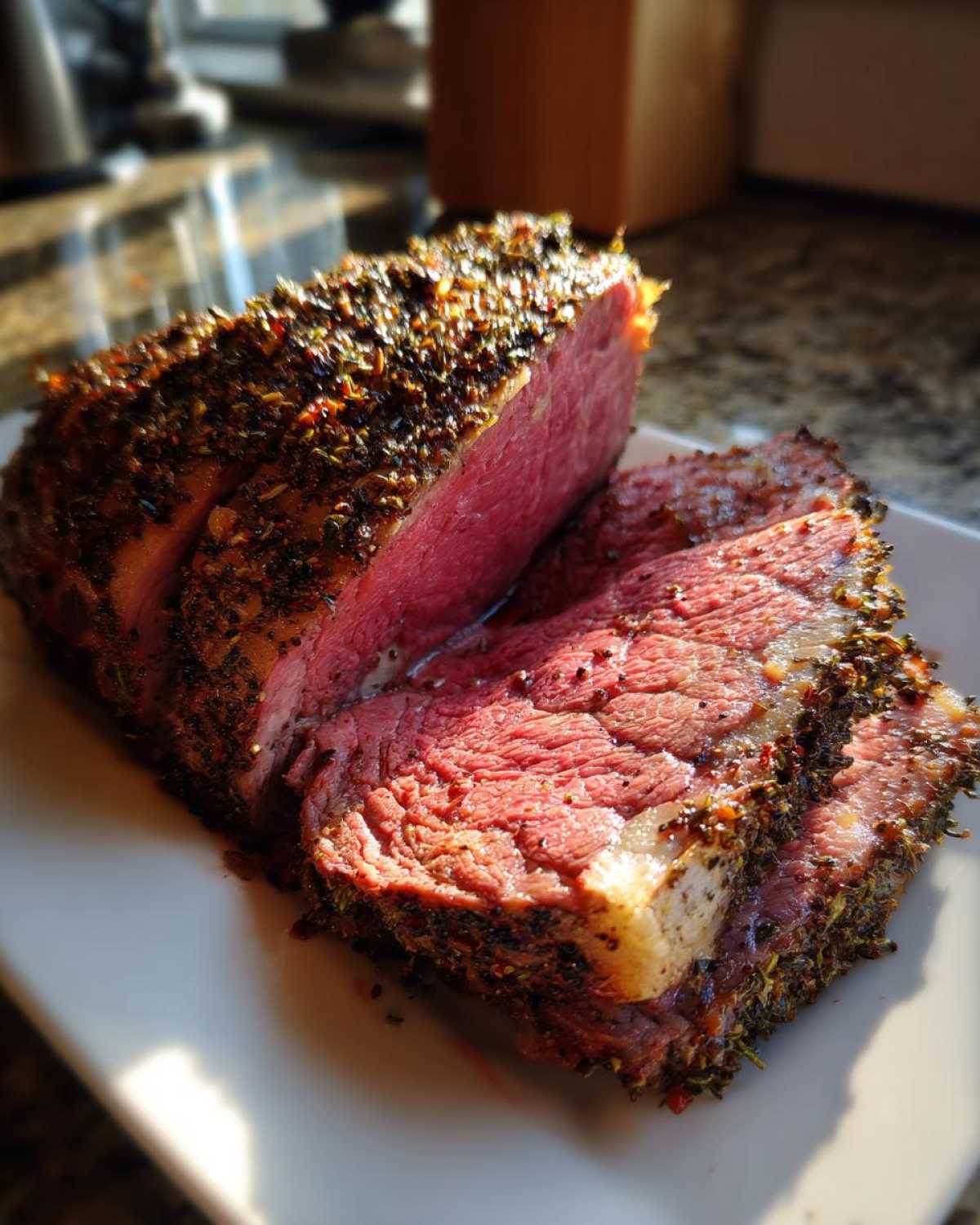
This recipe right here? It’s my ultimate go-to for a standing **rib roast**. We’re wrapping that beauty in a savory garlic and herb crust that gets perfectly crisp while the inside melts in your mouth. Forget dry roasts; I’ve tinkered with the tempering and temperature until I guarantee you a **juicy beef roast** every single time. Trust me, cooking a huge piece of meat used to stress me out, but this foolproof **prime rib recipe** changed everything.
Why This Herb-Crusted Rib Roast is Your New Holiday Favorite
Honestly, this recipe takes the guesswork out of hosting. You don’t need to stress about impressing your in-laws anymore because this standing **rib roast** makes you look like a culinary genius!
- Guaranteed tenderness every single time you make it.
- Our easy, two-stage temperature management system keeps things simple.
- It’s the most gorgeous **Christmas Dinner Main Course** presentation possible.
- That savory crust? That’s just heaven, if you ask me. We need to use that herb crust on everything now—I saw a recipe for Mississippi Pot Roast Sliders that I am dying to try next week!
Gathering Ingredients for Your Perfect Rib Roast
Okay, look at this list. These aren’t fancy ingredients, but the quality matters when you’re dealing with a roast this important. You need a **standing rib roast** that’s about 5 to 7 pounds, maybe two or three ribs if you’re feeling ambitious!
For the flavor layer, make sure your garlic is minced tiny, and use *fresh* rosemary and thyme—the dried stuff just doesn’t give you that bright, amazing punch for the crust. I always treat my herbs right, maybe pairing them with some Garlic Parmesan Hasselback Potatoes later on.
- 1 (5-7 pound) **standing rib roast**, 2-3 ribs
- 3 tablespoons olive oil
- 4 cloves garlic, minced
- 2 tablespoons fresh rosemary, chopped
- 1 tablespoon fresh thyme leaves
- 1 tablespoon coarse salt (this helps the crust!)
- 1 teaspoon black pepper
- 1 tablespoon Dijon mustard
Essential Equipment for Cooking a Standing Rib Roast
You don’t need a million gadgets for a fantastic **rib roast**, but these three things are non-negotiable if you want that perfect result. Seriously, don’t even think about skipping the meat thermometer!
First, you absolutely must have a sturdy roasting pan with a rack inside. That rack keeps the beef elevated so the heat circulates properly underneath. Second, grabbing some parchment is smart for easy cleanup later. But the star here is the meat thermometer—it’s the only way to guarantee your **Perfect Medium Rare Roast** without cutting into it! Paired with some Twice-Baked Potatoes, you’ve got dinner handled.
How to Cook Rib Roast: Step-by-Step Oven Instructions
Alright, this is where the magic happens. Do not rush the first step! You need to take the roast out of the fridge for a good two or maybe even three hours before you even think about turning on the oven. It needs time to warm up evenly, which is half the battle for a **tender roast beef**. Once tempered, pat it completely dry—moisture is the enemy of good crust!
We are using a two-stage heat attack here. You’ll preheat to a blazing 450 degrees for the sear, and then immediately drop it down to 325 degrees. Remember that crucial 20-to-30-minute resting period after it comes out? It sounds long, but that rest is what keeps all those glorious juices trapped inside your **rib roast** instead of spilling onto your cutting board.
Preparing the **Herb Crusted Roast** Rub
First, you’re going to brush the entire surface of that gorgeous piece of beef with the mix of olive oil and Dijon mustard. This sticky base is our secret weapon! It acts like glue for the flavor rub. Then, take your mixture of garlic, rosemary, thyme, salt, and pepper and press it firmly all over the surface. I mean press it in there—make sure every spot gets coated. That creates the most incredible savory crust when it roasts.
The Critical **Roast Temperature Guide** for Doneness
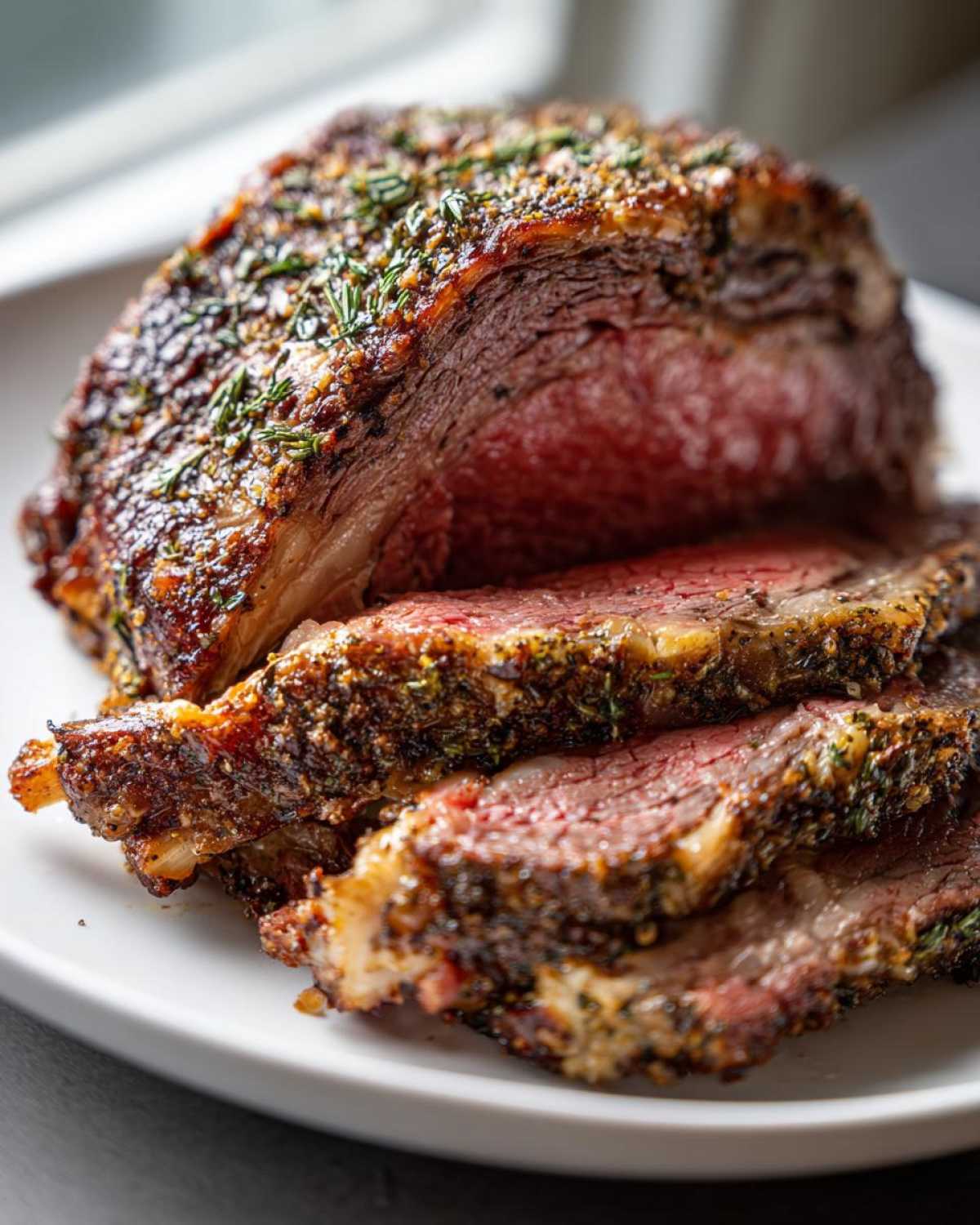
Start high at 450°F for just 15 minutes to give that crust a head start. Then, drop the oven down to 325°F. This lower temperature is what ensures a **juicy beef roast** throughout. Start checking the temp early! For that perfect medium-rare you’ve been dreaming of, you need to pull it when the thermometer hits between 125°F and 130°F. Don’t panic when you see that lower number; the internal temp keeps climbing 5 to 10 degrees while it rests. If you’re serving this for the holidays, you can find out more about timing it perfectly with our guide to making Foolproof Yorkshire Pudding!
Expert Tips for a Juicy Beef Roast Every Time
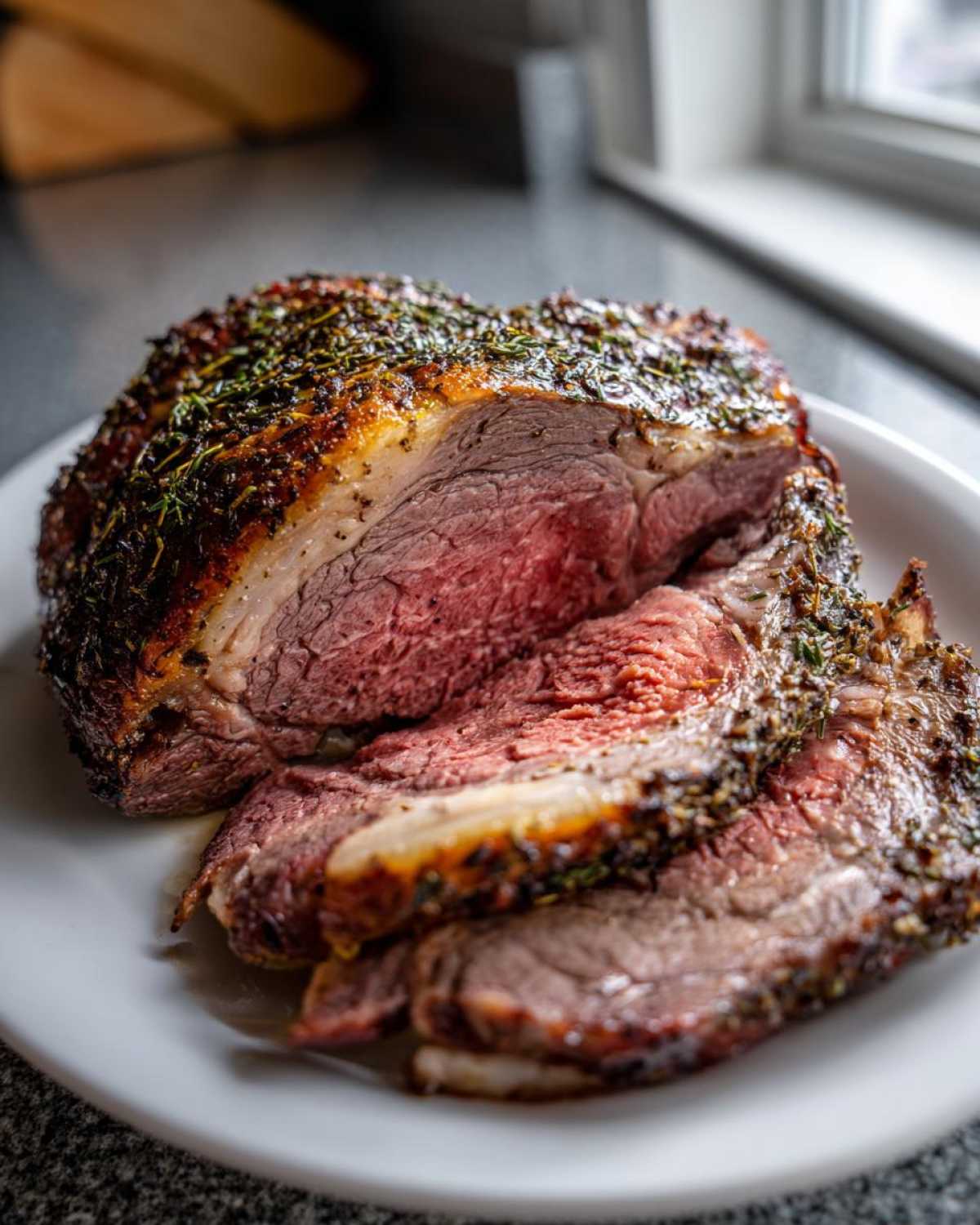
I’ve learned a few tricks over the years when dealing with these big, beautiful cuts of beef. Firstly, and I can’t scream this loud enough: **Resting is everything!** If you cut into that roast right when it comes out of the oven, all the beautiful juices you worked so hard to keep inside will flood out onto your cutting board. Let it rest for a solid 20 to 30 minutes, tented loosely with foil, so the internal pressure settles. This makes the difference between a really good roast and the most **tender roast beef** you’ve ever had.
Also, if you want a truly shattering crust, watch your broiler settings. If you feel like the herb crust didn’t quite crisp up enough at the lower temperature, you can flash it under the broiler for just two or three minutes right at the end. But you must stand there—I mean literally stare at it—because it goes from perfect to burned black quicker than you can say “roast temperature guide!” Speaking of maximizing moisture, you should check out my thoughts on getting a Juicy Pork Loin Roast; the resting principals are exactly the same!
Mastering the **Beef Roast Carving Tips**
Carving this **rib roast** correctly is key to keeping every slice perfect. If your roast has bones, which it should for the best flavor, you need to slice right in the space between the bones. Don’t try to saw through them; just let your sharp knife guide you. This keeps the slices neat and makes serving a breeze.
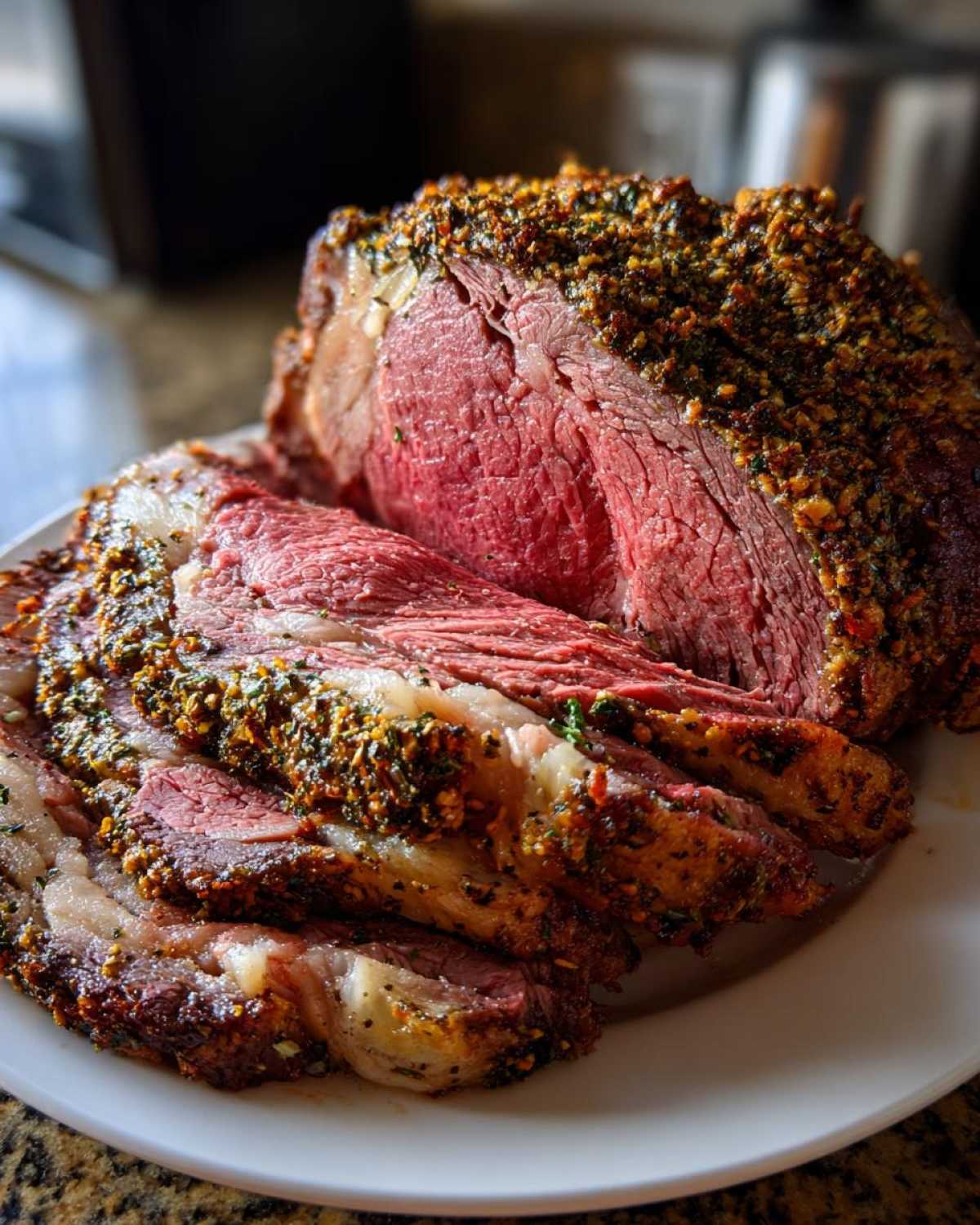
Keep your slices thick, maybe an inch or so, especially if you aren’t serving a huge crowd. Thicker slices stay juicier longer on the plate. Once you’ve carved your portion, lay the bone section back down to keep the remaining roast warm while you serve!
Serving Suggestions for Your Holiday Rib Roast
A centerpiece like this requires sides that can stand up to its impressive flavor, right? You don’t want something weak that disappears next to this magnificent **standing rib roast**! I always focus on balance. Since the roast is rich and savory, I love pairing it with something earthy or creamy to cut through that richness.
Think roasted root vegetables—carrots and parsnips tossed with a little balsamic vinegar really shine here. And of course, potatoes are mandatory for any good **Sunday Roast Recipe**. Instead of plain mashed potatoes, I always whip up a batch of cheesy scalloped potatoes, inspired by recipes like this amazing Scalloped Potatoes and Ham Casserole, which bring that creamy indulgence we all crave!
Storing and Reheating Your Leftover Rib Roast
Oh boy, leftovers! If you’re lucky enough to have any of this incredible roast leftover, you need to treat it right. Wrap the slices tightly in plastic wrap, and then pop them into an airtight container in the fridge. It should last beautifully for about three or four days—though honestly, ours never lasts that long!
When you go to reheat it, please, please don’t just toss it in the microwave naked! That’s a fast ticket to tough, dry beef. My secret is to slice the leftover meat very thin, toss it in a drizzle of beef broth or even just water, and warm it gently in a covered pan over low heat. It keeps that amazing texture. If you’re looking for what to do with leftover ham next week, I have some great ideas for Ham Salad, but for the beef, keep it simple!
Frequently Asked Questions About Cooking a Prime Rib Recipe
It’s funny how many questions pop up once you commit to cooking something this magnificent! I get asked all the time about roasting smaller joints or if the method works for different things. Don’t worry if you’re nervous; everyone starts somewhere!
Can I use this method for a smaller roast, say just one rib?
Yes, absolutely! That’s what I love about this **prime rib recipe**—it scales well. However, smaller roasts, like a single rib, cook much faster, and reducing the heat after the initial sear might dry it out too quickly. For a very small roast, I sometimes skip the initial 450°F blast and just cook the whole thing at 325°F, checking the internal temperature much sooner. You have to be super diligent with the thermometer!
Do you have any specific Cross Rib Roast instructions?
That’s a great question about the **Cross Rib Roast instructions**! A cross rib is usually a leaner cut, so it doesn’t have as much fat cap to protect it during the high-heat sear. My recommendation is to be gentler with that initial high-heat blast. Stick to 10 minutes at 450°F instead of 15, and keep a closer eye on it. You want a lovely **savory crust recipe** result, but you don’t want to scorch that leaner meat.
How do I avoid that gray band just under the crust?
Ah, the dreaded gray band! That happens when the outer layer of meat overcooks before the middle hits the right temperature. This recipe’s two-stage cooking is designed to minimize that, but the absolute best trick you can use for that **perfect medium rare roast** result is making sure your roast is completely tempered—two to three hours out on the counter is key! Also, covering it loosely with foil while it rests helps insulate the edge just a bit more.
Is this too complicated for a regular Sunday Roast Recipe?
Not at all! While it’s perfect for the holidays, it works for a big Sunday meal too. If you’re overwhelmed by the size, you can easily use this recipe for a nice thick chuck roast for an **oven roasted beef** night instead. Just treat it the same way—season it well and roast it low and slow until it’s fork-tender!
If you want sides that can handle the richness, I always turn to hearty things like slow-cooked Vegetable Beef Soup flavors, even if it’s not soup, or anything mashed. Good luck—you’ve got this!
Estimated Nutritional Data for Herb-Crusted Rib Roast
Now, let’s talk numbers briefly. Since this is a massive centerpiece dish, the nutrition breaks down quite well per serving, especially since we’re aiming for that lean medium-rare interior. Remember, these numbers are just estimates based on the 6-ounce serving size and the ingredients listed, so they can definitely change depending on how much of that herb rub you devour!
- Serving Size: 6 ounces cooked meat
- Calories: 450
- Protein: 40
- Fat: 30 (Saturated Fat: 12)
- Carbohydrates: 0
- Sodium: 350
The Ultimate Herb-Crusted Prime Rib Roast
A straightforward recipe for a tender, juicy standing rib roast featuring a savory garlic and herb crust, perfect for holiday meals.
- Prep Time: 20 min
- Cook Time: 2 hours
- Total Time: 2 hours 20 min
- Yield: 6-8 servings
- Category: Main Course
- Method: Oven Roasting
- Cuisine: American
- Diet: Low Fat
Ingredients
- 1 (5-7 pound) standing rib roast, 2-3 ribs
- 3 tablespoons olive oil
- 4 cloves garlic, minced
- 2 tablespoons fresh rosemary, chopped
- 1 tablespoon fresh thyme leaves
- 1 tablespoon coarse salt
- 1 teaspoon black pepper
- 1 tablespoon Dijon mustard
Instructions
- Remove the roast from the refrigerator 2 to 3 hours before cooking to allow it to come to room temperature. Pat the entire surface dry with paper towels.
- Preheat your oven to 450 degrees Fahrenheit (232 degrees Celsius).
- In a small bowl, combine the minced garlic, rosemary, thyme, salt, and pepper to create the herb rub.
- In a separate small bowl, mix the olive oil and Dijon mustard. Brush this mixture evenly over the entire surface of the roast.
- Rub the herb mixture firmly onto the roast, pressing it into the meat.
- Place the roast, fat side up, in a roasting pan on a rack.
- Roast at 450 degrees Fahrenheit for 15 minutes.
- Reduce the oven temperature to 325 degrees Fahrenheit (163 degrees Celsius). Continue roasting until the internal temperature reaches your desired doneness (see temperature guide below). A good starting point is about 13-15 minutes per pound at this lower temperature.
- Use a meat thermometer inserted into the thickest part of the roast, avoiding bone. For medium-rare, remove the roast when the thermometer reads 125 to 130 degrees Fahrenheit (52 to 54 degrees Celsius).
- Remove the roast from the oven. Tent it loosely with aluminum foil and let it rest for at least 20 to 30 minutes before carving. The internal temperature will rise by 5 to 10 degrees during resting.
- Carve between the bones into thick slices and serve.
Notes
- For a cross rib roast, cooking time may vary slightly; monitor the internal temperature closely.
- If you prefer a crispier crust, you can briefly place the roast under the broiler for the last 2-3 minutes, watching carefully to prevent burning.
- Resting the roast is crucial for retaining juices; do not skip this step.
Nutrition
- Serving Size: 6 ounces cooked meat
- Calories: 450
- Sugar: 0
- Sodium: 350
- Fat: 30
- Saturated Fat: 12
- Unsaturated Fat: 18
- Trans Fat: 0
- Carbohydrates: 0
- Fiber: 0
- Protein: 40
- Cholesterol: 140