

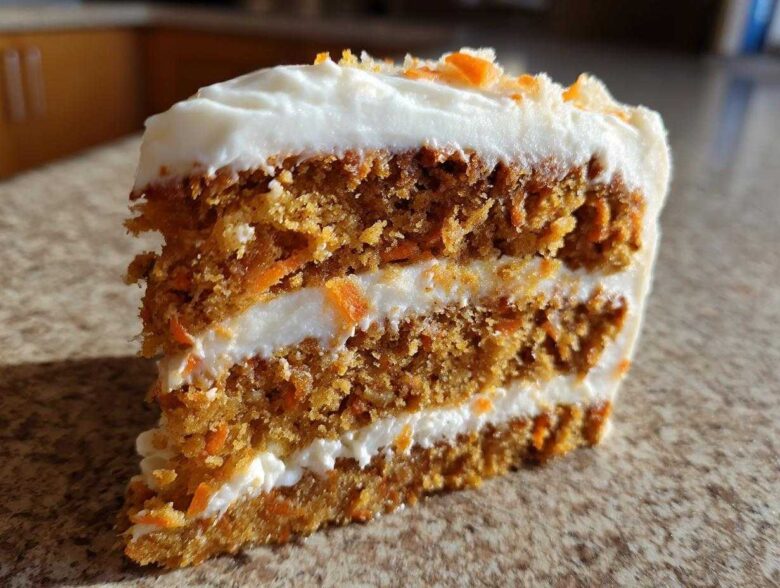
Honestly, how many times have you gone through the effort of baking a beautiful, spiced cake only to find the center dry as dust? It’s the baking emergency we all dread! Well, I’ve been messing around in the kitchen for years, trying every trick in the book, and I finally nailed the ultimate, nearly foolproof carrot cake recipe. This isn’t just *a* recipe; this is the one that guarantees a deeply moist, tender crumb every single time, thanks to a non-negotiable ratio of oil and how we combine our simple ingredients. Forget those disappointing, crumbly slices—this one sets a new standard!
We’re getting rid of cake anxiety right now. My secret weapon is focusing on moisture retention from step one right through to the frosting. I’ve tested this so many times that I practically know the batter by touch. If you follow these steps for the classic cream cheese frosting, you are going to boast about this cake all week long.
Why This is the Ultimate Moist Carrot Cake Recipe
I’m convinced that most recipes fail because they treat moisture as an accident, but that’s not how we operate here! This Moist Carrot Cake stands apart because we treat every single ingredient as a moisture-delivery system. It’s easily the Best Carrot Cake Ever because we aren’t guessing—we are strategically building flavor and tenderness. When you see how simple the process is, you’ll understand why this has become my go-to when anyone asks for a great cake. I developed this method after seeing too many beautiful cakes fall flat on texture, but now, thanks to a specific ratio of oil and how we combine our simple ingredients, it’s foolproof.
The foundation is solid, but the little details push it over the top. I’ve included some optional flair, but even sticking to the basics guarantees an incredible result. If you follow these steps for the ultimate carrot cake experience, you are going to boast about this cake all week long.
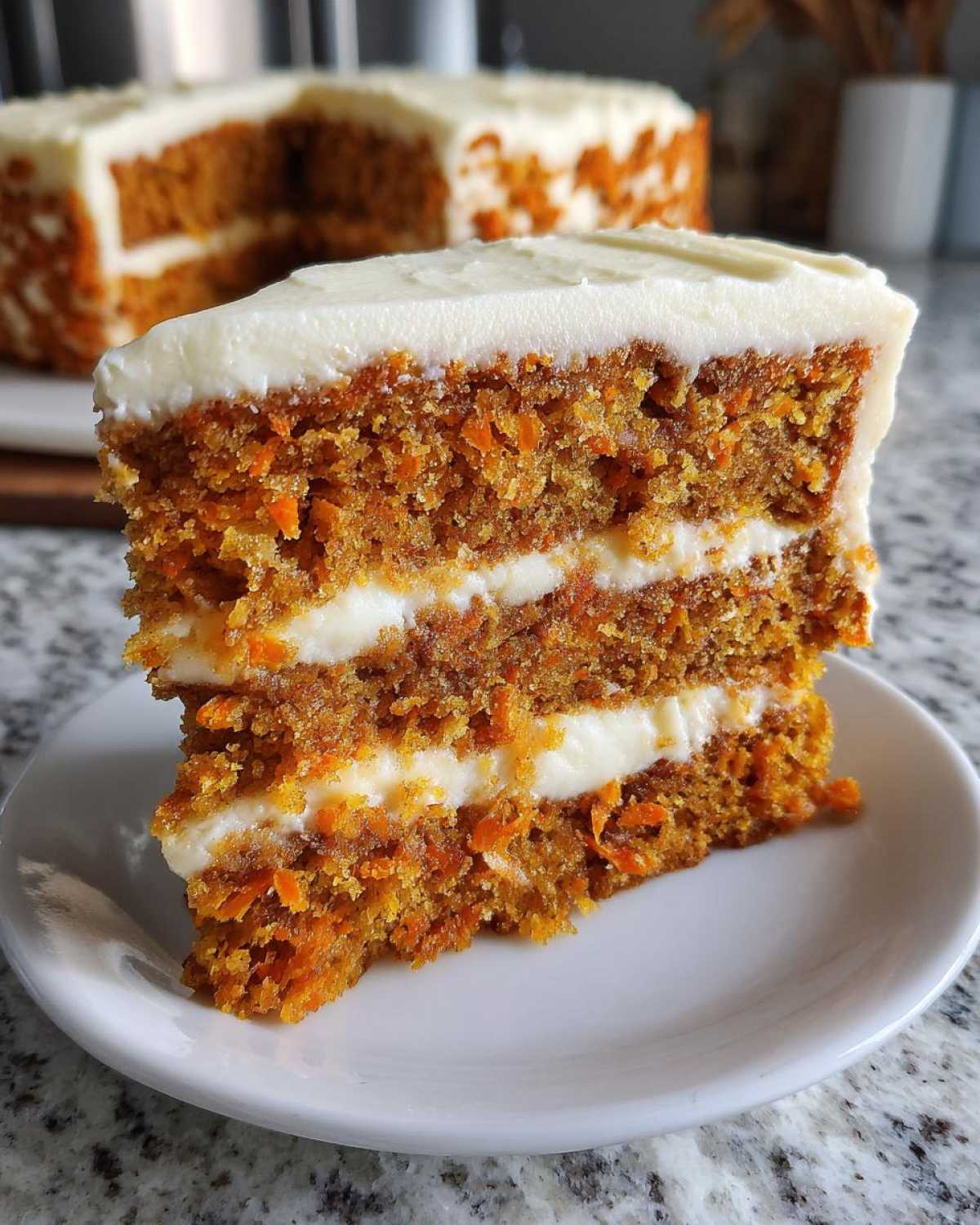
The Secret to a Perfectly Spiced Cake
A great carrot cake needs a warm hug of spice, not a punch in the face! This is why I insist on using cinnamon, nutmeg, ginger, and even a tiny hint of cloves. It’s all part of the deeper flavor profile we achieve in this Spiced Carrot Cake Tutorial. Too much of one spice screams too loud, but blending them evenly means the spices support the sweet earthiness of the carrots. It’s subtle, warm, and complex—exactly what you want in a Classic Carrot Cake Recipe.
Moist Cake Secrets: Oil vs. Butter
Here’s where we talk about texture, folks. Look, I love the flavor butter gives, but for supreme moisture, oil wins hands down in this particular carrot cake recipe. Oil stays liquid at room temperature, which means your cake stays soft and fluffy long after it cools down. Butter solidifies, making cakes feel dense or dry quickly. These Moist Cake Secrets mean you can bake this cake on Monday and it’ll still taste fresh on Thursday. Don’t fight me on the oil—it’s the key to making this cake truly great!
Gathering Ingredients for Your Classic Carrot Cake Recipe
Okay, let’s get our mise en place ready! Having everything measured out before we even touch the mixing bowls makes the actual baking assembly so smooth. This list is what separates a frantic baking session from a relaxing ‘weekend baking project.’ Remember, for the Classic Carrot Cake Recipe, precision matters, especially with the leavening agents and the spices we talked about earlier.
For your beautiful cake layers, here’s what you’ll need:
- 2 cups all-purpose flour
- 2 teaspoons baking soda
- 1 teaspoon ground cinnamon
- 1/2 teaspoon ground nutmeg
- 1/2 teaspoon ground ginger
- 1/4 teaspoon ground cloves
- 1/2 teaspoon salt
- 1 1/2 cups granulated sugar
- 1 cup vegetable oil (Don’t even think about swapping this yet—we’ll discuss it below!)
- 4 large eggs
- 2 teaspoons vanilla extract
- 3 cups grated carrots (Make sure these are fresh and finely grated!)
- 1 cup chopped pecans or walnuts (If you’re feeling like nuts are too much hassle, skip ’em, but they add lovely crunch!)
And for the star of the show, that rich, tangy Carrot Cake with Cream Cheese Frosting:
- 8 ounces cream cheese, softened
- 1/2 cup unsalted butter, softened
- 4 cups powdered sugar, sifted (I mean it, sift it!)
- 1 teaspoon vanilla extract
This feels like a lot of ingredients, but these are the components that turn a basic batter into a truly rich cake. We’ll talk about why substituting anything here could be a mistake in the next section.
Ingredient Notes and Substitutions for This Carrot Cake Recipe
Let’s clear up a few common questions right now because these details are crucial for a phenomenal result. First off, those carrots. You must grate them yourself. Pre-shredded carrots from the bag are just too dry, and they won’t release the moisture we need. I like to use the fine side of my box grater—they practically melt into the cake!
Next, the oil. I know some people prefer butter for flavor, but for this specific carrot cake recipe emphasizing moisture, the vegetable oil is non-negotiable. It’s what keeps that tender crumb soft for days. If you have a serious allergy and must substitute, you’re venturing into unknown territory for this specific formula, but honestly, the oil is a core part of the ‘moist cake secrets’ here.
Finally, if you want an extra layer of wetness and tang that I absolutely adore in my flavorful cake recipes, try folding in about 1/2 cup of very well-drained crushed pineapple along with the carrots. It adds that lovely complexity without making the batter runny, I promise!
How to Prepare the Ultimate Moist Carrot Cake Recipe
This is the part where the magic truly happens, and if you’ve followed along so far, you’re halfway to the best cake you’ve ever made. Before we dive in, get your oven cranked up to 350°F (175°C)! That’s our perfect temperature for baking this carrot cake recipe evenly. Make sure you’ve greased and floured whichever pan you are using—whether that’s a 9×13 inch pan or your two 9-inch rounds. I swear by my homemade pan release, but regular grease and flour works mighty fine too.
First things first: whisk your dry stuff together in a medium bowl—that’s the flour, baking soda, and all those beautiful spices we mentioned. Get that nice and airy, and set it aside. Now grab your biggest bowl for the wet elements. Whisk the oil, sugar, eggs, and vanilla together until they are looking happy and unified. This mixture is the reason your cake will be so tender, so give it a good minute together!
Next, we introduce the dry mix to the wet mix. Here’s where our focus on texture comes in, so pay attention!
Mixing the Batter: Avoiding Overmixing in This Carrot Cake Recipe
When adding the dry ingredients to the oil mixture, you need to be gentle—really gentle! Mix them only until you can’t see streaks of white flour anymore. Seriously, STOP mixing then! If you keep going, you start developing gluten, and that’s what turns a soft, moist cake into something tougher than an old shoe. We want tender, not tough! Once just combined, gently fold in your three cups of grated carrots and any nuts you are using. That’s it! Don’t stir it aggressively; folding keeps all those air bubbles we worked so hard to create intact. This is a primary rule for this carrot cake recipe.
Baking Times and Testing Doneness
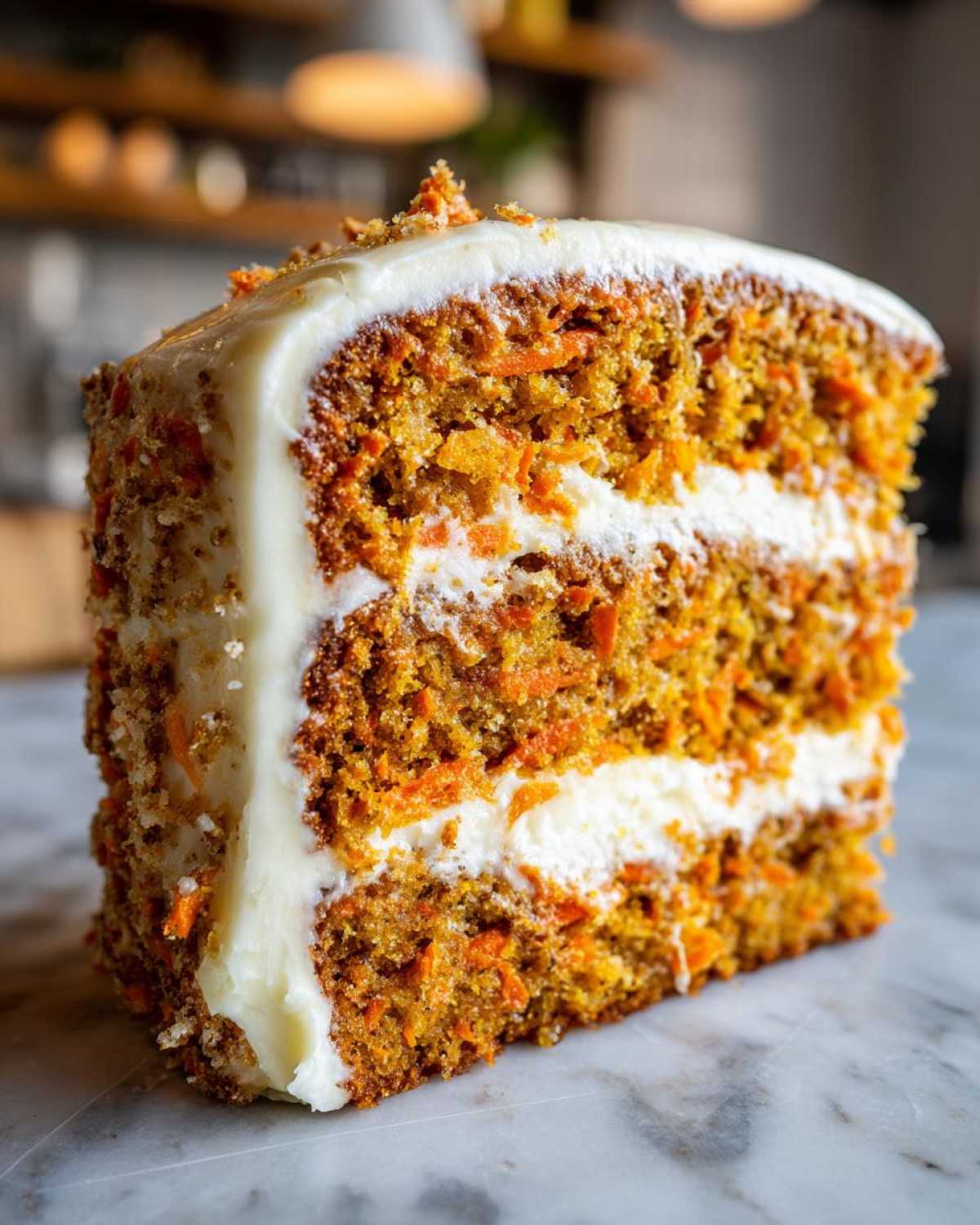
Once the batter is evenly distributed in your prepared pan(s), it’s time for the oven. If you’re using the 9×13 pan, plan on about 30 to 35 minutes. If you opted for the two 9-inch rounds, they might need a minute or two longer, maybe closer to 40 minutes, because the heat has to travel further down in those deep layers. You need to test them right at the 30-minute mark, though!
The ultimate test, as my mom always taught me, is the wooden pick test. Slide a thin wooden pick right into the very center of the cake. If it comes out clean, or with just a few moist, sticky crumbs clinging to it—you’ve won! If it comes out gooey, give it five more minutes and check again. Don’t forget to let the cake cool completely on a rack before you even think about frosting it, or you’ll have a melted mess, which is an issue even my make-ahead breakfast recipes don’t suffer from!
Crafting the Classic Carrot Cake with Cream Cheese Frosting
The cake might be moist perfection, but honestly, it’s not finished until we drown it in the proper topping. The perfect partner for this spicy cake is, of course, the rich, tangy Carrot Cake with Cream Cheese Frosting. To get that iconic texture, you absolutely must start with room-temperature cream cheese and butter—softened enough to press an indent into with your finger, but not melted or greasy.
Get your electric mixer out. Beat those two softened blocks together until they are completely smooth and creamy. Then, here’s the key: add the sifted powdered sugar one cup at a time. Don’t dump it all in at once, or you’ll end up with a sugar cloud in your kitchen! Beat until it’s mostly incorporated, add the vanilla, and beat on medium-high until that whole mixture is light and fluffy. It should look like thick, glorious whipped icing ready to hug every bit of your cooled cake.
Tips for Perfect Cream Cheese Frosting Consistency
If you’re baking on a scorching hot summer day, you might notice the frosting starts looking a little slumpy while you’re whipping it. That’s totally normal! If you find your kitchen is too warm and the frosting seems too soft, just pop the bowl (or even the beaters) into the fridge for 10 or 15 minutes. A little chill time keeps everything firm and easier to handle.
You want a spreadable texture that holds its shape. If it’s too stiff after chilling, just add a tiny splash of milk—maybe half a teaspoon at a time—to loosen it up. I’m telling you, this technique makes all the difference between homemade and bakery-quality frosting. Make sure your cake is stone-cold (seriously, cold!) before you start spreading, or your hard work will turn into a runny disaster! You can check out my guide for making the absolute best cream cheese frosting recipe if you need specific measurements for a larger batch!
Tips for Success with Your Homemade Carrot Cake
Now that you have the recipe and the frosting method down, let’s talk about those little behavioral tweaks that turn a good cake into a legendary one. We call these the Carrot Cake Tips and Tricks! You’re aiming for that ‘baking icon’ status, right? It’s all in the details beyond the measurement cup.
First thing: ingredient temperature, especially for the eggs. I know I stressed softened butter and cream cheese, but room temperature eggs emulsify so much better into that oil mixture. If your eggs are straight from the fridge, they chill the batter down and make it harder to get that smooth, cohesive mix we want. Pop them into a bowl of warm—not hot—water for about five minutes before you start. Trust me, your batter will thank you!
Next up is focusing on the mixing technique again, just to beat it into our heads! When you’re combining the wet and dry ingredients, I use the lowest speed on my stand mixer, or I use a large spatula if I’m hand mixing. We are gently folding, not violently stirring. This preserves the air pockets we earned during the creaming phase and is the cornerstone of Flavorful Cake Recipes that aren’t chewy. We want the batter to look thick and almost lumpy with carrots, not smooth and runny.
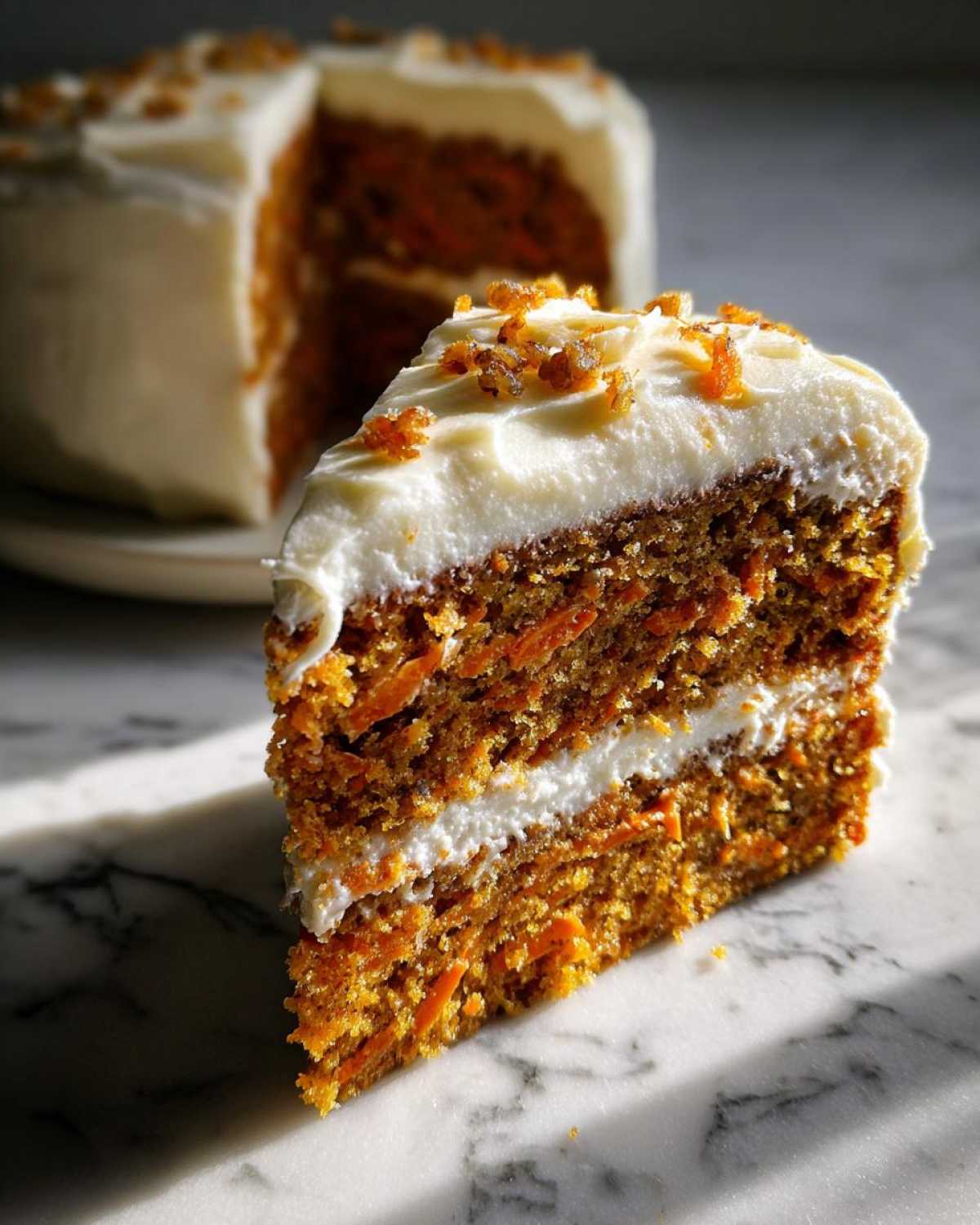
Also, don’t rush the cooling process! This might seem obvious, but people often get impatient after smelling that delicious spice wafting through the kitchen. If you try to frost a warm cake, even slightly warm, the cream cheese frosting melts, slides, and ruins the look. Let it stay in the pan on a wire rack for at least an hour until it feels completely cool to the touch. If it’s truly hot, stick the whole pan in the fridge for 30 minutes to force a temperature drop. Baking is mostly patience, and that cooling step is where you earn the right to frost it!
These small steps are what keep my Homemade Carrot Cake consistently perfect. If you want more general pointers about getting creative in the kitchen, you can always browse through my collection of baking ideas!
Serving Suggestions for This Carrot Cake Recipe
Okay, the hard part is done! You’ve baked the moistest cake on the block, and now it’s time to show it off. This amazing carrot cake recipe is absolute perfection for any occasion, whether it’s an easy weeknight dessert or you’re taking it to a big party—it’s truly one of the best Comfort Food Desserts out there.
Presentation is simple because the texture and frosting do most of the heavy lifting. If you baked it in a 9×13 pan, keep it simple! A light dusting of extra ground cinnamon or a sprinkle of your chopped pecans/walnuts right over that cream cheese frosting looks elegant and inviting. It hints at the spices tucked inside the cake.
If you baked it as layers, don’t fuss too much with fancy piping. A rustic swirl using the back of a spoon looks homemade, warm, and inviting. For an extra special touch, I sometimes grate a tiny bit of orange zest right over the top before serving. That little bit of citrus brightens up the whole flavor profile!
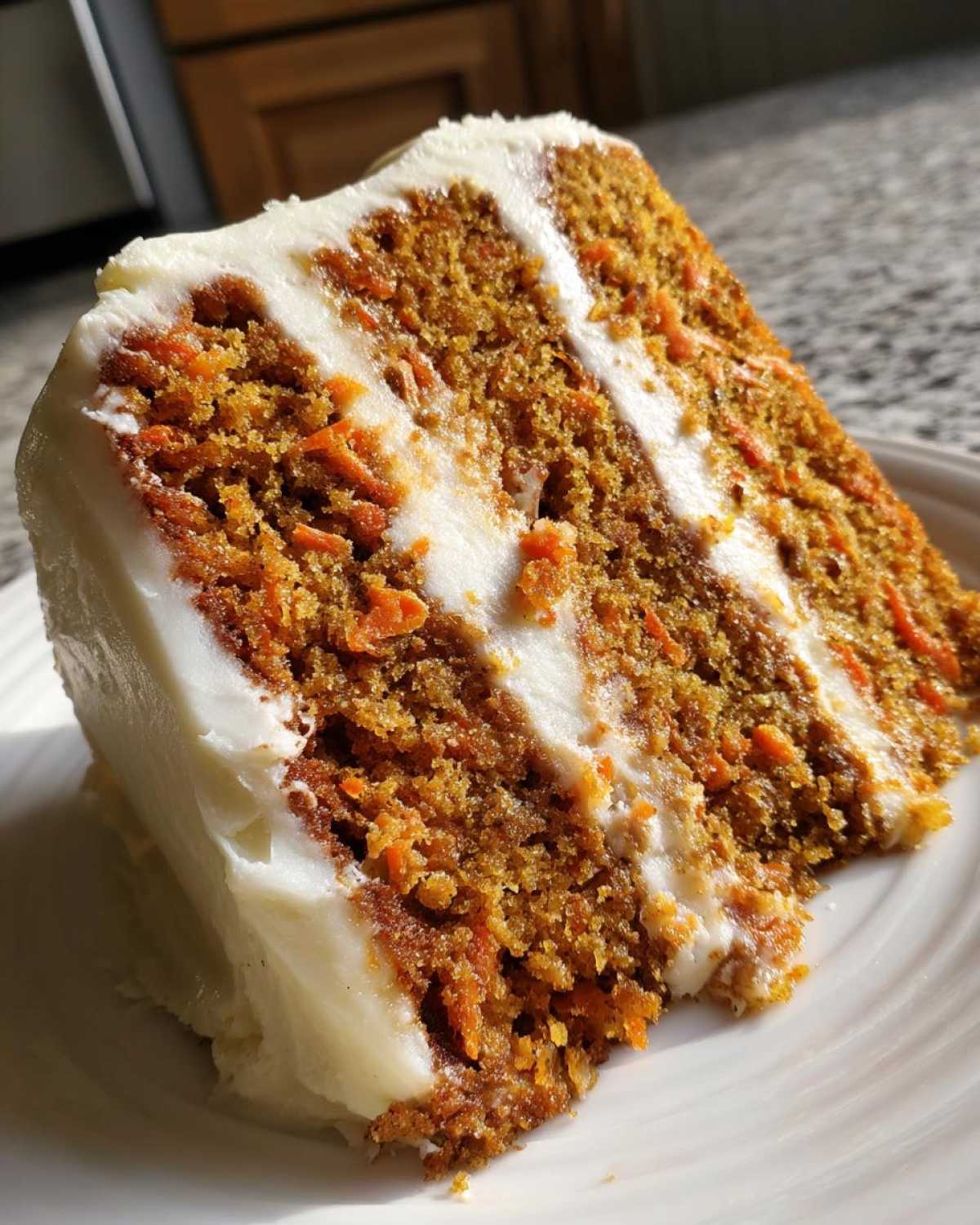
This cake is rich, so it doesn’t need much else alongside it, but if you are Baking for Gatherings and serving alongside coffee, it’s perfect as is. If you’re serving it after a big meal, a small dollop of lightly sweetened whipped cream on the side can cut through the richness of the frosting beautifully. Or, if you’re feeling extra, pair it with a slice of my sweet potato pound cake recipe for a full dessert spread!
Beverage pairings are simple: a strong, dark roast coffee cuts through the sweetness perfectly. If you’re serving this for breakfast (and who hasn’t eaten leftover cake for breakfast?), a glass of cold milk is unbeatable. Enjoy seeing everyone scoop up seconds!
Storage and Reheating Instructions for Leftover Carrot Cake
Now, if you somehow manage to have leftovers of this incredible, unbelievably moist carrot cake—which I seriously doubt!—you need to know how to store it properly. Because we slathered that glorious, tangy cream cheese frosting all over it, refrigeration is mandatory. Don’t leave this out on the counter overnight; that cream cheese is going to get soft and unsafe pretty quickly!
Wrap the remaining cake tightly. If it’s a whole sheet or round, cover the entire thing loosely with plastic wrap first to protect the frosting, and then wrap that whole package in foil or place it in an airtight container. This locks in that wonderful moisture we worked so hard for. Stored this way in the fridge, your homemade carrot cake should stay fantastic for about four to five days. I find the texture is almost better on day two, honestly!
When you’re ready to serve those refrigerated leftovers, please, please, please let them come back to room temperature! This is crucial for enjoying the cake’s true texture. Having it cold mutes the spice flavor and makes that delicious oil feel firmer, which defeats the purpose of using oil in the first place. Pull the slices out of the fridge about an hour before you plan to eat them. You want it soft, yielding, and fragrant.
What about freezing? Yes, you absolutely can freeze this! It’s perfect for planning ahead for holidays or just having a slice tucked away for a rainy day. The best way is to freeze it *before* you frost it. Wrap the unfrosted cake layers tightly in plastic wrap, then another layer of foil, and pop it into the freezer. It keeps beautifully for up to three months this way.
If you must freeze it already frosted (which I sometimes do because I can’t wait!), stick the whole thing in the freezer uncovered for an hour just to harden the frosting. Once it’s firm, wrap it up just as I described above. When you thaw it, let it thaw overnight in the fridge, still wrapped, and then let it sit on the counter for an hour before slicing. It’s excellent for making your comfort food desserts last longer!
Frequently Asked Questions About This Carrot Cake Recipe
I know that when you’re committing to an amazing carrot cake recipe, you want everything to go perfectly. It’s natural to have questions, especially when we talk about achieving that supreme moistness! I’ve gathered the questions I get most often from folks trying this for the first time. We want your experience with this From Scratch Carrot Cake to be a total win!
If you’re looking for general pointers on getting creative with your baking ideas after you master this, remember that practice makes perfect, even for an Easy Carrot Cake Baking project!
Can I use shredded carrots instead of grated in this carrot cake recipe?
Oh, my dear, please don’t! I know the store-bought bags are convenient, but trust me when I say no. Those pre-shredded carrots are typically dry—they’ve been sitting there waiting for you! For our cake to achieve that legendary moisture, we need the fresh, raw moisture that comes out when you use a box grater right before mixing. Think of it as part of the flavor-building process for this specific carrot cake recipe. You want the carrots to almost disappear into the batter, and only finely grated carrots will do that magic trick!
How do I make this carrot cake recipe dairy-free?
That’s a tricky one because a lot of the success here relies on those key ingredients, but we can certainly try to adapt! For the cake itself, the vegetable oil is what we use instead of butter to keep it moist, so that part is already dairy-free, which is great news for your Flavorful Cake Recipes! The tough part is the frosting, which relies heavily on cream cheese and butter.
For the frosting, you would need to find high-quality dairy-free cream cheese and vegan butter alternatives. You’ll need to beat those dairy-free substitutes even longer to get them smooth, as they sometimes emulsify differently than the real deal. The texture might be slightly softer, so you might need to chill your frosting mixture for a bit longer than usual before spreading it onto your cake. It’s certainly possible, but just know that the classic tang might taste slightly different!
Why is my cake sinking in the middle?
A sinking center is usually a big sign that the cake either wasn’t quite done when you pulled it out, or that you added too much leavening agent. Double-check that your baking soda is fresh—old soda doesn’t lift the cake properly, leading to a dense collapse. Also, check your oven temperature with an inexpensive thermometer; if your oven runs hot, it can bake the outside too fast, setting the edges while the center is still liquid and doughy, forcing it to crash when it cools. Make sure you are using precisely 2 teaspoons of baking soda for the dry components!
Can I use self-rising flour instead of all-purpose flour?
I always advise against swapping flours in recipes where moisture is key, like this one. Self-rising flour already contains salt and a leavening agent. Since this carrot cake recipe calls for us to separately add baking soda and salt, using self-rising flour throws off that delicate balance immediately! You might end up with too much lift initially, followed by a nasty collapse, or worse, a metallic flavor from too much baking powder/soda reacting. Stick to the all-purpose flour and the measured baking soda for predictable, wonderful results every time you bake!
What can I use instead of nuts in this cake?
If you’re not a fan of pecans or walnuts, or if you have allergies, that’s easy! The nuts are purely for texture contrast in this excellent Homemade Carrot Cake recipe. You can easily omit them entirely, and the cake will still be unbelievably moist and delicious. If you want to keep some crunch, try adding 1/2 cup of unsweetened shredded coconut along with the carrots. It blends in beautifully and adds a great chewy texture, too!
Nutritional Estimates for This Carrot Cake Recipe
I always like to give my readers a rough idea of what they are diving into when they make something this delicious! Keep in mind this is just an estimate for one slice of the cake topped with the cream cheese frosting, based on standard ingredient measurements and assuming 12 servings from a 9×13 pan. Please remember that exact values can change based on the specific brands of oil or cream cheese you use.
Here’s what the tracking looks like for one slice of this amazing cake:
- Serving Size: 1 slice
- Calories: 450
- Sugar: 55g
- Sodium: 250mg
- Fat: 24g
- Saturated Fat: 8g
- Unsaturated Fat: 16g
- Trans Fat: 0g
- Carbohydrates: 60g
- Fiber: 2g
- Protein: 5g
- Cholesterol: 75mg
It’s definitely a treat, but when it’s this good, you deserve every crumb! If you want to check out some lighter baking ideas, feel free to browse my site, but sometimes you just need the best classic carrot cake, and this is it!
Nutritional Estimates for This Carrot Cake Recipe
I always like to give my readers a rough idea of what they are diving into when they make something this delicious! Keep in mind this is just an estimate for one slice of the cake topped with the cream cheese frosting. This is based on standard ingredient measurements and assuming you get 12 beautiful slices out of your 9×13 pan. Please remember that exact values can change based on the specific brands of oil or cream cheese you use, so take this as a guideline for your decadent slice!
Here’s what the tracking looks like for one slice of this amazing cake. It’s loaded with flavor and moisture, so you know where those calories are coming from!
- Serving Size: 1 slice
- Calories: 450
- Sugar: 55g
- Sodium: 250mg
- Fat: 24g
- Saturated Fat: 8g
- Unsaturated Fat: 16g
- Trans Fat: 0g
- Carbohydrates: 60g
- Fiber: 2g
- Protein: 5g
- Cholesterol: 75mg
It’s definitely a treat, but when it’s this good, you deserve every crumb! If you want to check out some lighter baking ideas after you polish off this masterpiece, feel free to browse my site, but sometimes you just need the best classic carrot cake, and trust me, this is it—the ultimate moist version!
PrintUltimate Moist Carrot Cake with Classic Cream Cheese Frosting
Follow this reliable recipe to bake a deeply moist, perfectly spiced carrot cake topped with rich cream cheese frosting. This recipe focuses on techniques that guarantee a tender crumb.
- Prep Time: 20 min
- Cook Time: 35 min
- Total Time: 55 min
- Yield: 12 servings
- Category: Dessert
- Method: Baking
- Cuisine: American
- Diet: Vegetarian
Ingredients
- 2 cups all-purpose flour
- 2 teaspoons baking soda
- 1 teaspoon ground cinnamon
- 1/2 teaspoon ground nutmeg
- 1/2 teaspoon ground ginger
- 1/4 teaspoon ground cloves
- 1/2 teaspoon salt
- 1 1/2 cups granulated sugar
- 1 cup vegetable oil
- 4 large eggs
- 2 teaspoons vanilla extract
- 3 cups grated carrots (about 4-5 medium carrots)
- 1 cup chopped pecans or walnuts (optional)
- For Frosting: 8 ounces cream cheese, softened
- 1/2 cup unsalted butter, softened
- 4 cups powdered sugar, sifted
- 1 teaspoon vanilla extract
Instructions
- Preheat your oven to 350°F (175°C). Grease and flour a 9×13 inch baking pan or two 9-inch round cake pans.
- In a medium bowl, whisk together the flour, baking soda, cinnamon, nutmeg, ginger, cloves, and salt. Set aside.
- In a large bowl, whisk together the granulated sugar, vegetable oil, eggs, and vanilla extract until well combined.
- Gradually add the dry ingredients to the wet ingredients, mixing only until just combined. Do not overmix.
- Fold in the grated carrots and the chopped nuts, if using. The batter will be thick.
- Pour the batter into your prepared pan(s) and spread evenly.
- Bake for 30 to 35 minutes for a 9×13 pan, or 30 to 40 minutes for round layers, or until a wooden pick inserted into the center comes out clean.
- Let the cake cool completely in the pan on a wire rack before frosting.
- To make the frosting: Beat the softened cream cheese and butter together until smooth using an electric mixer.
- Gradually add the sifted powdered sugar, one cup at a time, beating well after each addition.
- Mix in the vanilla extract until the frosting is light and fluffy.
- Spread the cream cheese frosting evenly over the cooled cake.
Notes
- Use finely grated carrots for the best texture; do not use pre-shredded carrots from a bag as they are too dry.
- The oil in this recipe is key to moisture; do not substitute it with butter.
- For extra flavor, add 1/2 cup of crushed pineapple (drained well) to the batter along with the carrots.
- Chill the cream cheese and butter slightly before making the frosting if your kitchen is warm; this prevents the frosting from becoming too soft.
Nutrition
- Serving Size: 1 slice
- Calories: 450
- Sugar: 55g
- Sodium: 250mg
- Fat: 24g
- Saturated Fat: 8g
- Unsaturated Fat: 16g
- Trans Fat: 0g
- Carbohydrates: 60g
- Fiber: 2g
- Protein: 5g
- Cholesterol: 75mg