

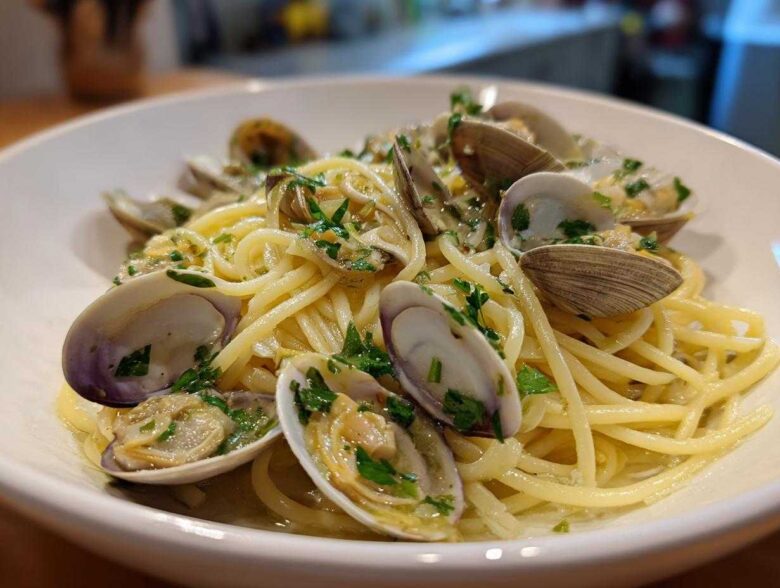
Oh, my friend, let me tell you about true Italian comfort—the kind that tastes like the sea air and sunshine all mixed together in one glorious bowl! There is nothing, and I mean *nothing*, that beats a perfectly executed plate of proper Linguine and Clams. We’re talking Linguine alle Vongole in Bianco here, the stunning white wine version that sings with garlic and fresh herbs.
For years, I was terrified of the clams. I thought I’d serve up a gritty disaster or, worse, raw ones! But once I finally nailed that first batch where every single shell sprang open like a happy little surprise party, I realized this dish is actually one of the fastest, most luxurious dinners you can make. Seriously, this is my definitive, quick, and totally authentic recipe. Forget the fancy stuff; all you truly need is great olive oil, good wine, and happy clams. Trust me, once you master this, it’ll become your go-to for impressing people without spending hours in the kitchen.
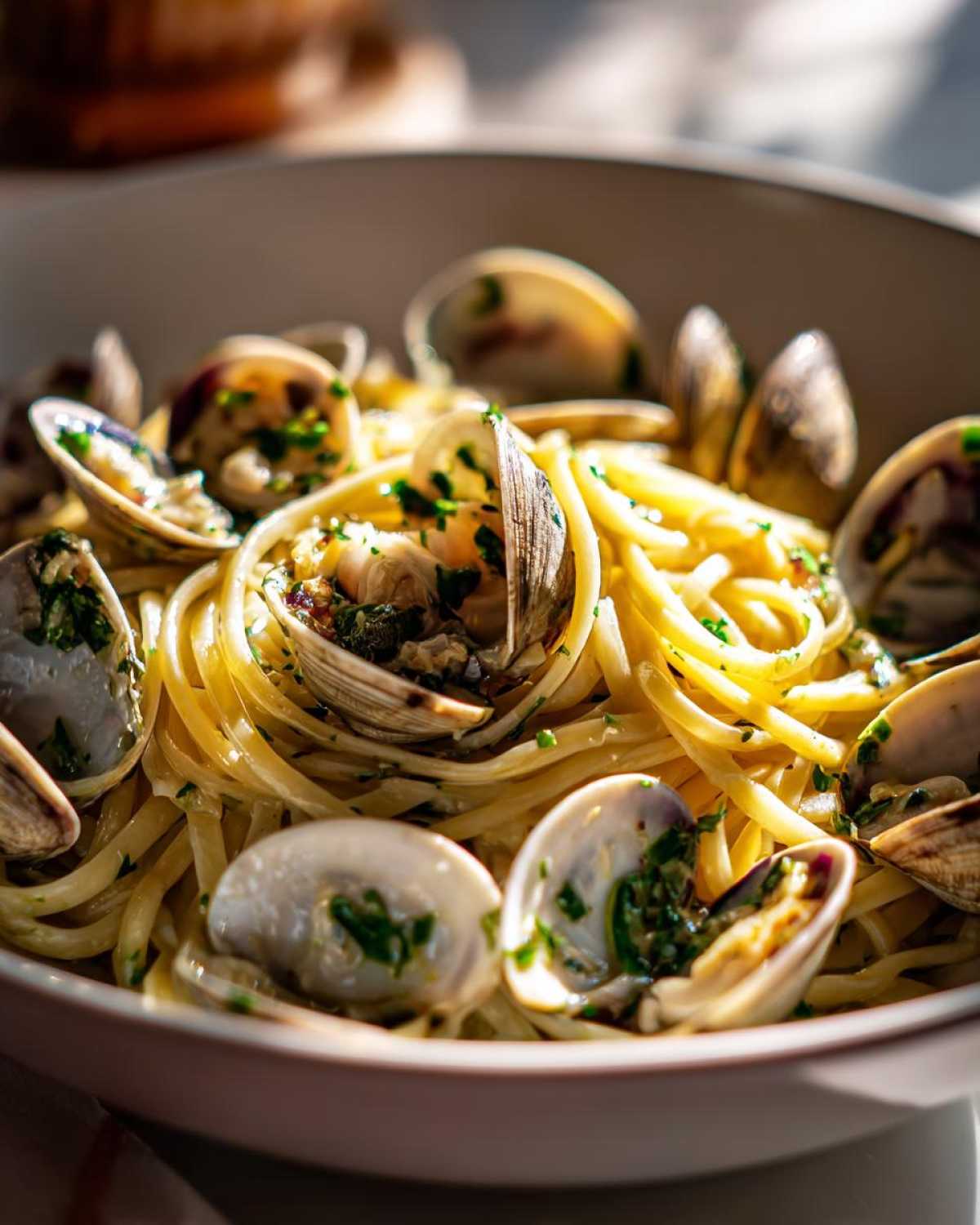
We’re going to make sure your sauce is flavorful and your pasta is just right. And don’t forget to check out my collection of other amazing Italian pasta recipes once you’re done conquering the clams!
Why This Classic Linguine and Clams Recipe Delivers Authentic Flavor (E-E-A-T)
When you make this Classic Clam Pasta, you aren’t just mixing ingredients; you are building layers of ocean flavor. The secret to the Best Clam Pasta Flavor isn’t heavy cream or loads of tomato—it’s the trifecta: good garlic, dry white wine, and that salty, slightly briny liquor released by the clams themselves. It’s pure simplicity done right. That strained clam juice mixed with olive oil? That’s liquid gold for your sauce, trust me.
The Importance of Fresh Clams for Linguine and Clams
You just can’t cheat on the clams, folks. Canned or jarred stuff leaves you with a metallic taste, and that’s not what we want in a Seafood Pasta Dish. Fresh clams are crucial because they release that clean, sweet liquid when they steam open. Before anything else, you have to scrub them until they gleam! And please, if one doesn’t snap shut when you tap it, toss it out immediately. We want happy, healthy clams steaming open perfectly for us.
Gathering Ingredients for Perfect Linguine and Clams
Okay, so we’ve established flavor is king, and with this Linguine and Clams Recipe, simplicity gives us that royal flavor. Everything relies on the quality of what you buy. Do not, I repeat, *do not* grab that cheap cooking wine—it tastes sour when reduced! You want something crisp that you’d happily sip on its own, like a Pinot Grigio. And the olive oil needs to be good quality extra virgin, because it stays in the pan and becomes the *base* of your whole sauce.
Get your fridge stocked with these bits and bobs, and remember that even though this is a Quick Seafood Dinner, rushing your shopping won’t help you.
If you’re looking for other quick, tasty mains, you might want to bookmark my creamy seafood salad recipe for later, but right now, let’s focus!
Ingredient List for Linguine alle Vongole
- 1 pound linguine pasta
- 3 pounds fresh littleneck or Manila clams, scrubbed clean
- 1/2 cup dry white wine (like Pinot Grigio)
- 1/2 cup extra virgin olive oil
- 6 cloves garlic, thinly sliced
- 1/4 teaspoon red pepper flakes (or more to taste)
- 1/2 cup fresh parsley, chopped
- 1/4 cup reserved clam juice (from steaming)
- Salt and freshly ground black pepper to taste
Essential Equipment for How to make Linguine with Clams
You don’t need a whole kitchen full of gadgets for this amazing Italian Pasta Recipe, but there are three things you absolutely must have on hand. First, a really big, deep skillet—we need room to toss everything without sauce escaping! Second, a fine-mesh sieve. This is non-negotiable for straining out any stray grit. And finally, if you want to be extra meticulous, grab some cheesecloth to line that sieve for the smoothest sauce possible. That’s it! Simple tools for a stunning result.
Step-by-Step Instructions for White Clam Sauce Pasta
Alright, time to put that amazing equipment to work! This part moves fast once the heat is on, so read the steps through once before you start cooking. We are going for perfect timing here—the sauce needs to be ready just when the pasta hits that beautiful al dente stage.
Preparation: Cleaning Clams and Cooking Pasta
First things first, the clams! They need a good bath. Scrub them hard under cold water. If you see any that are hanging open, give ’em a little tap; if they don’t snap shut, that clam is grumpy and needs to be thrown out—no risks here! While those clams are chilling, get a big pot of salted water boiling. Cook your linguine until it’s just shy of done—we call that al dente. Before you drain it, scoop out at least a cup of that starchy pasta water. That water is going to save your sauce later, seriously!
Building the Flavor Base for Linguine and Clams Sauce
Now we move to the skillet. Keep the heat at medium, and gently warm up that lovely olive oil. Pop in your sliced garlic and red pepper flakes. You want the garlic to get fragrant and just barely turn golden—quick, quick! As soon as it smells amazing, crank that heat up to medium-high. Toss in all those clean clams and splash in the white wine. Cover it fast and let them steam for about five to seven minutes until they start popping open. Use a slotted spoon to move the open clams to a bowl to keep them warm, and make sure to throw away any that stayed shut.
This next part is super important for that Fresh Clam Sauce quality. Take all that liquid left in the pan and pour it through your fine-mesh sieve, maybe lined with cheesecloth, straight into a small bowl. We need to catch any sand hiding down there! Then, you only pour back about a quarter cup of that clean, strained juice into the skillet. Discard the rest of the strained liquid. This is how we guarantee a gritty-free experience!
Combining Pasta and Sauce to Finish Your Classic Clam Pasta
It’s time for the magic moment! Dump your drained linguine right into that skillet with the reserved clam liquor. Start tossing! If it looks a little tight or dry, add a small splash of that starchy pasta water you saved. That water emulsifies the oil and juice, making the sauce cling perfectly. Return all those glorious open clams to the pan, sprinkle in all that fresh parsley, and toss everything gently for just one more minute to heat the clams through. Taste it, add salt and pepper if you think it needs it, and serve immediately! This is one of those fantastic Seafood Pasta Dishes that demands to be eaten the second it’s ready.
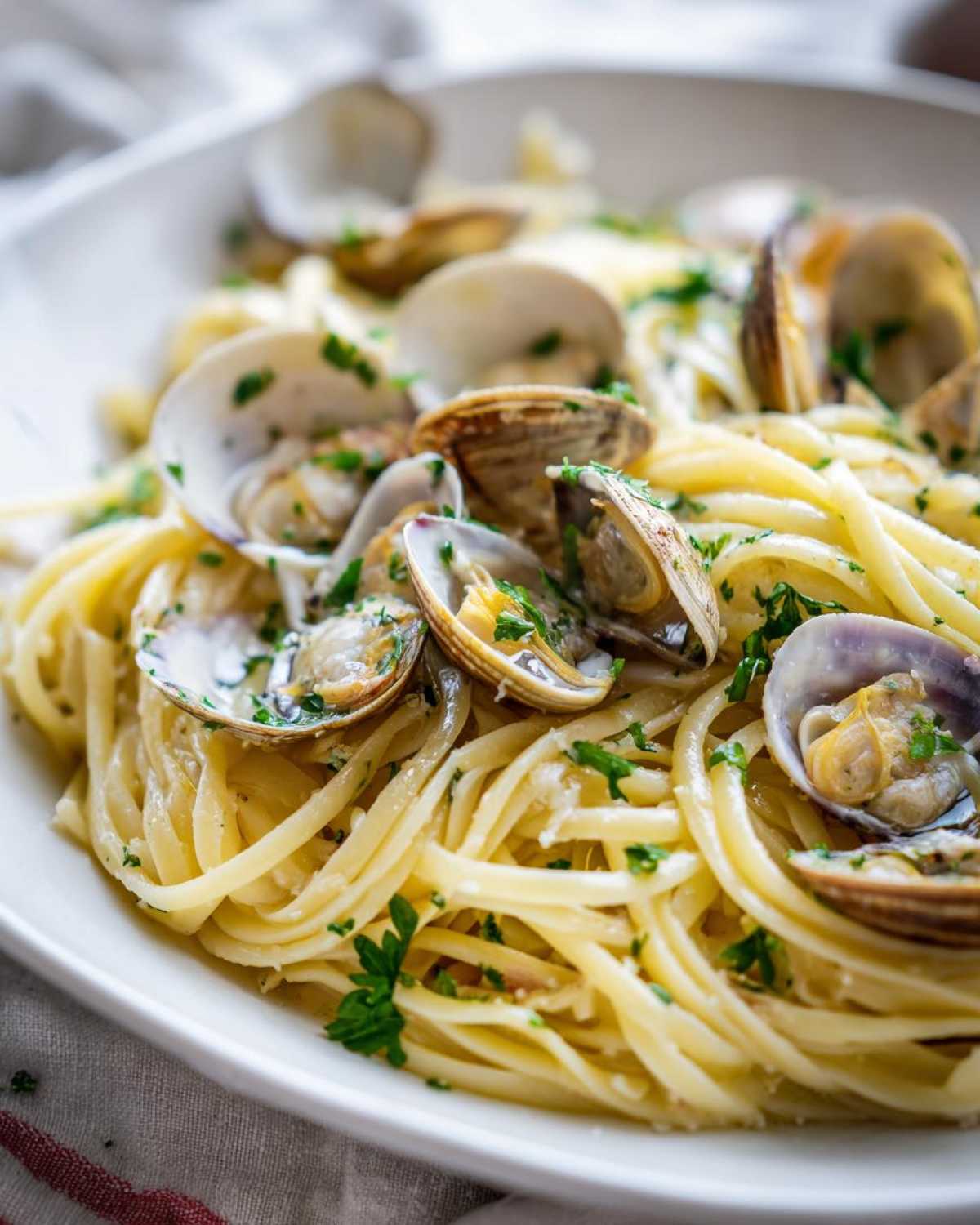
Expert Linguine and Clam Sauce Tips for Success
Even though this is simple food, a few non-negotiables make the difference between a good plate and a truly spectacular one. If you want to show off your Classic Clam Pasta skills, remember that pre-prep is everything. To really nail the cleaning, I always soak my clams in a bowl of cold water mixed with a little salt for about half an hour before scrubbing the shells raw. It encourages them to spit out any last bit of sand!
Also, don’t forget that little note about the tomatoes if you’re feeling adventurous! While we are making the white sauce here, you can easily pivot to a red sauce option. Just toss in one drained can of diced tomatoes right along with the white wine when you cover the pan; it gives the sauce a beautiful depth. For more incredible dinners, check out my guide to best seafood pasta dishes.
Variations on Linguine and Clams: Red Sauce Option
Now, I know some folks just feel more comfortable with a little tomato involved in their shellfish. It’s delicious, but it’s not the traditional in bianco style we just made. If you’re craving that deeper, richer flavor, transitioning to a Red Clam Sauce Pasta Variation is super easy! When you add the white wine to the steaming clams, just throw in a drained 14.5-ounce can of diced tomatoes right there too. The tomatoes will cook down happily with the garlic and wine, giving your Linguine and Clams a lovely, slightly sweet tint. It’s still quick, just a little heartier!
Storage and Reheating Instructions for Seafood Pasta Dishes
Look, I’m going to be honest: this Classic Clam Pasta tastes best right out of that skillet. Leftovers are tricky because the pasta soaks up all that gorgeous sauce and the clams can get a bit chewy.
If you must save some, store it in an airtight container in the fridge for no more than a day. When reheating, do it low and slow. Don’t microwave it brutally—that turns seafood rubbery! Instead, put the leftovers in a small pan with a tiny splash of water or maybe a splash of dry white wine. Heat gently, just until warmed through. You can always find more great ideas like this on my creamy seafood salad recipe page when you need a non-pasta meal!
Frequently Asked Questions About Linguine and Clams
I get so many questions whenever I post this recipe, which just proves how much people love getting this meal right! Let’s tackle a few of the things I hear most often so you can dive right in with confidence.
Can I use frozen clams for this Linguine and Clams Recipe?
Oh, I really, really wouldn’t recommend it, honestly. Frozen clams have already shed most of their water content, and when you try to steam them, they just cook out even more moisture and turn chewy. For a truly phenomenal Fresh Clam Sauce, you must use fresh—it makes all the difference in that sauce texture. If you absolutely have to supplement the flavor, you could theoretically toss in a tiny bit of frozen clam meat near the end, but only after dealing with the fresh ones.
What wine is best for White Clam Sauce Pasta?
This is simple: If you wouldn’t drink it warm out of the bottle, don’t cook with it! You need a crisp, dry white wine. Think Pinot Grigio, Sauvignon Blanc, or even a dry Italian Vernaccia. The worst thing you can do is use something sweet or oaky, like a heavily oaked Chardonnay, because that sweetness bakes into the sauce and overpowers the delicate clam flavor. We want bright acidity to cut through the richness of the olive oil for the Best Clam Pasta Flavor.
If you’re looking for more inspiration for your next weeknight feast, check out my full collection of Italian pasta recipes!
Estimated Nutritional Information for This Classic Clam Pasta
Now, keep in mind that when you’re dealing with pounds of clams and generous amounts of olive oil, the nutritional breakdown can sway a bit based on how much sauce you manage to devour—and I usually devour all of it!
These numbers are estimates based on the quantities I listed, assuming four healthy servings:
- Serving Size: 1 serving
- Calories: 550
- Sugar: 3g
- Sodium: 450mg
- Fat: 18g (with 15g being unsaturated, thank you, olive oil!)
- Carbohydrates: 70g
- Protein: 30g
This is just rough guidance, of course! If you use less oil or rinse your pasta water more thoroughly, those figures change. But I like to think of the protein and healthy fats as making this a pretty well-rounded, albeit decadent, meal!
PrintClassic Linguine with White Clam Sauce (Linguine alle Vongole)
A recipe for traditional Italian linguine pasta tossed in a light, flavorful white wine and garlic sauce with fresh clams.
- Prep Time: 15 min
- Cook Time: 20 min
- Total Time: 35 min
- Yield: 4 servings
- Category: Dinner
- Method: Stovetop
- Cuisine: Italian
- Diet: Low Fat
Ingredients
- 1 pound linguine pasta
- 3 pounds fresh littleneck or Manila clams, scrubbed clean
- 1/2 cup dry white wine (like Pinot Grigio)
- 1/2 cup extra virgin olive oil
- 6 cloves garlic, thinly sliced
- 1/4 teaspoon red pepper flakes (or more to taste)
- 1/2 cup fresh parsley, chopped
- 1/4 cup reserved clam juice (from steaming)
- Salt and freshly ground black pepper to taste
Instructions
- Scrub the clams thoroughly under cold running water. Discard any clams that are open and do not close when tapped.
- Cook the linguine according to package directions until al dente. Reserve about 1 cup of the starchy pasta water before draining.
- While the pasta cooks, heat the olive oil in a large, deep skillet over medium heat. Add the sliced garlic and red pepper flakes. Cook until the garlic is fragrant and lightly golden, about 2 minutes. Do not let the garlic burn.
- Increase the heat to medium-high. Add the cleaned clams to the skillet. Pour in the white wine. Cover the skillet tightly and cook for 5 to 7 minutes, shaking the pan occasionally, until the clams open.
- Remove the lid. Use a slotted spoon to transfer the opened clams to a bowl. Discard any clams that did not open.
- Pour the liquid remaining in the skillet through a fine-mesh sieve lined with cheesecloth into a small bowl to remove any grit. Measure out 1/4 cup of this strained clam juice and add it back to the skillet. Discard the rest.
- Add the drained, cooked linguine directly to the skillet with the clam juice mixture. Toss to coat. Add a splash of the reserved pasta water if the sauce seems too dry.
- Return the opened clams to the skillet. Add the chopped fresh parsley. Toss everything together gently for 1 minute until the pasta is well coated and heated through. Season with salt and pepper.
- Serve immediately in bowls, ensuring each serving gets plenty of clams and sauce.
Notes
- To clean clams, soak them in a bowl of cold, salted water for 30 minutes, then scrub the shells.
- For a red sauce variation, add one 14.5-ounce can of diced tomatoes (drained) along with the white wine in Step 3.
- Use high-quality olive oil for the best flavor in the sauce.
Nutrition
- Serving Size: 1 serving
- Calories: 550
- Sugar: 3
- Sodium: 450
- Fat: 18
- Saturated Fat: 3
- Unsaturated Fat: 15
- Trans Fat: 0
- Carbohydrates: 70
- Fiber: 4
- Protein: 30
- Cholesterol: 55