

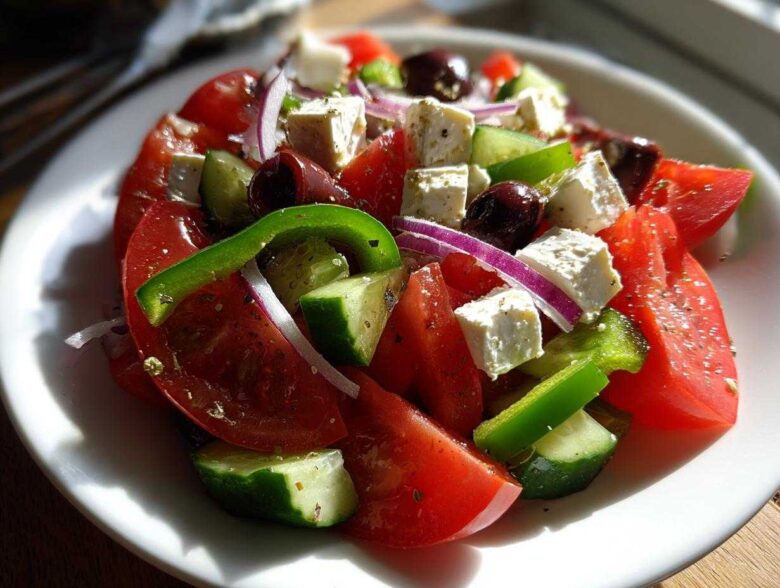
Oh my gosh, when the weather gets warm, there is nothing—and I mean *nothing*—that hits the spot quite like a vibrant, crunchy, brine-soaked salad. Forget those sad bowls of wilted lettuce; we’re talking about tradition here! This recipe for a true, authentic Greek salad is my year-round secret weapon. It’s tangy, it’s bright, and it tastes like summer holiday sunshine in every single bite. Seriously, if you want that taverna feeling at home, this is the simple combination you have been hunting for.
I usually bring this to every neighbourhood barbecue because it’s so forgiving and incredibly simple to assemble when the heat is miserable outside. Plus, it’s the perfect counterpoint! You know how sometimes you have a heavy, slow-cooked meat dish? You need something sharp and clean to cut through all that richness, and this salad is just the ticket. It’s got that satisfying mix of textures—the firm tomato, the crisp pepper—that lets you know you’re eating real, fresh vegetables.
Why This Traditional Greek Salad Recipe Works (Healthy Side Dish)
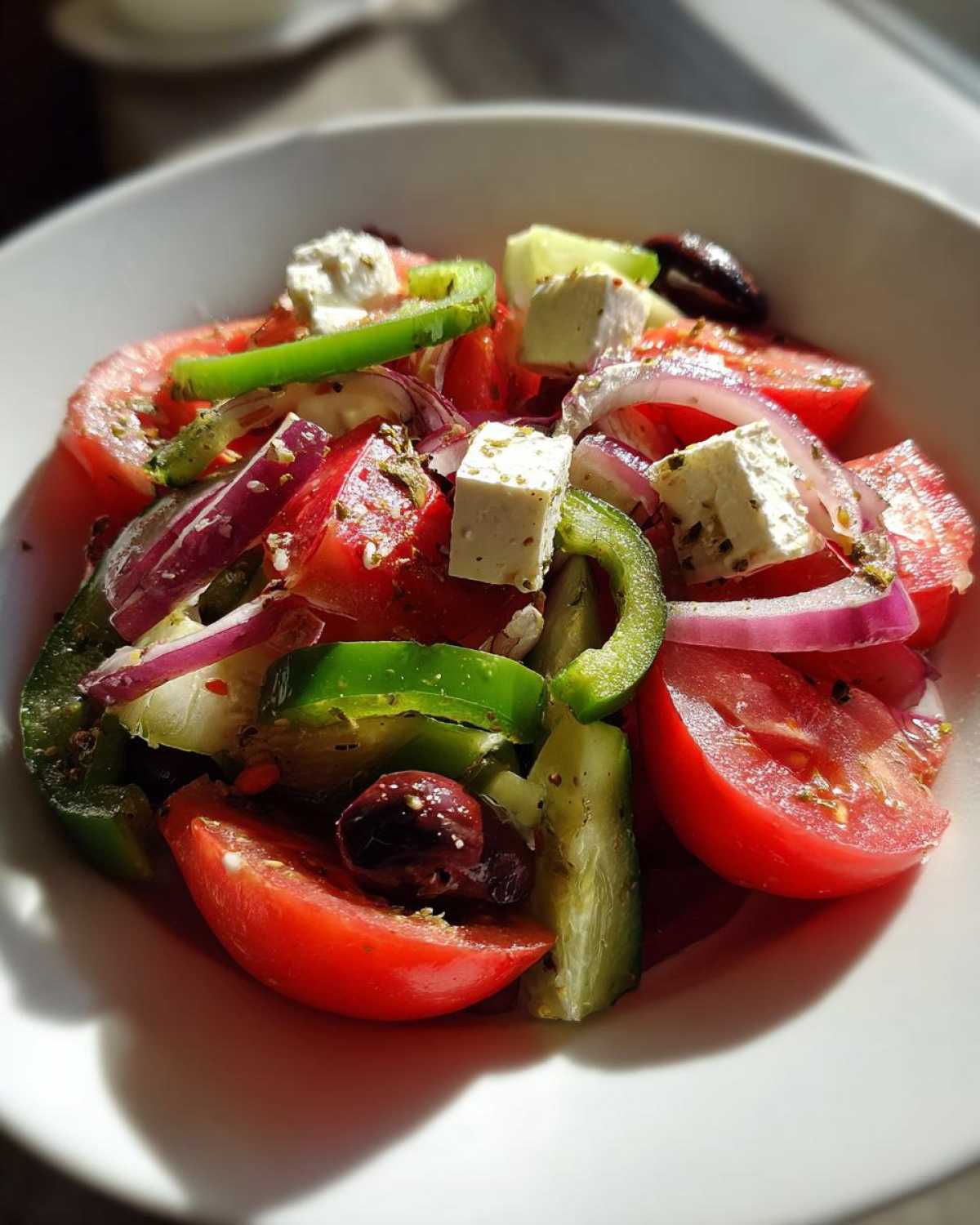
Honestly, sometimes I think people overcomplicate salads, but this one is pure magic because it requires zero cooking and maximum flavour. It’s the cornerstone of the Mediterranean diet, packed with good fats from olive oil and all those crisp veggies. That’s why it’s the ultimate healthy side dish—it never feels heavy, even when you load up your plate!
The beauty of a traditional Greek salad is that its ingredient list is short and relies entirely on quality. We skip the lettuce entirely, which means you avoid the inevitable droopy mess an hour after serving. You’re getting crunchy cucumber and juicy tomato, and that’s it! It comes together in literally fifteen minutes, which is why I make it even on terribly busy weeknights.
Ingredients for the Perfect Greek Salad
Okay, listen up, because ingredient quality is where we really nail the authenticity here. Since there’s no cooking involved, every single component of this salad needs to sing! We aren’t messing around with floppy ingredients.
You need three big, ripe tomatoes cut into rustic wedges—don’t try doing perfect squares, we want that nice, juicy burst when you bite in. Then, grab a large cucumber, and I usually chop mine, peel and all, unless the skin looks really thick. We also need one green bell pepper, sliced into thin strips after you remove those pesky seeds.
For the onions, you want about half a red onion, sliced paper-thin—I’ll tell you how to mellow those out in a minute! Don’t forget a good cup of those briny Kalamata olives; they are the soul of this dish, so use the ones you love. Then comes the star: the feta! You need about 8 ounces, and I strongly suggest buying the block packed in brine. Crumbled feta often tastes dry, and we want that creamy mouthfeel.
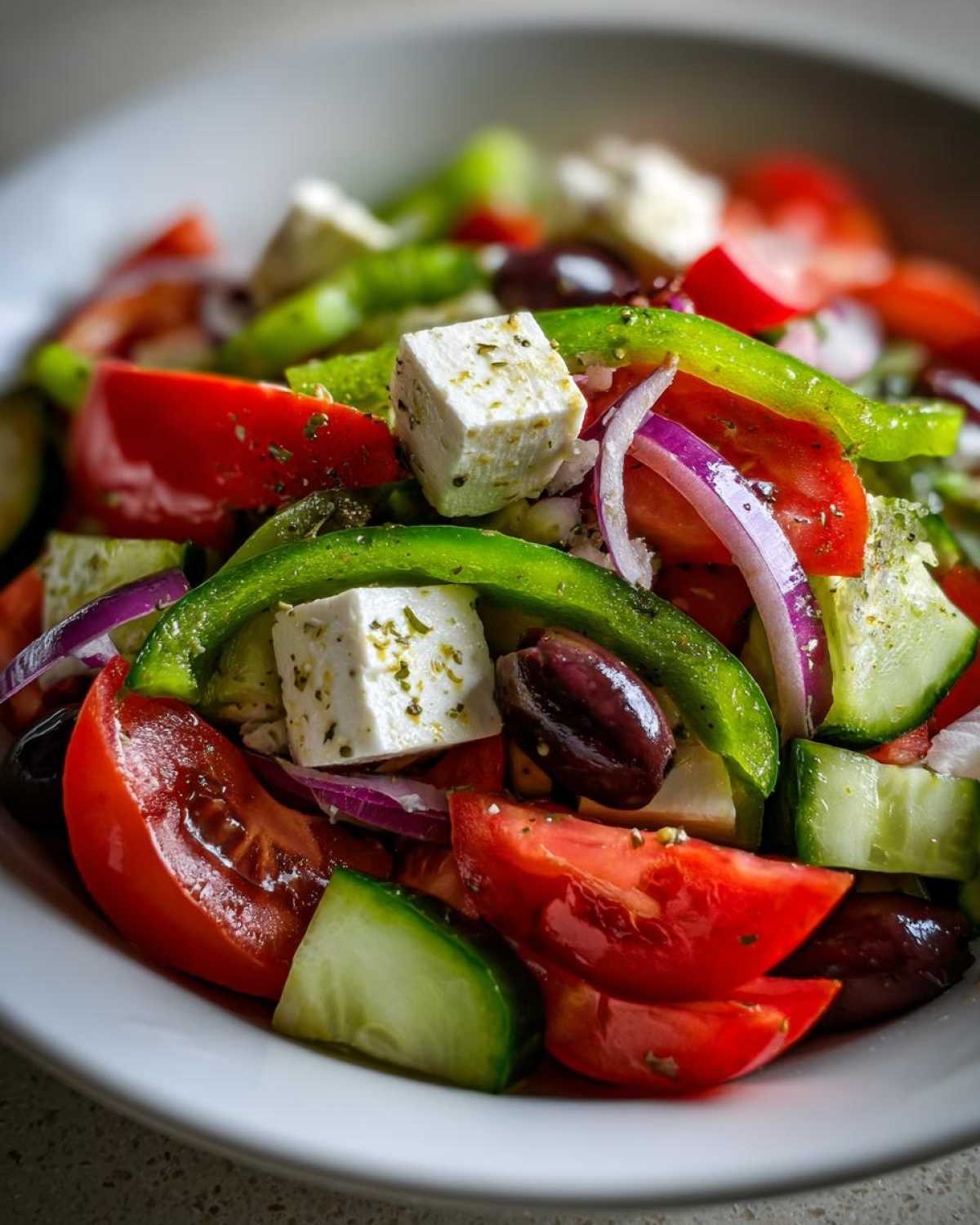
If you’re making this ahead of time, remember this tip: keeping the feta in its brine until the last minute keeps it tasting amazing. Have you checked out this zesty cucumber salad inspiration? We should try that next week!
For the Tangy Olive and Feta Salad Dressing
The dressing is ridiculously easy, but it drives the flavour home—it’s where we get those beautiful, tangy notes. You are definitely going to want to use the highest quality, peppery extra virgin olive oil you can find; it just makes all the difference when it’s served raw like this. Whisk together 1/4 cup of that amazing olive oil with 3 tablespoons of red wine vinegar. That vinegar is key for that unmistakable sharpness!
Then, you mix in 1 teaspoon of dried oregano—please, use dried here, it’s traditional for the dressing! A little salt and pepper to taste finishes it off. That’s it! Simple but so effective.
How to Assemble Your Classic Greek Salad
This is the part where everything comes together, and I promise, it takes almost no time at all. You are looking at about fifteen minutes of hands-on prep time for this gorgeous summer salad recipe. My biggest rule? We assemble in layers to keep everything looking perfect when it hits the table.
If you’ve got any heavier mains cooking, like a roast or the lemon-garlic chicken, this is the perfect thing to whip up while the oven hogs all the attention. It’s all about efficiency!
Preparing the Vegetables for the Greek Salad
First things first, get all those glorious, freshly chopped veggies into your biggest bowl. I mean your *biggest* bowl, because tomatoes and cucumbers take up way more volume than you think! We’re talking about gently placing those tomato wedges, your chopped cucumber, the sliced green bell pepper, the thinly sliced red onion, and all those beautiful, salty Kalamata olives right in there together.
My advice here is just to keep the chopping roughly the same size so that you get a perfect textural bite every time. Don’t overthink the cutting style; rustic is good here. Think about what you’d get served at a little seaside taverna—it’s beautiful because it’s hearty, not because it’s fussy!
Tossing the Greek Salad with Oregano Dressing
Now, remember that dressing we whisked up? You’re going to pour that tangy dressing right over the vegetables, but not the feta yet! We want to coat everything evenly first. I use tongs or two wooden spoons to toss it gently. You want the olive oil and vinegar to cling to the cucumber and tomato skins, but you don’t want to smash them!
Once everything is lightly coated—and I mean lightly, we don’t want a soup at the bottom of the bowl—then you carefully add the feta cubes or crumbles. You toss *very* lightly one last time, just enough so the feta is distributed without breaking into tiny sad bits. If you’re not eating it right away, cover it and let it chill briefly. But trust me, this traditional Greek salad tastes best five minutes after you dress it!
Expert Tips for the Best Greek Salad Experience
Look, everyone can put chopped veggies in a bowl, but if you want your Greek salad to taste like it was airlifted straight from the Aegean Sea, you have to follow the little rules. These aren’t suggestions; these are the secrets to flavour depth!
First, let’s circle back to the feta. I cannot stress this enough: buy that block parked in brine! A dry, pre-crumbled feta is dusty and chalky. The feta packed in salt water stays creamy and tangy until the moment you toss it in. That’s where you get that amazing punch of saltiness against the sweet tomatoes.
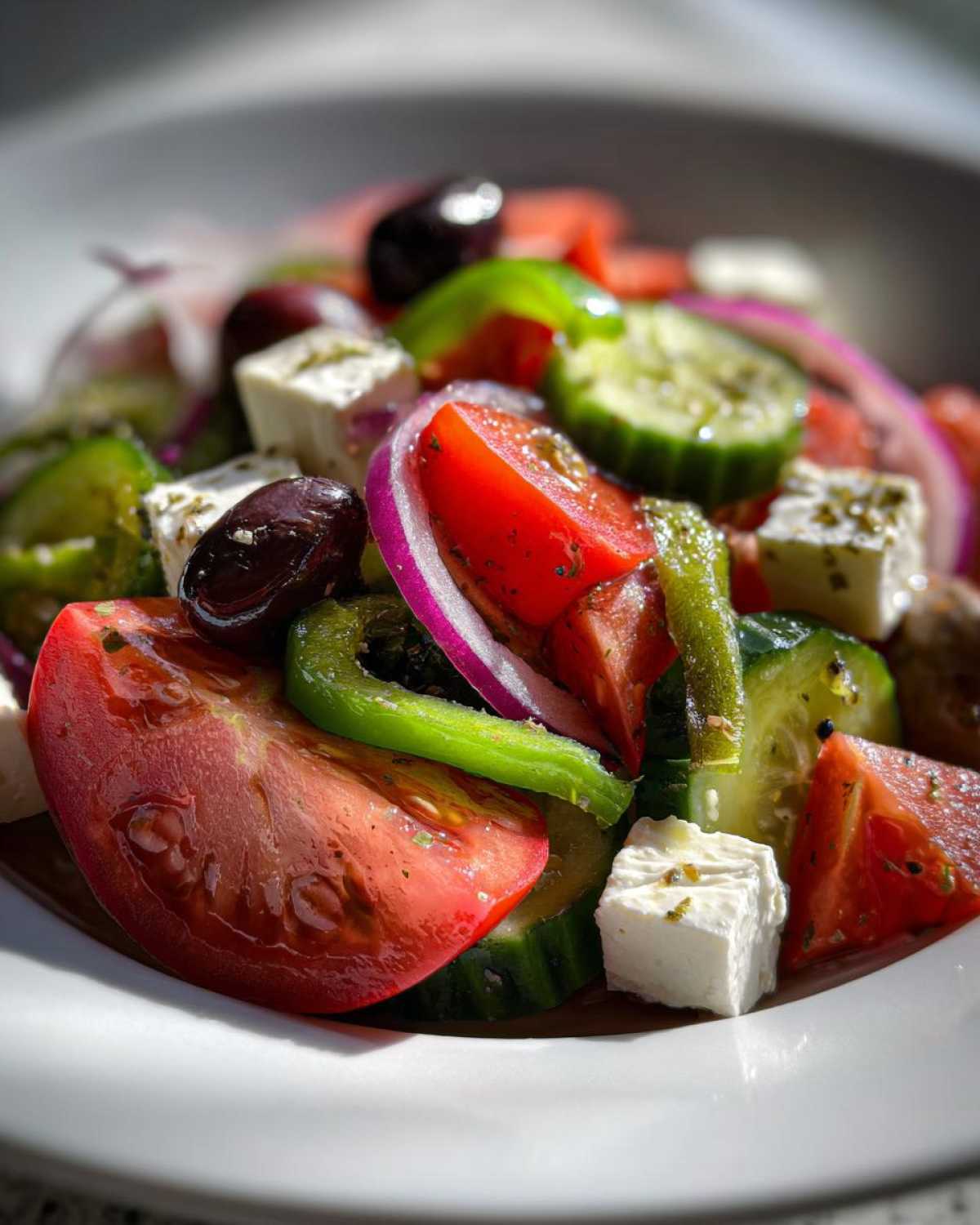
Now, about those red onions—they can dominate everything if you let them. If you find raw red onion a bit too aggressive for your lunch, slice them thinly, toss them in a small bowl of ice water for about ten minutes, and then drain them really well before they join the party. It takes the harsh bite right out. It works like a dream, trust me on this one, and it’s a lifesaver for meal-preppers!
Here’s my little extra step, and I’ve seen people skip this, but don’t! Once you have dressed your vegetables and oil is coating everything, let the bowl sit right on the counter for about five minutes *before* you add the feta. This tiny rest lets the red wine vinegar and oregano start penetrating the cucumber and tomatoes. It deepens the flavour of the whole dish beautifully. Then, and only then, do you gently fold in those beautiful feta cubes.
Since we avoid lettuce, this salad is sturdy, but that soaking time is golden. If you’re looking for other amazing fresh ideas, you absolutely have to check out this tomato and burrata salad when you’re feeling a bit richer later in the season!
Variations for Your Summer Salad Recipe
While perfection is found in simplicity, sometimes you just want to switch things up! Even though the classic ingredient list is sacred, we can absolutely add little twists to keep this summer salad recipe exciting throughout the warmer months. These changes enhance the Mediterranean vibe without ruining the authentic structure.
If you want an extra layer of briny pop, throw in about a tablespoon of capers right along with the olives. They offer a wonderful little burst of saltiness that pairs perfectly with the feta. Or, if you’re feeling like you need a bit more herbaceous freshness, skip the dried oregano in the dressing and use fresh dill instead—it makes the whole thing smell like Greece!
Now, if you need to turn this from a side dish into a fantastic light lunch, you know exactly what to do: add protein! I chop up leftover grilled chicken, toss it right in, and suddenly we have a meal. If you need a great recipe for that chicken, you’ve got to check out my juicy Greek chicken recipe; it pairs perfectly!
Serving Suggestions for Tangy Olive and Feta Salad
So, you’ve got this stunning, bright bowl of goodness ready to go. What do you serve it with? The beauty of a Greek salad is that it cleanses the palate, so it sings next to almost anything rich and grilled. My absolute favorite way to eat this tangy olive and feta salad is scooped up with warm, fluffy pita bread. I mean, you have to get every last drop of that oregano-infused olive oil dressing, right?
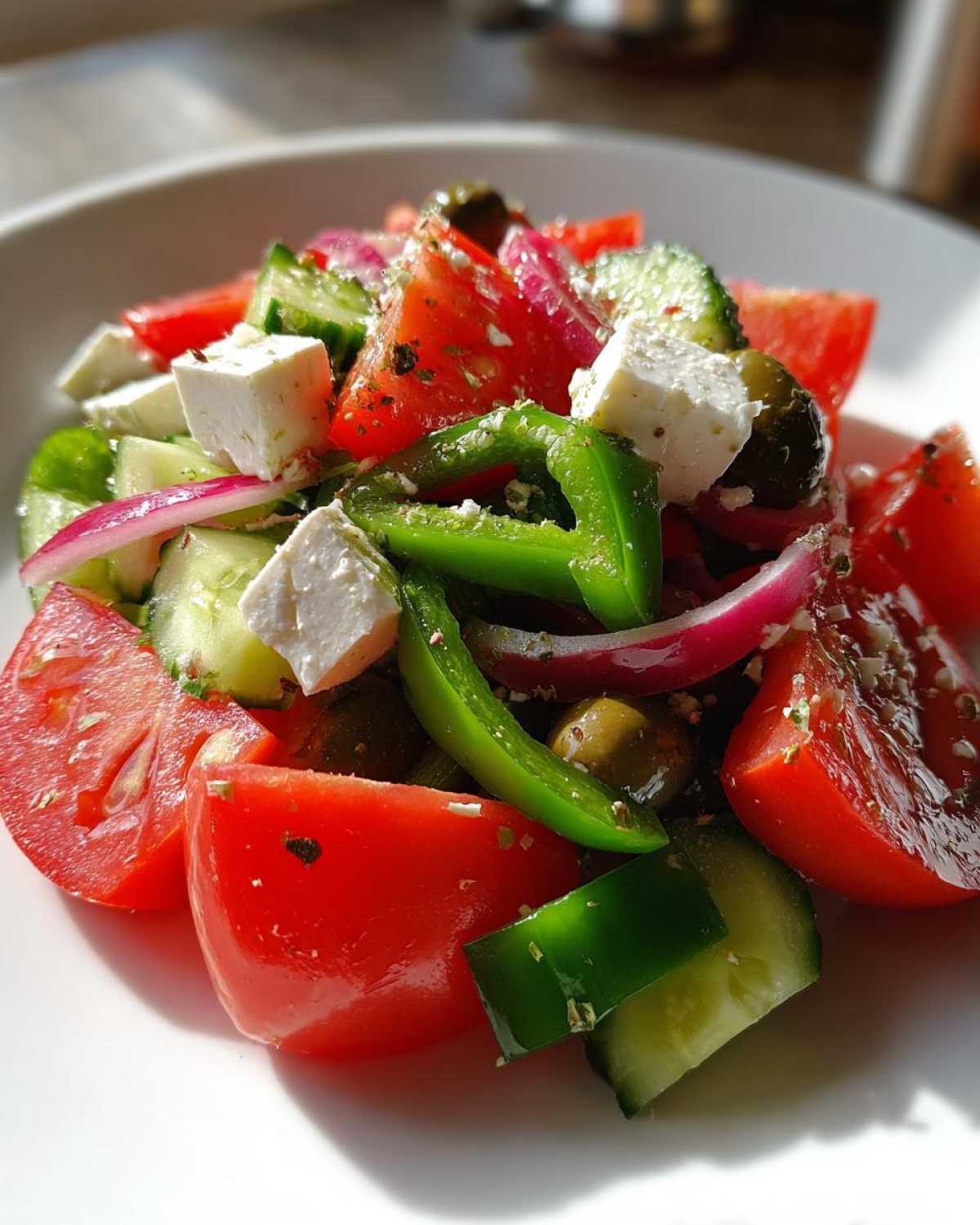
If you’re making this as a side dish for dinner, it’s fantastic next to grilled fish—think simple salmon or cod seasoned with lemon. It also cuts through rich lamb perfectly if you’re having a heartier meal. For a real throw-together lunch, I just pile a huge serving of it over a bed of fresh, crisp romaine lettuce to make it a bigger meal. And speaking of bread, you have to try making your own fluffy naan bread to dip in those leftovers!
Storage and Reheating Instructions for Greek Salad
Okay, this is the tough part about any really high-quality, fresh vegetable salad—it hates spending the night in the fridge! Look, if you want the best experience with this Greek salad, you absolutely must eat it within about an hour of tossing it with the dressing. Those juicy tomatoes are going to start weeping pretty quickly, and the cucumbers lose that amazing snap.
If you absolutely MUST prep ahead for a party the next day, do not dress it! That’s my number one piece of advice. Keep your chopped vegetables (tomatoes, cucumbers, peppers, onions, and olives) in one airtight container. Keep your feta cubes in a separate, sealed container—maybe even leave them in that brine for extra freshness.
Then, keep the dressing completely separate! Whisk it up, put it in a tiny jam jar with a tight lid, and chill it. When it’s time to serve, or maybe thirty minutes before if you’re serving it as a late lunch, you toss the vegetables and the dressing together first. Let that sit for maybe five minutes, then *gently* fold in the feta.
Can you reheat leftovers? Absolutely not! This isn’t a casserole; it’s a celebration of crispness. If you have any leftover dressed veggies, they’ll be mushy. Honestly, I try to make just enough so that we eat it all the first time around. If you have extra undressed veggies, that’s fine, but once the dressing hits that tomato, the clock starts ticking, my friend!
Frequently Asked Questions About Making Greek Salad
Can I use block feta instead of crumbled for this Greek salad?
Yes, please do! I strongly recommend buying the block feta that comes packed in brine, which I mentioned earlier. It stays wonderfully creamy and doesn’t dry out the same way pre-crumbled feta does. You just cut the block into nice, thick cubes before tossing it in at the very end. It makes such a difference in the texture!
What is the purpose of soaking the red onion?
It’s a trick to tame the heat! Red onions are wonderfully colourful, but sometimes that sharp, pungent flavour can totally overpower the delicate oregano and cucumber. Soaking the thinly sliced onions in ice water for about ten minutes knocks off that aggressive bite without affecting the flavour or colour much. It keeps the salad tasting balanced and bright, which is what we want for a perfect Greek salad!
Is it okay to add lettuce to this traditional Greek salad?
In a truly traditional recipe, no, we leave the lettuce out! The classic version relies on the crunch of the cucumber and the juicy heft of the tomatoes. If you add lettuce, especially if you’re making it ahead of time, you’re just ensuring your salad wilts faster. If you absolutely need more greens or a bigger salad base, I suggest serving the Greek salad *over* a bed of crisp romaine lettuce on the plate, rather than mixing it all in.
How long before serving should I pour the dressing on?
This is crucial advice for avoiding soup! Since there are no leafy greens to protect the veggies, the olive oil and red wine vinegar work fast. You want to dress this salad no more than 30 minutes before you serve it. Ideally, toss it about 5 to 10 minutes before everyone sits down. Remember what I said? That short rest marries the flavours perfectly without making the vegetables soggy.
Can I use dried oregano, or do I need fresh for the dressing?
For the dressing in this classic recipe, stick to dried oregano! It’s fantastic for this Mediterranean flavour profile. Fresh oregano is amazing, but dried oregano has a more concentrated, earthy spice that works perfectly with the vinegar and olive oil when it’s whisked raw like this. Save the fresh herbs for garnish on other dishes!
Nutritional Estimate for This Greek Salad
Okay, so while we are absolutely focused on making this the tastiest, freshest Greek salad imaginable, I know a lot of you are tracking macros or just want to know what you’re putting in your body. It’s wonderful that this recipe lines up so well with healthy eating, right?
Here is the breakdown based on the ingredients listed in the recipe above, serving four people. Now, you have to remember that nutrition labels are tricky, and the exact amount of fat and sodium can really change depending on the brand of feta you grab or how much olive oil you really drizzle. This is just a ballpark estimate to give you an idea of where you stand!
- Serving Size: 1 serving
- Calories: 350
- Fat: 30g (This is mostly those good fats from the extra virgin olive oil, don’t stress!)
- Saturated Fat: 10g
- Carbohydrates: 12g
- Protein: 14g
- Fiber: 4g
- Sugar: 8g
- Sodium: 650mg (The olives and feta definitely bring that salt up, so watch the extra salt if you add any!)
- Cholesterol: 45mg
See? Packed with protein and fibre from all those fantastic vegetables and that wonderful feta cheese. It’s proof that delicious *and* nutrient-dense food is the easiest kind to make. This healthy side dish really proves that you don’t need a complicated spreadsheet to eat well!
PrintClassic Greek Salad
Prepare a refreshing, traditional Greek salad featuring crisp vegetables, briny olives, and feta cheese with a simple oregano dressing.
- Prep Time: 15 min
- Cook Time: 0 min
- Total Time: 15 min
- Yield: 4 servings
- Category: Side Dish
- Method: Tossing
- Cuisine: Greek
- Diet: Vegetarian
Ingredients
- 3 large ripe tomatoes, cut into wedges
- 1 large cucumber, peeled and sliced or chopped
- 1 green bell pepper, seeded and sliced
- 1/2 red onion, thinly sliced
- 1 cup Kalamata olives, pitted
- 8 ounces feta cheese, cut into cubes or crumbled
- 1/4 cup extra virgin olive oil
- 3 tablespoons red wine vinegar
- 1 teaspoon dried oregano
- 1/4 teaspoon salt
- 1/8 teaspoon black pepper
Instructions
- Place the tomatoes, cucumber, green bell pepper, red onion, and Kalamata olives into a large bowl.
- In a small bowl, whisk together the olive oil, red wine vinegar, dried oregano, salt, and pepper to make the dressing.
- Pour the dressing over the vegetables and gently toss to coat.
- Add the feta cheese to the salad and toss very lightly to avoid breaking up the cheese too much.
- Serve immediately or chill briefly before serving.
Notes
- For the best flavor, use good quality feta cheese packed in brine.
- If you prefer a milder onion flavor, soak the sliced red onion in cold water for 10 minutes, then drain well before adding to the salad.
Nutrition
- Serving Size: 1 serving
- Calories: 350
- Sugar: 8
- Sodium: 650
- Fat: 30
- Saturated Fat: 10
- Unsaturated Fat: 20
- Trans Fat: 0
- Carbohydrates: 12
- Fiber: 4
- Protein: 14
- Cholesterol: 45