


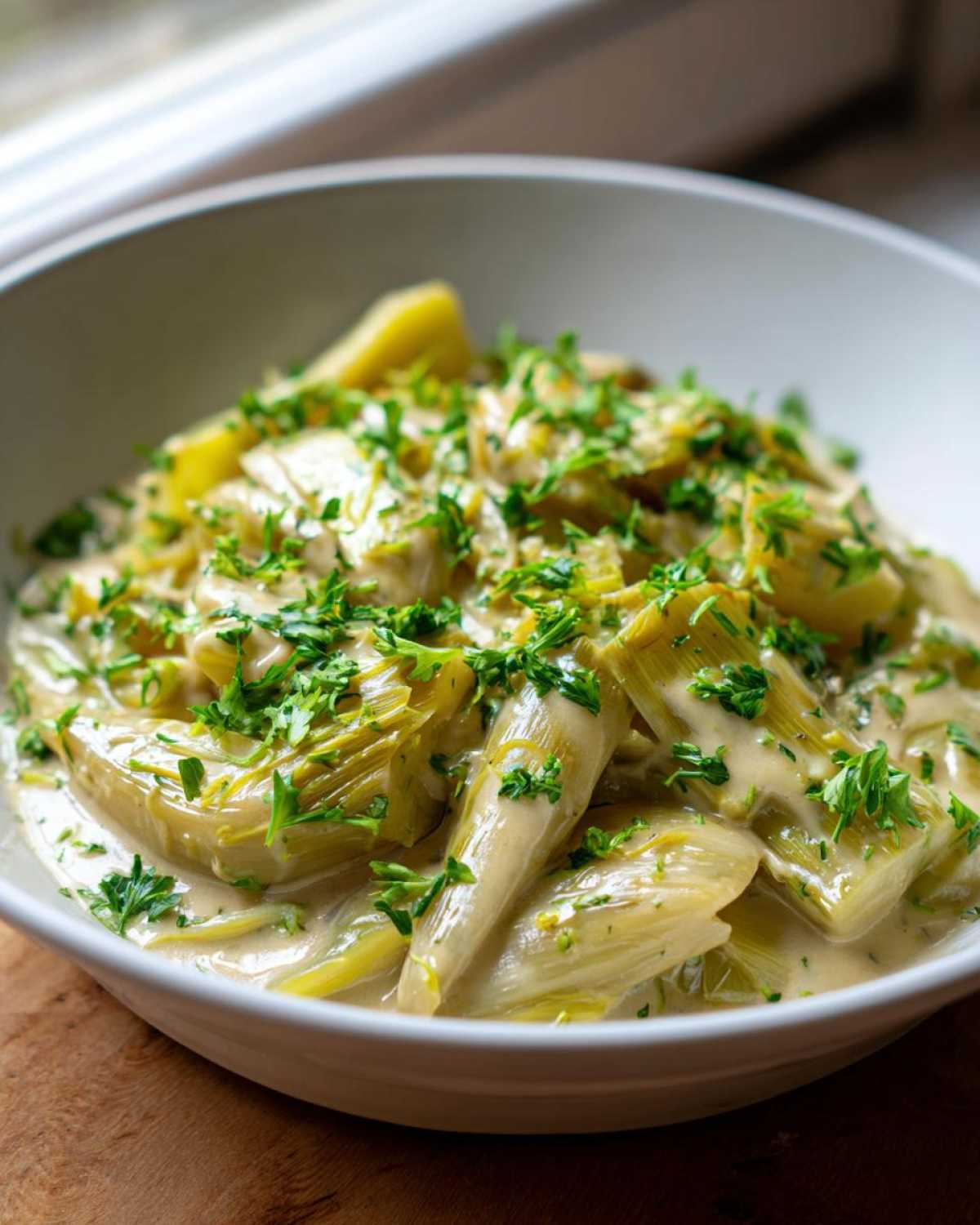
Honestly, sometimes I think we all get stuck serving the same tired vegetable sides at special dinners. But trust me, when you take the humble leek—that simple, oniony friend you usually chop up for soup—and give it the French treatment, everything changes. We’re talking about **braised leeks** that turn silky, luxurious, and completely craveable. I first learned this method years ago studying classic French technique, and it hit me: this slow cooking process completely transforms their texture. Paired with a bright, tangy white wine cream sauce, this isn’t just a side dish; it’s the showstopper your roasted chicken or perfectly seared steak has been waiting for. It feels incredibly gourmet, but I promise you, it’s way easier than you think!
If you want to see more of my favorite kitchen discoveries, check out what I’ve been cooking up lately over on my kitchen adventures page!
Why You Will Make These Tender Braised Leeks Again and Again
Okay, if you’re on the fence about trying a new vegetable dish, let me convince you why these **braised leeks** need to be on your next dinner menu. They’ve got that something special that makes you feel like you’re eating at a fantastic bistro, even if you just whipped them up after work.
- Melt-in-Your-Mouth Texture: This isn’t chewy, fibrous leek. We’re talking about a texture so soft and silky, it barely requires chewing. They genuinely melt!
- Sophisticated Pairing: That white wine cream sauce? It’s simple enough that it doesn’t steal the show, but rich enough to elevate any main course. Perfect for those times you need elegant side dish ideas.
- Surprisingly Speedy: While we call them ‘braised’, the majority of the time is hands-off simmering. You look like a culinary hero with minimal active effort!
- Holiday Ready: These are absolutely my go-to when I’m tired of boring mashed potatoes. They look gorgeous piled high on a platter, making them ideal for holiday side dishes. You can find more ideas like this over at my gourmet vegetable sides collection.
Essential Ingredients for Perfect Braised Leeks
To get that incredible, melt-in-your-mouth texture for your braised vegetable recipes, you have to start with the right stuff. Don’t try to rush this part! Gathering everything first—that old-school *mise en place*—makes the cooking process flow so smoothly. You’ll notice there aren’t a ton of ingredients here, which is great because it lets the natural flavor of the leeks really shine through the sauce.
Here’s what you need on hand for four servings. You’ll see there’s no heavy stock needed, just broth, letting the wine and cream do the heavy lifting!
You’ll need: 4 large leeks (just the white and light green parts), 2 tablespoons of unsalted butter, 1 shallot (minced finely), 1/2 cup of dry white wine, 1/2 cup of heavy cream, 1/2 cup of vegetable broth, 1 tablespoon of fresh lemon juice, salt, pepper, and a little fresh parsley for garnishing at the end.
Ingredient Notes and Substitutions for Braised Leeks
Listen, the success of this dish hinges on selecting and prepping your main vegetable correctly. Cleaning the leeks is non-negotiable! They grow in sandy soil, and you don’t want that grit mingling with your fancy white wine sauce.
Leek Prep Magic: Slice your leeks in half lengthwise after you trim off the tough dark green tops and the root end. Then, open them up under running water and really swish them around to knock out all that hidden dirt. Cut them into nice 2-inch pieces after they are sparkling clean.
When it comes to the wine, only use something you would actually drink! You need a nice, crisp *dry* white—Sauvignon Blanc or Pinot Grigio are perfection for these **creamy leek sides**. Don’t even think about using cooking wine; it tastes just like what it is!
If you’re trying to keep things plant-based, don’t sweat it! For amazing vegan braised leeks recipes, just swap that butter out for good quality olive oil. And instead of heavy cream, use a can of full-fat coconut cream. It sounds weird, but trust me, the savory spices cover the coconut essence, leaving you with a surprisingly luxurious, thick sauce. It’s a great way to make this dish versatile for everyone!
For more inspiration on how to transform humble veggies, take a peek at my thoughts on hearty comfort food sides—sometimes simple ingredients just need the right technique!
Step-by-Step Method for Creamy Braised Leeks
Alright, buckle up! This is where the magic happens. I’m going to walk you through exactly how I turn those clean leeks into the softest **braised leeks** you’ve ever had. Remember how we talked about cleaning them? Do not skip that part! Now, grab your heavy-bottomed pot—a Dutch oven is my absolute favorite for this kind of gentle cooking.
First things first: we need to build a little flavor base. Melt those two tablespoons of butter over medium heat. Toss in your minced shallot and let it soften up until it’s translucent. That usually takes about two minutes. Don’t let it brown; we want sweet, not sharp!
Next, add all those prepped leeks in there. Give them a good stir so they get coated completely in that buttery shallot mixture. Cook them for about five minutes; you’ll see them start to slump down a bit. This just gets them warmed up for the actual braise.
Now for my favorite part of any good technique: deglazing! Pour in that half-cup of dry white wine. Turn the heat up a touch and let it sizzle and bubble away for two minutes. As it reduces, use your spoon to scrape up every little brown bit stuck to the bottom of the pot. That dark stuff is pure flavor, and we want it all in our final sauce!
Once the wine has mostly cooked off, pour in your vegetable broth. Bring the whole pot to a very gentle simmer, then slap the lid on tight! Reduce your heat down to low. Seriously, low. We are *braising*, not boiling them away!
Achieving Tender Braised Leeks Texture
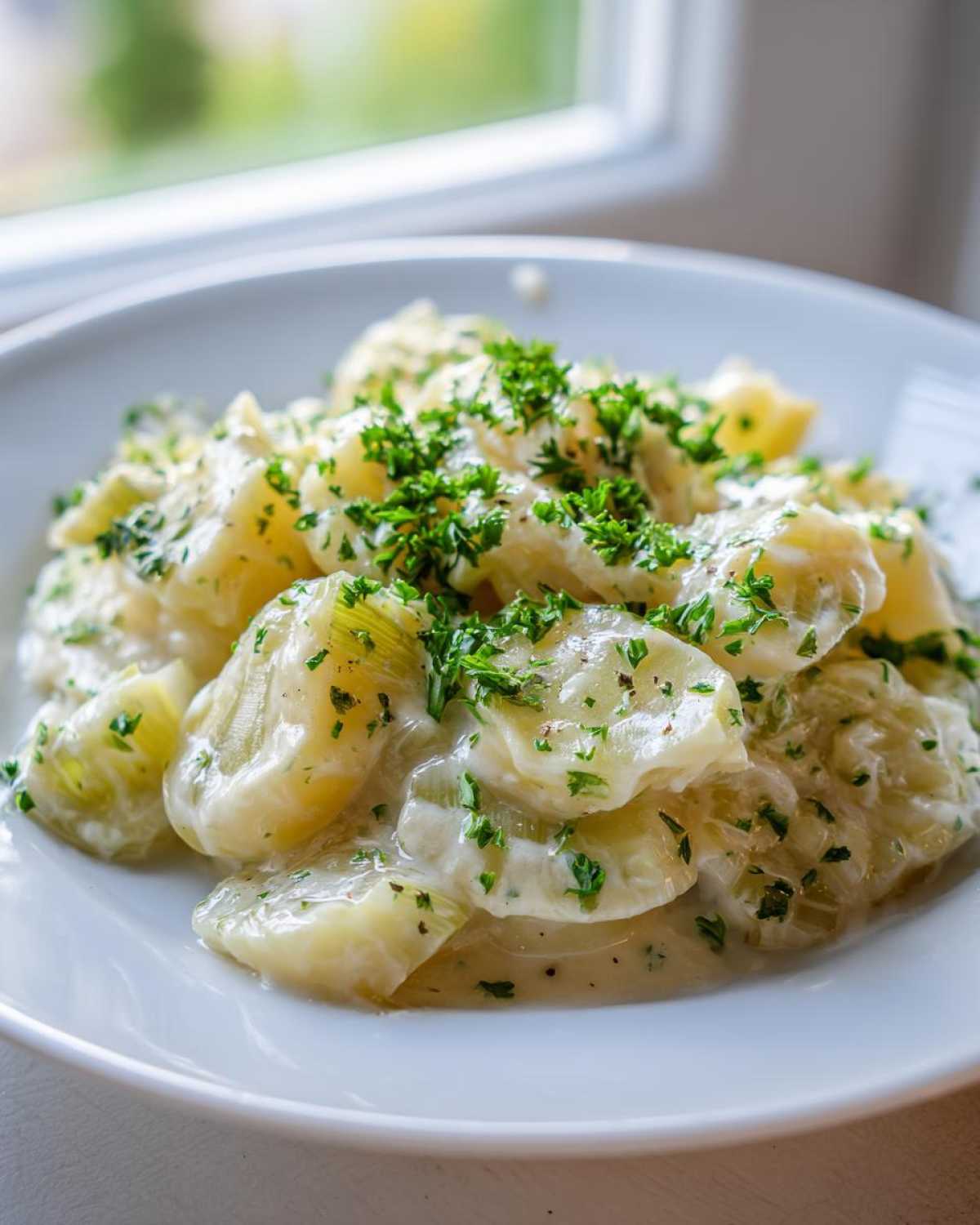
This is the time commitment, but it’s mostly hands-off waiting time. You need to let those leeks cook, covered, for a solid 20 to 25 minutes. Why so long? Because we are aiming for that unbelievably soft texture. You’re looking for true tenderness here. When you pierce one of those 2-inch pieces with a fork, it should slide in with almost zero resistance. If you feel any tugging or firmness, put the lid back on and give it another five minutes. This slow cooking ensures every bit of fiber breaks down, creating those unbelievably tender braised leeks. This gentle heat is also perfect for developing the deeper, sweeter profile of the leeks, which is key for any good how to cook leeks method, honestly.
Finishing the White Wine Sauce
Once you’ve confirmed they are fork-tender, it’s time for the grand finale! Take the lid off and turn the heat back up just slightly—medium-low is perfect for this phase. Pour in that heavy cream and the fresh lemon juice. The lemon is essential; it cuts through the richness beautifully. Now, you must watch this carefully! You only want this mixture to simmer gently. Stir it often and let it reduce down for about three to five minutes until the sauce thickens enough to cling lightly to the back of a spoon. Do not let this boil vigorously once the cream is in, or you risk breaking the sauce! We want a silky, cohesive, creamy leek side finish, not curdled sadness. Once it coats nicely, kill the heat, season with salt and pepper generously, and get ready to serve immediately!
If you want to see a peek at the finished sauce consistency first, check out my guide on how to cook leeks—it shows you exactly what I look for before adding the cream!
Tips for Success with French Vegetable Sides
Okay, now that you know the steps, let me give you my last few insider secrets. When you’re making French vegetable sides, or really any vegetable dish that relies on slow cooking to create tenderness, a few small habits make a huge difference! These little tweaks are what separate a good dish from the truly unforgettable ones.
First, revisit your pot choice. I mentioned using a heavy-bottomed pot or a Dutch oven, and I can’t stress this enough. Because we are cooking these leeks low and slow, we need heat distribution to be as even as possible. If you use a thin pan, you risk hot spots, which leads to scorching on the bottom while the middle is still crunchy. We are aiming for uniform softness across the whole batch. It’s all about that gentle, consistent hug of heat!
Second, you need to pay attention to your leeks—they aren’t all the same size! If you happen to use massive, chunky leeks, you might need an extra 5 or 10 minutes of braising time, and you definitely need to check your liquid levels. If the liquid evaporates too much before the leeks soften, the bottom will burn before the top pieces are cooked through. If that happens, just add half an inch more broth or even water, put the lid back on, and keep simmering. It’s all about adjusting the moisture depending on what the vegetables are doing!
My final, critical tip for serving creamy dishes: serve these immediately! That white wine cream sauce is gorgeous when it first reduces, coating everything perfectly. If you let it sit around or try to reheat it too aggressively later, that beautifully emulsified sauce can separate. This dish is best enjoyed right off the stove. If you absolutely must make it ahead of time, stop right before adding the cream, then gently reheat the leeks in broth the next day and finish with the cream/wine reduction just before serving. For more advanced insight into these traditional preparations, check out my notes on classic French cooking fundamentals!
Serving Suggestions for This Elegant Side Dish
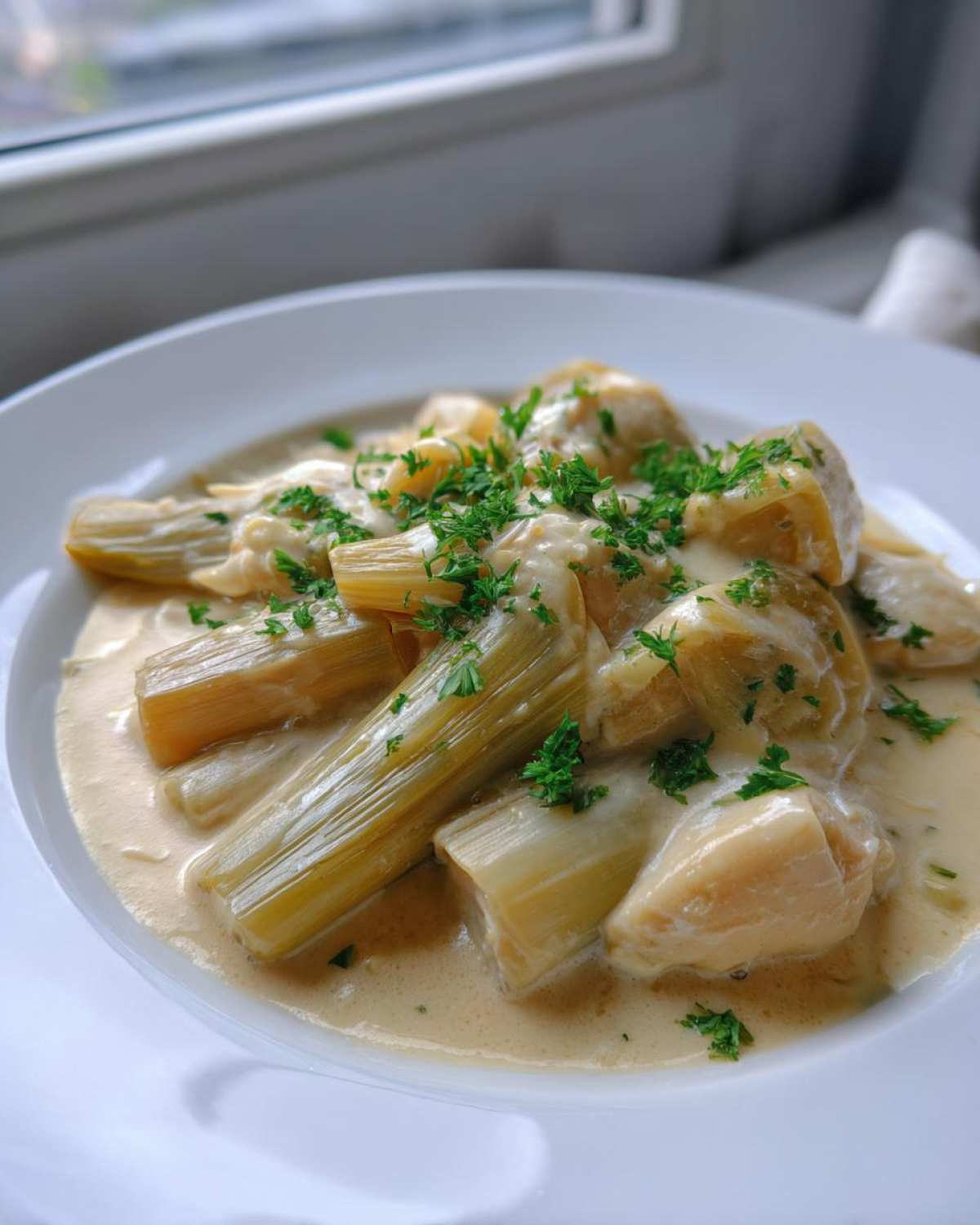
So, you have this gorgeous pot of silky braised leeks swimming in a glorious white wine cream sauce. What do you serve it with? You deserve a main course that matches this level of elegance! Because the sauce has a lovely richness—it’s practically a vegetarian beurre blanc side dish—it pairs beautifully with cleaner proteins that won’t fight the delicate flavors.
This is my go-to recipe when I’m trying to impress without stressing out. Forget the heavy sides; these leeks are the star!
Pairing with Poultry and Pork
Roasted chicken is perhaps the most classic pairing here. The crispy skin and simple, savory meat contrast perfectly with the creamy, slightly tangy sauce. Try a pan-roasted chicken breast and let the leeks soak up all those delicious pan drippings alongside the cream sauce. If you’re doing pork, a thick-cut pork chop, perhaps flavored simply with thyme, works wonders. We want the pork’s natural sweetness to play nicely with the leeks.
The Perfect Seafood Match
Look, if you want a truly restaurant-worthy meal, seafood is the way to go. The slight acidity from the lemon juice in the sauce brightens up delicate fish. I cannot tell you how good these are next to a perfectly baked salmon fillet! If you’re looking for an easy way to nail that fish companion, you should check out my recipe for easy juicy baked salmon—it takes almost no effort and lets you focus on getting those leeks just right.
For the Carnivore: Steakhouse Vibes
If you prefer red meat, these make an absolutely fantastic stand-in for traditional creamed spinach. These leeks work perfectly as a vegetable dish for steak because they are rich enough to stand up to a good cut of beef, but lighter than potatoes. Think about searing a beautiful ribeye. The salt and fat from the steak complement the wine reduction in the sauce with every bite. Honestly, for a weeknight dinner, this combination makes me feel like I’m having a proper steakhouse experience right in my own dining room!
Storage and Reheating Instructions
Now, I really hope you don’t have leftovers because these **braised leeks** are genuinely best eaten the second they come off the stove—that creamy sauce is liquid gold right then! But let’s be real, sometimes we cook too much, right? Life happens!
If you do end up with some extra, you generally have about two to three days for storage. Make sure you get them into an airtight container as soon as they cool down a bit. Sticking them in the back of the fridge is fine, but try to eat them within 72 hours for the best texture.
The Challenge of Reheating Cream Sauces
If you’ve ever tried to reheat a sauce made with heavy cream, you know the anxiety! Sometimes they can get a little bit grainy or start to break apart when you try to bring them back up to temperature, and nobody wants a broken sauce hugging their otherwise perfect leeks.
Do NOT be tempted to nuke these in the microwave on high power; that will definitely cause trouble. You need to reheat them slowly, using gentle, moist heat. Pop the leftovers into a small saucepan over the absolute lowest heat setting you have. Continuous, gentle stirring is your best friend here.
Adding Moisture Back In
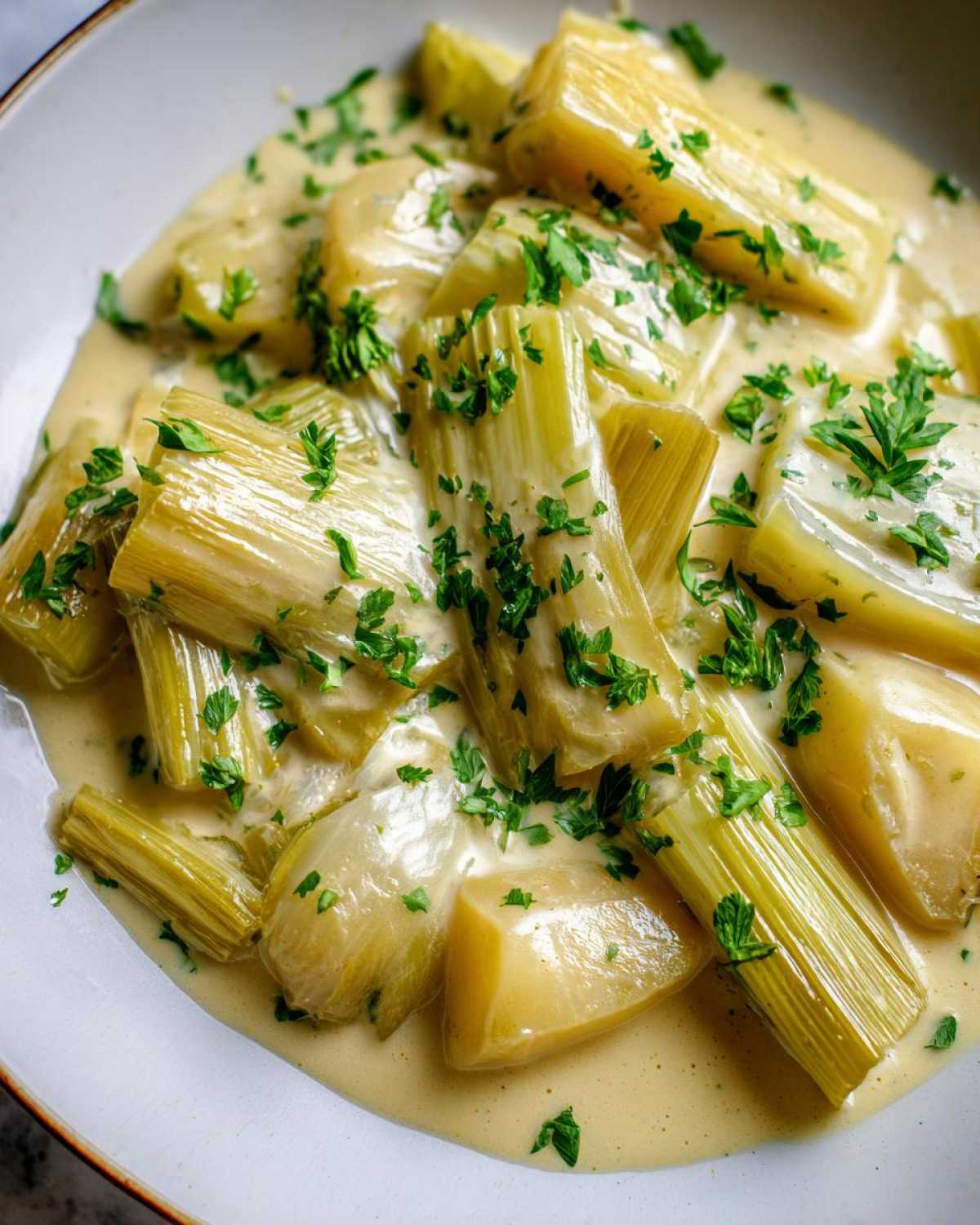
As the mixture warms up, you might notice it looks a little tighter or thicker than it did before. That’s the cream setting up. To fix this without breaking the emulsion, just add a tiny splash of liquid. I prefer using a splash of good-quality vegetable broth—it keeps the flavor profile consistent. If you’re completely out of broth, a tablespoon of water works in a pinch!
Warm it slowly until it’s just steaming hot throughout, but pull it off the heat before it ever comes to a hard simmer or boil. That way, your **tender braised leeks** will come back tasting almost as good as they did the first time around! It takes patience, but this gentle method saves your creamy finish every time.
Frequently Asked Questions About Cooking Leeks
I get so many questions from folks trying this recipe for the first time, especially about handling the leeks themselves. They seem intimidating, but trust me, once you know the trick, they are so easy! Here are some of the things I hear most often about preparing these vegetables.
What part of the leek do I use, and how much cleaning is really necessary?
This is probably the number one question! You only want the white part and the very bottom part of the light green stalks. The dark green tops are too tough and fibrous for braised vegetable recipes like this one, where we want ultimate tenderness. Toss those dark tops into your next stock pot instead! As for cleaning, I cannot stress this enough: wash them until you hear the sand stop rattling! Seriously, run them under the water, lift them out, swish them around in the bowl, and pull them out again. You have to separate those layers to get all the grit out. It’s the difference between heaven and a mouthful of grit!
If I don’t have white wine, what is the best substitute?
If you absolutely must skip the wine, don’t panic! The wine adds that crucial acidity that balances the fat in the cream and keeps the dish from tasting heavy. If you don’t drink or don’t have any on hand, your best bet is a combination of fresh chicken or vegetable broth mixed with a good squeeze of fresh lemon juice—maybe an extra teaspoon of juice beyond what the recipe calls for. You won’t get the exact depth of flavor you get from reducing the wine, but it keeps the sauce bright enough to work well. I cover some other fun ways to flavor dishes in my section on easy gourmet recipes!
Can I make the white wine sauce ahead of time?
This is tricky because this dish is best fresh. If you are prepping for a big dinner, you can certainly complete the entire braising process—steps 1 through 5—and keep the cooked leeks stored in their liquid overnight. Then, the next day, gently reheat them (low and slow!) before adding the cream and finishing the sauce to serve. Trying to make the entire finished dish ahead of time means the cream sauce will solidify and may break when you try to reheat it. For the best result, leave the final cream reduction for the last 10 minutes before serving.
Can these braised leeks be made vegan?
Absolutely! As I mentioned above, these are super adaptable. If you want to make these into wonderfully rich vegan braised leeks recipes, ditch the butter and use a nice neutral oil like avocado oil for sweating the shallots. Then, when it comes time for the heavy cream, swap it out entirely for two-thirds cup of full-fat canned coconut cream. Coconut cream is much richer than coconut milk, so it reduces down beautifully into a thick, decadent sauce that coats the leeks perfectly. It’s surprisingly fantastic!
Estimated Nutritional Information
Okay, so now that you know how ridiculously easy it is to create this gourmet side dish, naturally, you want to know what’s in it, right? I always stress that these numbers are just an estimate! I threw mine together with high-fat cream and salted butter this week, so yours might look a little different depending on your choices.
I pulled the numbers based on the standard recipe measurements we used, assuming the dish is split evenly among four people trying to make an elegant side dish experience. Remember, since we use a relatively small amount of butter and cream compared to the bulk of the vegetable, they tend to come out lighter than you might expect for such a rich flavor!
Here are the breakdown estimates per serving:
- Serving Size: 1 serving
- Calories: 210
- Fat: 16g (with 9g Saturated Fat)
- Cholesterol: 55mg
- Carbohydrates: 14g (with 3g Fiber and 5g Sugar)
- Protein: 4g
- Sodium: 180mg
Just a quick word of caution for my fellow readers watching their diet: those numbers are for the leeks and the sauce combined. If you splurge on richer cream or butter, or if you happen to eat more than one serving (which, trust me, is tempting!), those numbers will go up. But compared to heavy mashed potatoes or some rich gratins, these braised vegetable recipes are actually quite reasonable for how luxurious they taste! Enjoy them guilt-free!
Share Your Gourmet Vegetable Sides
Well, that’s it! You’ve done the work, you’ve mastered the gentle art of braising, and now you have a pot full of the most elegant, tender, creamy braised leeks the kitchen has ever seen. I am so excited for you to serve these up for your next dinner party or just because you felt like treating yourself—which, by the way, is an excellent reason!
Now, I really, really want to know how they turned out for you! Food is meant to be shared, right? Please don’t be shy. Drop a comment down below—tell me what main dish you paired them with. Did you decide to go for salmon, or were you pairing them with a gorgeous roasted chicken? I love hearing all your dinner strategies!
And if you snapped a picture of your beautiful presentation—because honestly, these deserve a photo shoot—please tag me! It makes my day to see your gorgeous results on social media, knowing you made something truly special from scratch. Every time someone shares their success with these gourmet vegetable sides, it just validates that taking the extra minute to clean those leeks properly was totally worth it!
If you ever run into trouble, or if you just want to bounce some ideas around for your next **winter vegetable recipes** project, don’t hesitate to reach out! You can always get in touch with me directly through the contact page. Happy cooking, and thank you for trusting this recipe!
PrintTender Braised Leeks with White Wine Cream Sauce

This recipe shows you how to cook leeks until they are very tender, finished in a simple white wine cream sauce, creating an elegant side dish.
- Prep Time: 15 min
- Cook Time: 35 min
- Total Time: 50 min
- Yield: 4 servings
- Category: Side Dish
- Method: Braising
- Cuisine: French
- Diet: Low Fat
Ingredients
- 4 large leeks, white and light green parts only
- 2 tablespoons unsalted butter
- 1 shallot, minced
- 1/2 cup dry white wine
- 1/2 cup heavy cream
- 1/2 cup vegetable broth
- 1 tablespoon fresh lemon juice
- Salt to taste
- Black pepper to taste
- 1 tablespoon fresh parsley, chopped (for garnish)
Instructions
- Clean the leeks thoroughly by slicing them in half lengthwise and rinsing dirt from between the layers. Cut the leeks into 2-inch pieces.
- Melt the butter in a large, heavy-bottomed pot or Dutch oven over medium heat. Add the minced shallot and cook until soft, about 2 minutes.
- Add the cut leeks to the pot. Stir to coat them in the butter and cook for 5 minutes until they begin to soften slightly.
- Pour in the white wine and let it simmer rapidly for 2 minutes, scraping up any browned bits from the bottom of the pot.
- Add the vegetable broth. Bring the liquid to a gentle simmer, then cover the pot. Reduce the heat to low and cook for 20 to 25 minutes, or until the leeks are very tender when pierced with a fork.
- Remove the lid. Increase the heat to medium-low. Stir in the heavy cream and lemon juice. Let the sauce reduce slightly, about 3 to 5 minutes, until it coats the back of a spoon. Do not boil rapidly.
- Season the braised leeks and sauce with salt and pepper to your preference.
- Serve immediately, garnished with fresh chopped parsley.
Notes
- For a richer sauce, substitute half of the heavy cream with crème fraîche.
- If you prefer a thinner sauce, add a splash more broth or wine at the end.
- To make this dish vegan, replace the butter with olive oil and use full-fat coconut cream instead of heavy cream.
Nutrition
- Serving Size: 1 serving
- Calories: 210
- Sugar: 5
- Sodium: 180
- Fat: 16
- Saturated Fat: 9
- Unsaturated Fat: 7
- Trans Fat: 0
- Carbohydrates: 14
- Fiber: 3
- Protein: 4
- Cholesterol: 55