

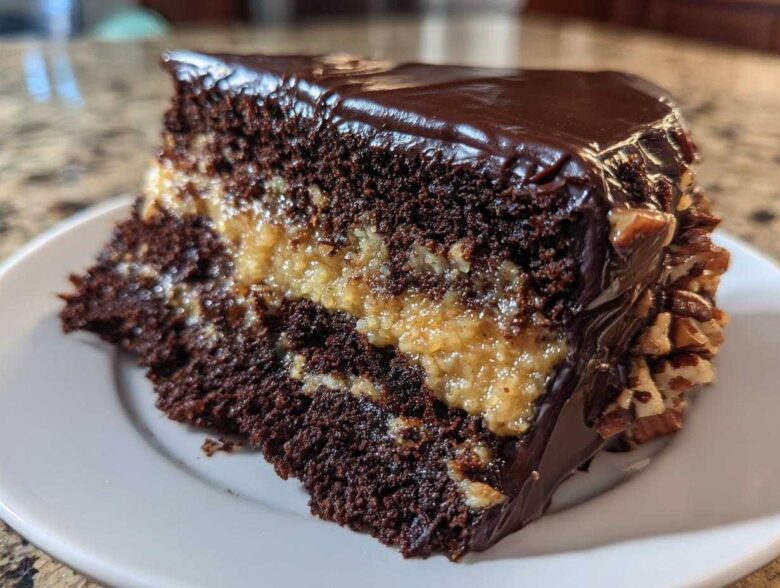
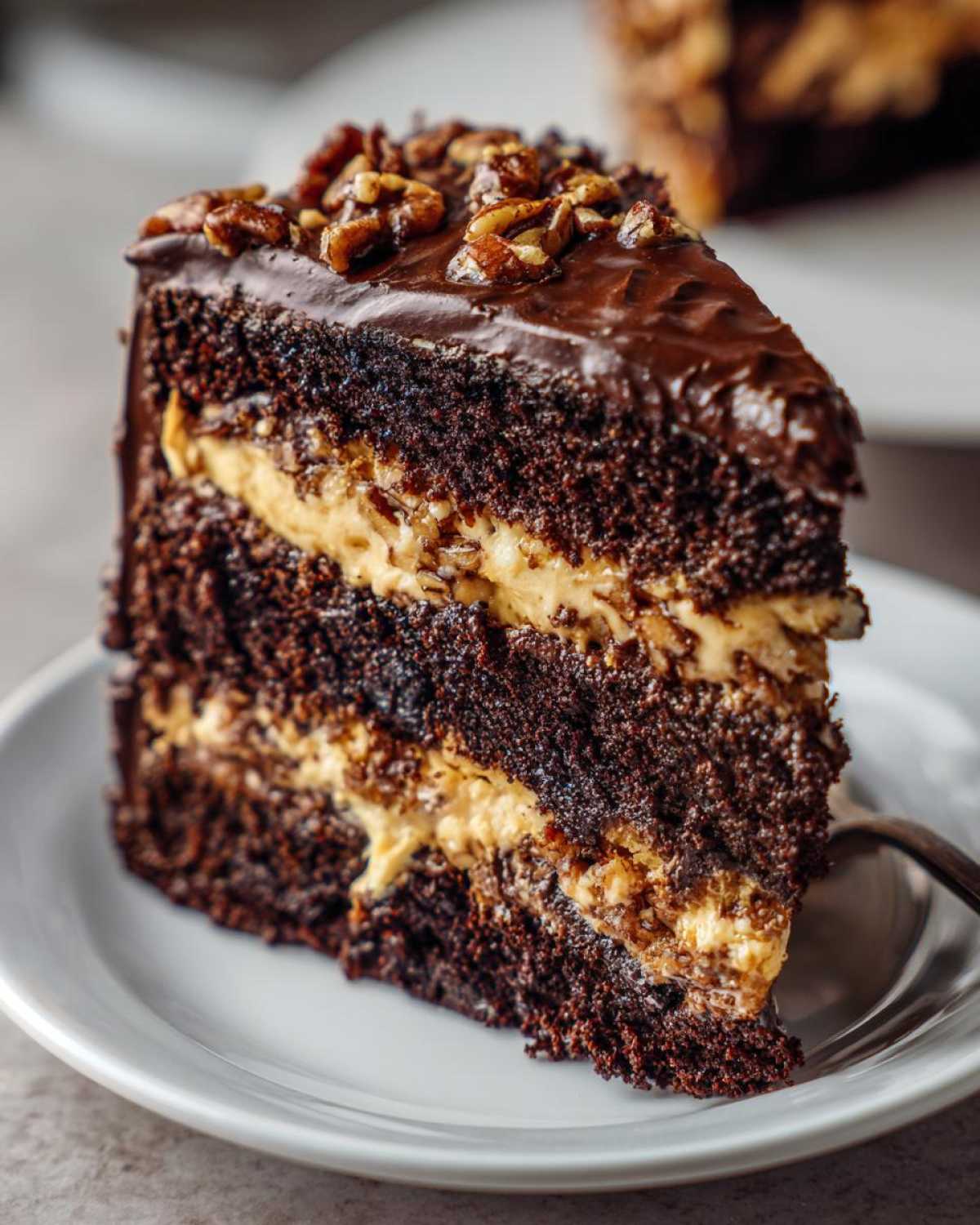
Oh my goodness, you are in for such a treat! When we talk about a german chocolate cake recipe, we aren’t just talking about dessert; we’re talking about a towering, decadent monument to American baking that deserves respect. David and I spent ages testing every single stage because we needed this to be the definitive guide for you. Most recipes cheat on the texture, but Zola insisted that the layers had to be unbelievably moist, perfectly complemented by that signature, buttery, gooey coconut-pecan frosting. We pour our whole kitchen philosophy into this, and you can read more about how David and I ended up blending our styles over at the Our Story section.
This isn’t just any batch; this is our Taste Edition—the version where Zola’s vision for perfection meets my need for structural integrity. Believe me, after reviewing our source material and making countless test bakes, we nailed it. If you love baking from scratch and want a showstopper, you’ve come to the absolute right place!
Why This is the Best german chocolate cake recipe for Your Celebrations
So, why should you trust our german chocolate cake recipe over all the others? Because we obsessed over the details so you don’t have to! When Zola took this traditional cake recipe, she kept one thing central: texture. If you’re looking for something less intensely sweet sometimes, check out our cream cheese frosting recipe, but for this classic, stick with the gooey stuff!
- You get guaranteed moist chocolate cake layers—no dry edges allowed!
- We perfected the signature gooey coconut-pecan frosting recipe; it’s buttery and thick, just how it should be.
- It’s built on the foundation of a true American classic layer cake.
We put in the hard work so your next celebration features a cake that everyone remembers, not just the sugar rush!
Gathering Ingredients for Your german chocolate cake recipe
Alright, David always insists I read these measurements out loud three times to make sure I don’t miss anything, because that’s how you ensure we nail this german chocolate cake recipe from the start! You need quality stuff here, especially for those layers to turn out as moist as they should. Grab your measuring cups—this is the shopping list for true, decadent bliss.
For the Moist Chocolate Cake Layers
This is where the foundation of moisture gets laid! Seriously, don’t skimp on letting your eggs and buttermilk warm up a bit first; it helps them mix into that beautiful golden butter base way better.
- 1 cup (2 sticks) unsalted butter, softened
- 2 cups granulated sugar
- 4 large eggs, room temperature
- 1 teaspoon vanilla extract
- 1 cup buttermilk, room temperature
- 1 3/4 cups all-purpose flour
- 3/4 cup unsweetened cocoa powder
- 1 teaspoon baking soda
- 1/2 teaspoon salt
- 1 cup hot water or hot brewed coffee (Coffee makes the chocolate sing, trust me!)
- 4 ounces German’s Sweet Chocolate, melted and cooled slightly
For the Gooey Coconut Pecan Frosting Recipe
This is the star of the show! Make sure your pecans are roughly chopped—we want texture, not dust!
- 1 cup (2 sticks) unsalted butter
- 1 cup packed light brown sugar
- 1/2 cup evaporated milk
- 4 large egg yolks, lightly beaten
- 1 teaspoon vanilla extract
- 1/4 teaspoon salt
- 1 1/2 cups flaked coconut
- 1 cup chopped pecans
For the Chocolate Ganache Glaze
Simple, shiny, and ready to seal in all that goodness.
- 4 ounces bittersweet chocolate, finely chopped
- 1/2 cup heavy cream
How to Make german chocolate cake recipe From Scratch: Step-by-Step
Okay, here is where David’s structure-loving brain really kicks in—we need precision for this german chocolate cake recipe to shine. Making this cake from scratch involves three distinct stages, and moving between them correctly is the secret sauce. Remember, the frosting needs time to cool, so it helps to think of this process in batches! If you’re new to baking from scratch, you’ll see these steps are clearer than my first chaotic attempts! You can always brush up on your fundamental techniques over at the baking from scratch guide if you need a refresher on creaming!
Baking the Moist Chocolate Cake Layers
First things first, get that oven ready! Preheat it to 350°F (175°C) right away. You’ll need three 9-inch round cake pans, so grease and flour those up nice and thoroughly; sticky chocolate cake is the absolute WORST to scrape out.
Start by creaming that softened butter and sugar until it looks light and fluffy—you want air in there! Beat in your room-temperature eggs one by one, mixing well after each one, then stir in the vanilla. In a separate bowl, whisk together the flour, cocoa powder, and baking soda.
Now for the liquids! Dissolve your baking soda into the room-temperature buttermilk. Add half of your dry ingredients to the wet mixture, just mixing until you barely see streaks of flour left. Next, we introduce the melted German’s Sweet Chocolate mixed with hot water or coffee; gently mix that in until smooth. Finally, slowly alternate adding the rest of the dry stuff and the buttermilk mixture, starting and ending with the dry. Be careful here—do not overmix! Just mix until it’s smooth. Divide that beautiful batter evenly into your pans and bake for about 25 to 30 minutes. Test with a pick; if it comes out clean, let them cool in the pan for about 10 minutes before turning them out onto a wire rack to cool completely. We wait until they are totally cool before frosting!
Creating the Signature Coconut Pecan Frosting Recipe
This step is tricky, but Zola got it down pat, and I documented the exact science. In a medium saucepan, cook your butter, brown sugar, and evaporated milk over medium heat. Stir constantly until it thickens up a bit, maybe 5 to 7 minutes. Don’t let it boil over!
Now, listen up: we have to temper the egg yolks. Remove the saucepan from the heat. Whisk your 4 egg yolks in a separate small bowl—you need them beaten slightly so they don’t scramble when they hit the hot mixture. Slowly, I mean slowly, whisk about half a cup of that hot sugar mixture into the yolks. This is called tempering, and it stops them from turning into scrambled eggs when you pour them back in! Once they’re mixed in, pour the tempered egg mixture back into the saucepan.
Return it over medium-low heat and stir constantly until the frosting thickens enough to coat the back of a spoon. Pay attention! As soon as it coats, pull it off the heat immediately. Stir in your vanilla and salt, then fold in all that glorious coconut and those chopped pecans. This frosting will look soupy at first, but you must let it cool *completely* to room temperature. It thickens up like magic as it cools, getting that perfect, gooey frosting recipe texture you look for.
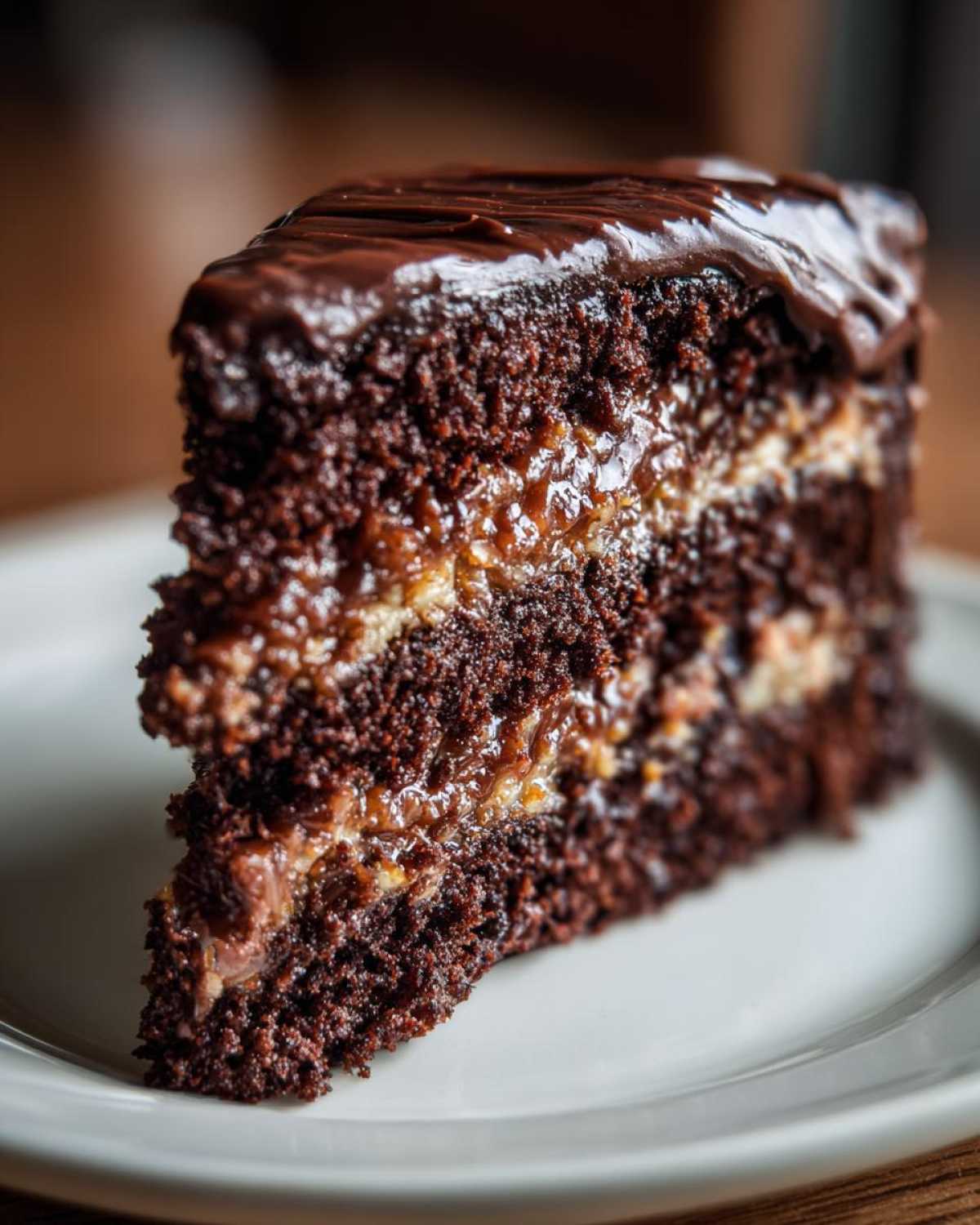
Finishing with the Chocolate Ganache Glaze and Assembly
While that frosting is cooling its heels, whip up the simple glaze. Just put your chopped bittersweet chocolate in a bowl, heat the heavy cream until simmering, pour it over the chocolate, wait five minutes, and whisk until it’s glossy smooth. Let that cool slightly until it’s easily spreadable.
Time for the glorious assembly! Place one cooled chocolate layer on your plate. Spread about a third of that cooled, thick coconut-pecan frosting evenly over the top. Place the second layer down and repeat the frosting layer. Put on the final chocolate layer.
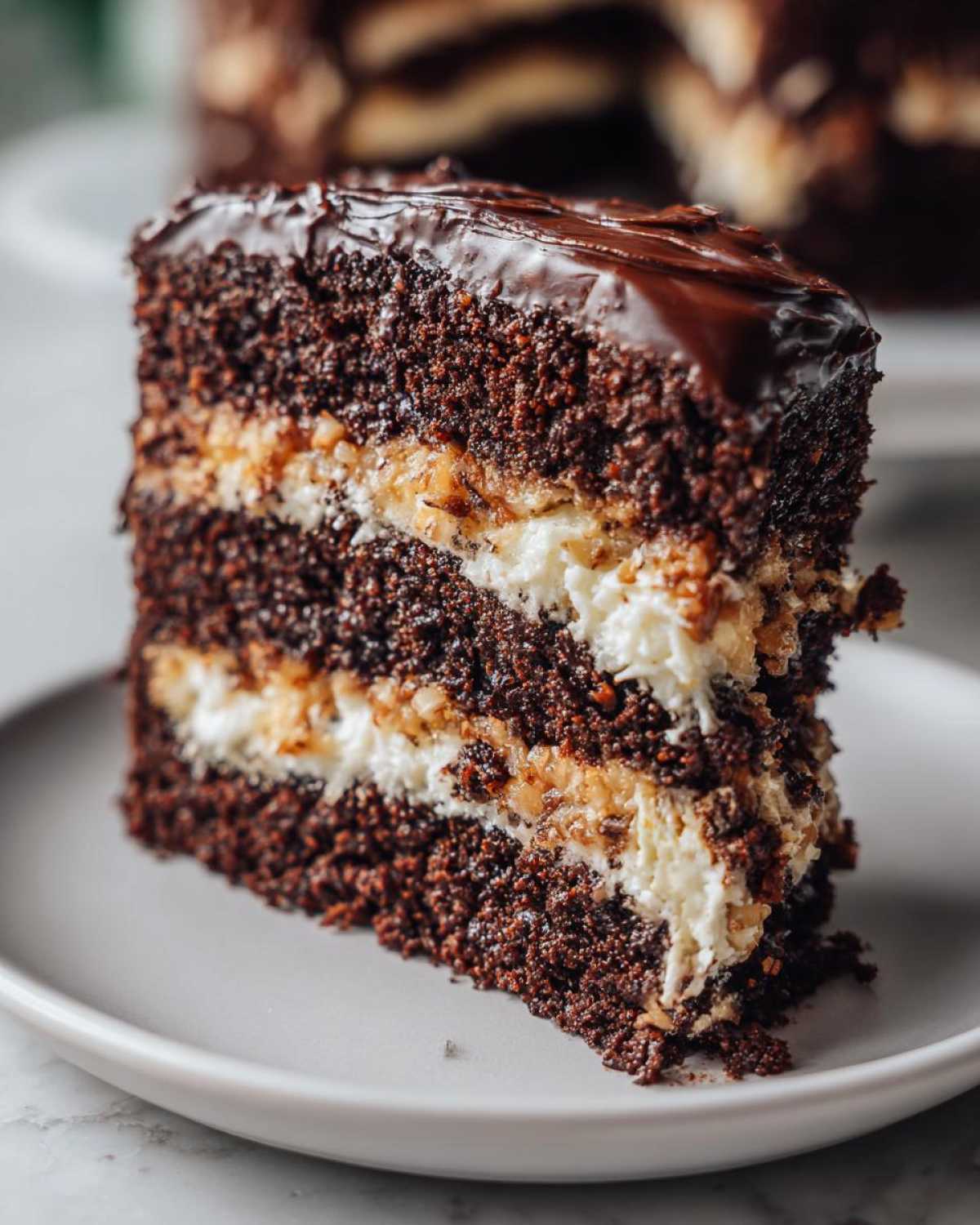
You can drizzle the ganache over the top layer of coconut pecan, or if you want a really sharp, polished look, use it to carefully frost the top and sides of the whole cake. Let that chocolate ganache set up a bit before you slice. That’s it—you’ve made a classic layer cake from scratch!
Tips for the Perfect german chocolate cake recipe
Whew, now that you’ve gone through that whole process, I want to give you just a few more little secrets Zola and I discovered. These aren’t step-by-step instructions; they’re just the little nudges that take this cake from “really good” to “I need the recipe immediately!” kind of good. David is all about precision when it comes to achieving that deep chocolate flavor, which is why he’s so adamant about my hot coffee tip.
First off, let’s talk about that hot liquid for the cake layers. The recipe calls for hot water or coffee, and if you aren’t using coffee, you are missing out! The hot liquid “blooms” the cocoa powder, intensifying the chocolate flavor tenfold. Seriously, you won’t taste coffee, but your chocolate cake layers will be darker, richer, and taste like the very best decadent chocolate dessert you’ve ever had. Just make sure it’s hot when you add it!
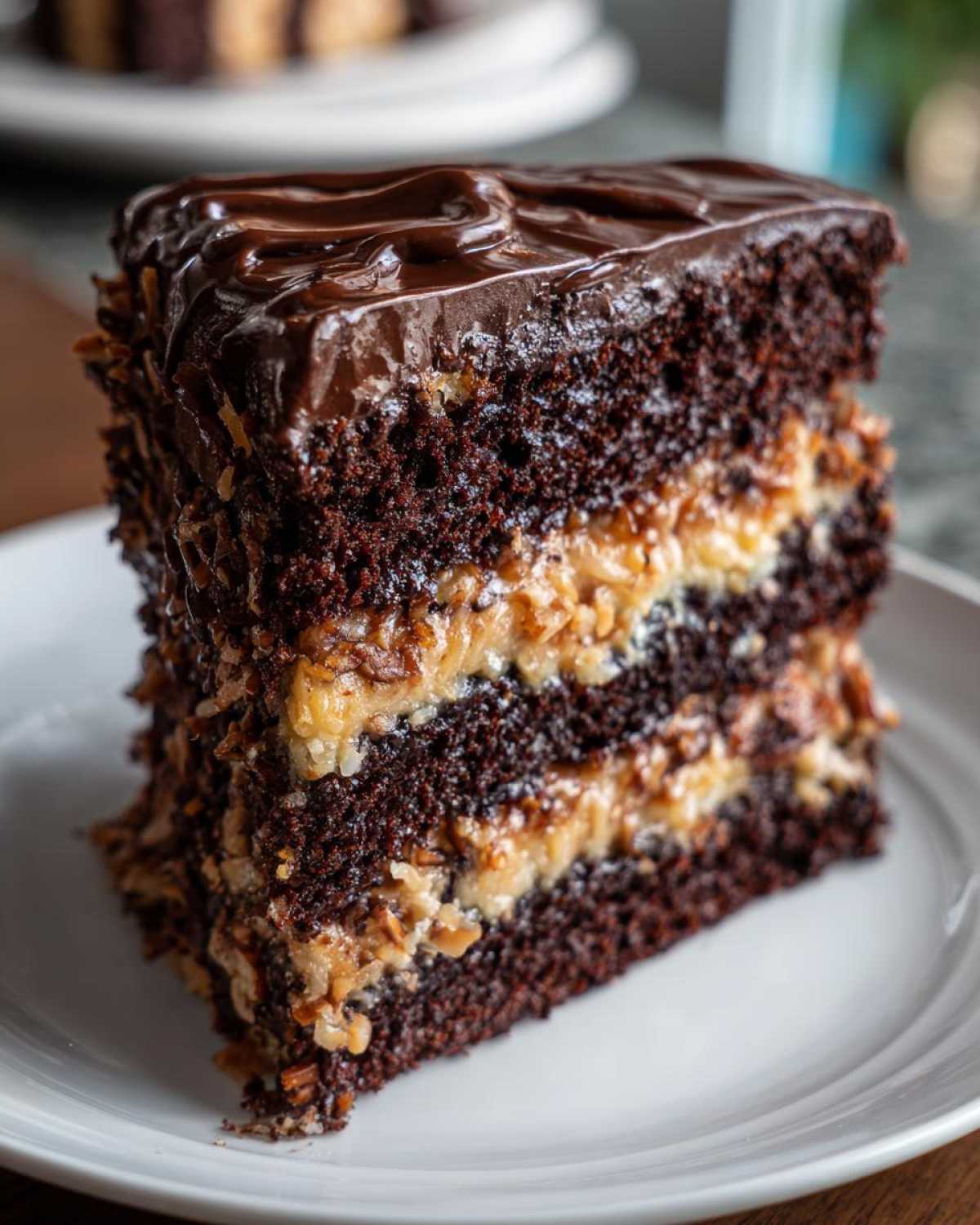
Next up is handling that superstar frosting. Remember how I mentioned it looks soupy when you first finish cooking the egg yolks? Don’t panic and start adding more flour or coconut! That’s the crucial point where Zola learned patience. You have to let it cool completely—and I mean completely—on the counter. If you try to rush it or chill it too fast, you’ll get a cement-like frosting instead of that beautifully gooey texture we promise. Give it a good hour or two undisturbed after folding in the pecans and coconut.
Also, concerning the German’s Sweet Chocolate: if you absolutely cannot find that specific bar, you can substitute with bittersweet chocolate mixed with an extra tablespoon of brown sugar, but the true classic flavor comes from the original. We stick to the source material here because we aim for that traditional cake recipe perfection!
And finally, if you want to make sure those layers stay perfectly flat for stacking, try baking them with a recipe for our favorite buttermilk pancakes right before you start your cake. Wait, no, that’s silly! Just kidding! But seriously, if your cakes dome weirdly, level them gently with a serrated knife before assembly. Every little bit helps when building a true, show-stopping bake.
Ingredient Notes and Substitutions for this Classic Layer Cake
Okay, let’s talk ingredients because Zola always says that while creativity is fun, the classics sometimes require specific anchors. You might be staring at your pantry thinking, “I don’t have that exact thing,” and that’s okay! We can navigate substitutions for this classic layer cake, especially in the cake layers where that moisture is key.
The big question always comes down to the chocolate itself. The recipe genuinely calls for German’s Sweet Chocolate. Now, I know that brand can be tough to hunt down sometimes, which is where David steps in with the technical fix. If you can’t find it, don’t throw in the towel! You can create a decent substitute by taking 4 ounces of bittersweet chocolate (the darker kind) and adding about 1 full tablespoon of extra packed light brown sugar to your melted chocolate mixture before adding it to the batter. It shifts the sweetness profile just a tad, but it keeps the texture right.
What about the buttermilk? That slightly acidic kick is crucial for reacting with the baking soda to give the cake its beautiful lift and tender crumb. If you ran out or just don’t keep it stocked (which happens to me all the time!), don’t panic. I have a super easy fix! Just take one tablespoon of white vinegar or lemon juice and add it to a measuring cup, then fill the rest of the way up with regular milk to the 1-cup line. Let that mixture sit for about five minutes until it looks slightly curdled. Boom—you’ve got homemade buttermilk perfect for this german chocolate cake recipe!
For the pecans in the frosting, quality matters because you want that crunch to contrast the gooey filling. If you have walnuts on hand, you can use them, but honestly, the pecan flavor is too signature for this dish, so try to stick with pecans if you can. Remember, we are aiming for that truly authentic, traditional result!
Making Ahead and Storing Your german chocolate cake recipe
This is one of those cakes, right? It’s gorgeous, it’s rich, and frankly, it takes a little effort with those three different components. So, if you’re planning this for a big party or holiday event, you absolutely should break the process up! David is always telling people they can make components ahead of time for our more involved recipes, like our make-ahead breakfast egg bake. It completely takes the stress out of party day!
For our german chocolate cake recipe, you have a couple of great make-ahead windows. The absolute best part you can get done days early is the Coconut Pecan Frosting. Once that gooey frosting is cooked and fully cooled to room temperature, place it in an airtight container and stick it in the fridge. It will firm up a lot in there, so when you pull it out the day before you plan to assemble, you’ll need to let it sit on the counter for at least an hour. If it still seems too stiff to spread, give it a good gentle mix with a rubber spatula to loosen it up a bit—but remember, it should still be thick!
The chocolate cake layers are also your friends here. Once they are completely cooled after baking, you can wrap each layer individually in plastic wrap, making sure they are airtight. They will hold up beautifully at room temperature for up to two days, or you can freeze them for about a month! If you freeze them, just let them thaw overnight, still wrapped, on the counter. That wrapping is key to locking in all that internal moisture we worked so hard to achieve.
Now, about that assembly! I always argue that this traditional cake recipe tastes best when assembled the day of or the day before serving. The moisture from the frosting starts to seep into the cake layers perfectly over about 24 hours. If you’ve already frosted the sides with the ganache, it’s best stored covered at room temperature for up to two days. If you need to keep it longer, fridge storage is fine, but always remember to pull it out at least two hours before serving. Nothing ruins a slice of rich chocolate cake faster than being served straight from the cold!
Frequently Asked Questions about the german chocolate cake recipe
Look, I know baking a layered cake like this can feel intimidating, especially when you are aiming for that absolute perfect, gooey frosting recipe consistency. That’s why we put so much detail into the main steps! We get asked the same things all the time, so let’s clear up any last little worries before you start mixing up this amazing German Chocolate Cake.
Oh, and before we start—this is a quick nod to history! Despite the name, this wonderful dessert is not German at all; it’s actually a classic American invention, named after an American baker, Samuel German. David laughs because I always have to correct people when they ask about the “German” origins of this chocolate cake for celebrations!
Is this a difficult german chocolate cake recipe to master?
I would say that this recipe falls into the medium category, mostly because we are making three separate components—the layers, the coconut-pecan filling, and the optional ganache glaze. If you follow the steps exactly, especially for tempering those egg yolks in the frosting, it’s totally manageable! David and I broke down the tricky parts of preparing this homemade german chocolate cake so you should feel really confident. Just take your time with the frosting; that’s where most people rush!
What makes this cake layers so moist?
This is my favorite part to talk about! The primary thing ensuring those moist chocolate cake layers are incredible is the combination of buttermilk and that hot liquid—either hot water or, as we suggest, hot brewed coffee. The hot liquid helps “bloom” the cocoa powder, making the chocolate flavor burst through, and it also helps create a super tender crumb. The buttermilk adds that tender tang and reacts perfectly with the baking soda. It’s a chemical masterpiece that results in cake perfection!
If you still have questions after following these instructions for the best german chocolate cake recipe, please don’t hesitate to reach out via our Contact page! If you want to see what another reputable baker suggests for handling the layers, you can check out this guide here. Happy baking!
Serving Suggestions for this Decadent Chocolate Dessert
Phew! You have conquered the german chocolate cake recipe, and now you have this absolutely massive, glorious, decadent chocolate dessert sitting in front of you. It is so rich that you don’t need much else to go with it, thank goodness. David is always trying to pair it with something heavy, but honestly, this cake practically begs for something light to balance out all that caramel and coconut glory!
My favorite way to serve this is super simple: just a thin slice on a white plate with a really good cup of coffee. The bitterness of a dark roast cuts right through the sweetness of that coconut pecan frosting like a charm. If you are serving it after a big dinner, maybe skip the heavy evening coffee and opt for a simple espresso shot instead. It keeps the focus right where it should be—on the cake!
If you are serving it mid-day or want a slightly fresher counterpoint, think light fruit. Sometimes I’ll put a few raspberries scattered around the plate—they add a beautiful color contrast, too, so it looks fancy for minimal effort. Or, if you have a little bit of that leftover ganache, just drizzle a tiny zig-zag over the plate border. That always makes it feel like a professional plating job, even though we know we just slopped it on there!
This cake is undeniably a showstopper, which is why it’s one of my go-to holiday dessert ideas. It looks impressive on any table, whether it’s for a birthday bash or, my personal favorite, Easter brunch! I think your guests will agree: this is a slice of pure nostalgia that absolutely demands to be part of your celebration spread!
Understanding the Nutrition of This Traditional Cake Recipe
Well, let’s pour another cup of coffee because we need to talk reality for a second. We just made the most glorious, decadent slice of pure happiness in this traditional cake recipe, and a cake this good deserves an honest look at what’s packed inside. David always insists that if we are sharing something this rich, we need to be transparent about the numbers. So, here is the estimated nutritional breakdown for one single, generous slice. Remember, this is just a rough guide based on standard ingredients, and you can always check out our official disclaimer for more details on how we calculate these estimates!
Don’t look too closely if you’re counting calories, though! This cake is meant for celebrating, and that gooey coconut pecan frosting isn’t exactly “light.” But knowing what you’re enjoying is part of the fun of baking from scratch, right?
- Serving Size: 1 slice
- Calories: 550 (Yes, they are worth every single one!)
- Sugar: 55g
- Sodium: 250mg
- Fat: 35g
- Saturated Fat: 18g
- Unsaturated Fat: 12g
- Trans Fat: 0.5g
- Carbohydrates: 60g
- Fiber: 3g
- Protein: 6g
- Cholesterol: 120mg
See? It’s a showstopper in every way! If you’re making this for a big event, the rich serving size means you don’t need huge wedges. A modest slice of this German Chocolate Cake goes a very long way!
PrintThe Best Homemade German Chocolate Cake with Gooey Coconut Pecan Frosting (Classic & Moist Recipe)
You can master this classic American dessert! This recipe delivers exceptionally moist chocolate cake layers paired with the signature, gooey, buttery coconut-pecan frosting. It is a decadent dessert perfect for any celebration.
- Prep Time: 40 min
- Cook Time: 30 min
- Total Time: 70 min
- Yield: 12 servings
- Category: Dessert
- Method: Baking
- Cuisine: American
- Diet: Vegetarian
Ingredients
- 1 cup (2 sticks) unsalted butter, softened
- 2 cups granulated sugar
- 4 large eggs, room temperature
- 1 teaspoon vanilla extract
- 1 cup buttermilk, room temperature
- 1 3/4 cups all-purpose flour
- 3/4 cup unsweetened cocoa powder
- 1 teaspoon baking soda
- 1/2 teaspoon salt
- 1 cup hot water or hot brewed coffee
- 4 ounces German’s Sweet Chocolate, melted and cooled slightly
- For the Coconut Pecan Frosting: 1 cup (2 sticks) unsalted butter
- 1 cup packed light brown sugar
- 1/2 cup evaporated milk
- 4 large egg yolks, lightly beaten
- 1 teaspoon vanilla extract
- 1/4 teaspoon salt
- 1 1/2 cups flaked coconut
- 1 cup chopped pecans
- For the Chocolate Ganache Glaze: 4 ounces bittersweet chocolate, finely chopped
- 1/2 cup heavy cream
Instructions
- Preheat your oven to 350°F (175°C). Grease and flour three 9-inch round cake pans.
- In a large bowl, cream together the softened butter and sugar until light and fluffy. Beat in the eggs one at a time, mixing well after each addition. Stir in the vanilla extract.
- In a separate bowl, whisk together the flour, cocoa powder, and baking soda.
- In a small bowl, dissolve the baking soda in the buttermilk. Add half of the dry ingredients to the wet ingredients, mixing until just combined.
- In a small bowl, combine the melted German’s Sweet Chocolate with the hot water or coffee. Add this chocolate mixture to the batter, mixing until smooth.
- Alternate adding the remaining dry ingredients and the buttermilk mixture, beginning and ending with the dry ingredients. Mix until the batter is smooth. Do not overmix.
- Divide the batter evenly among the prepared cake pans. Bake for 25 to 30 minutes, or until a wooden pick inserted into the center comes out clean. Let the cakes cool in the pans for 10 minutes before inverting them onto a wire rack to cool completely.
- Prepare the Coconut Pecan Frosting: In a medium saucepan, combine the butter, brown sugar, and evaporated milk. Cook over medium heat, stirring constantly, until the mixture thickens slightly, about 5 to 7 minutes.
- Remove the saucepan from the heat. Whisk the egg yolks in a small bowl, then slowly temper them by whisking in about 1/2 cup of the hot sugar mixture. Pour the tempered egg mixture back into the saucepan.
- Return the saucepan to medium-low heat. Cook, stirring constantly, until the frosting thickens enough to coat the back of a spoon (do not boil). Remove from heat immediately. Stir in the vanilla and salt.
- Fold in the flaked coconut and chopped pecans. Let the frosting cool completely to room temperature; it will thicken as it cools.
- Prepare the Ganache Glaze: Place the chopped bittersweet chocolate in a heatproof bowl. Heat the heavy cream in a small saucepan until it just begins to simmer. Pour the hot cream over the chocolate. Let it sit for 5 minutes, then whisk until smooth and glossy. Let it cool slightly until it reaches a spreadable consistency.
- Assemble the cake: Place one cooled chocolate layer on your serving plate. Spread about one-third of the coconut-pecan frosting evenly over the top. Repeat with the second layer. Place the final layer on top.
- Use the chocolate ganache glaze to frost the top and sides of the cake, or drizzle it decoratively over the coconut-pecan frosting on the top layer. Allow the glaze to set before slicing and serving your homemade German Chocolate Cake.
Notes
- For the moistest cake layers, make sure your buttermilk and eggs are at room temperature before mixing.
- If you prefer a simpler finish, you can skip the ganache glaze and use a standard chocolate buttercream to frost the exterior of the cake, reserving the coconut-pecan filling for the layers only.
- This cake is best stored covered at room temperature for up to two days, or refrigerated for up to four days. Bring to room temperature before serving for the best texture.
Nutrition
- Serving Size: 1 slice
- Calories: 550
- Sugar: 55
- Sodium: 250
- Fat: 35
- Saturated Fat: 18
- Unsaturated Fat: 12
- Trans Fat: 0.5
- Carbohydrates: 60
- Fiber: 3
- Protein: 6
- Cholesterol: 120