

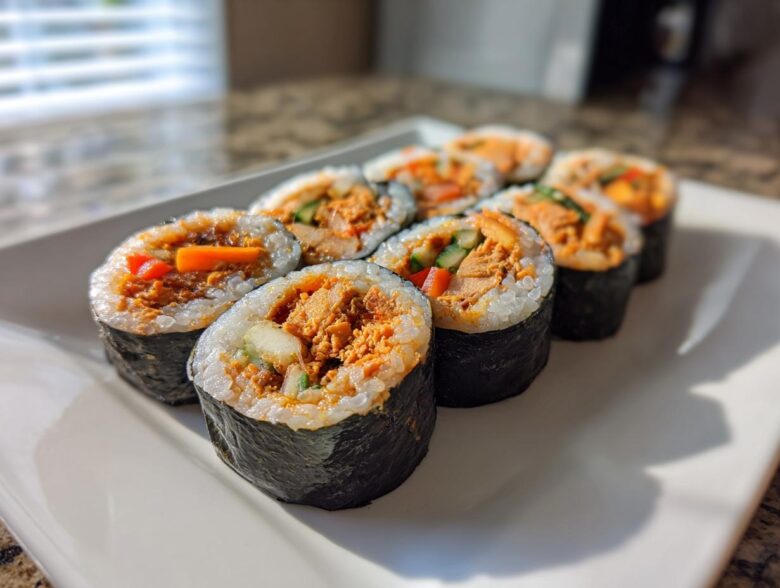
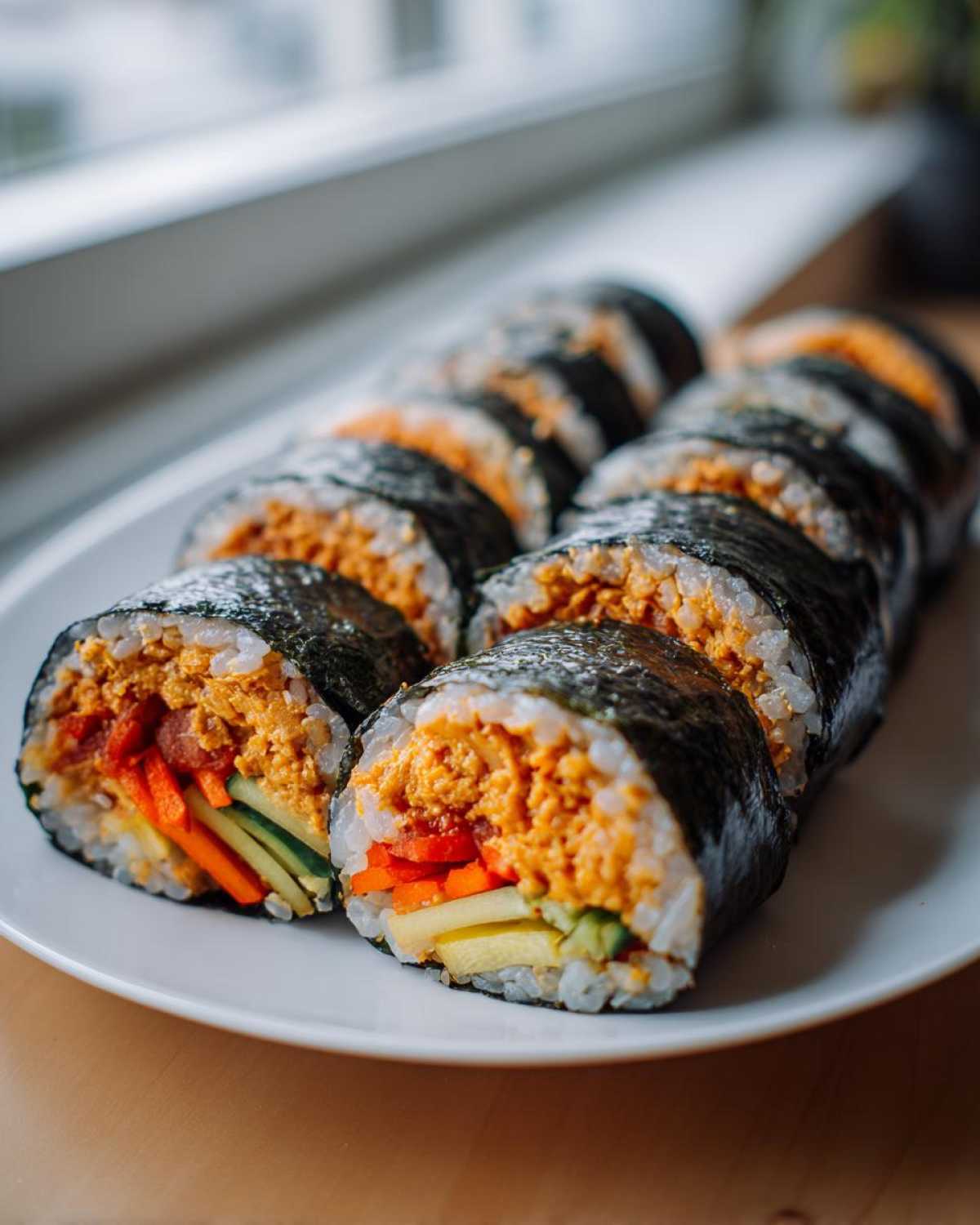
I don’t know about you, but sometimes I get this massive craving for authentic Korean flavors, and I need them now. Forget waiting for takeout! That’s why Zola and I perfected this recipe: The Ultimate Easy Korean Spicy Tuna Kimbap (Chamchi Kimbap). This isn’t just another batch of Korean seaweed rolls; this is our Taste Edition, where my technical structure meets Zola’s need for bold spice. It’s fast enough for an emergency quick lunch, perfect packed up for a picnic, and honestly, it absolutely destroys anything you can buy pre-made. If you’ve been looking for how to make Kimbap at home that actually packs a punch, you’ve found your winner. You should check out our whole story to see how we remix these classics!
Why This Ultimate Easy Tuna Kimbap Recipe Works (Quick Korean Lunch Ideas)
When Zola and I developed this Tuna Kimbap, we were obsessed with balancing speed and flavor—that’s the whole point of our Taste Edition, right? This version is truly made to outshine those sad grocery store rolls. It’s a fantastic option when you need quick Korean lunch ideas that don’t taste like a compromise.
- It comes together in about 30 minutes total, making it a lifesaver for weeknights.
- The filling is basically no-cook; we just mix, roll, and eat!
- It’s incredible for meal prep; you can easily make a big batch to keep on hand.
If you are grabbing your packed lunch inspiration, make sure you check out all our quick lunch recipes!
Speed and Convenience: Perfect for Lunch Box Kimbap Snacks
Seriously, who has time for complicated cooking when you’re rushing out the door? That’s why I love that this is one of those great no-cook filling Kimbap options. If you have rice cooked from the night before, you are basically 20 minutes away from perfection. It slices beautifully, too, which makes it the absolute best for packing into a lunch box Kimbap snack or tossing into a picnic basket. They hold their shape so well inside that container!
Flavor That Beats Store-Bought Homemade Kimbap
The difference between this and the stuff wrapped in cellophane at the market is night and day. We are using perfectly seasoned rice here, not just plain stuff, and the star is our spicy filling. We insist on using Kewpie mayo; the slight sweetness and richness it brings to the spicy mayo tuna filling is crucial. You get that fantastic savory kick that makes these Spicy Tuna rolls Korean style truly irresistible. You’re going to wonder why you ever bought them before!
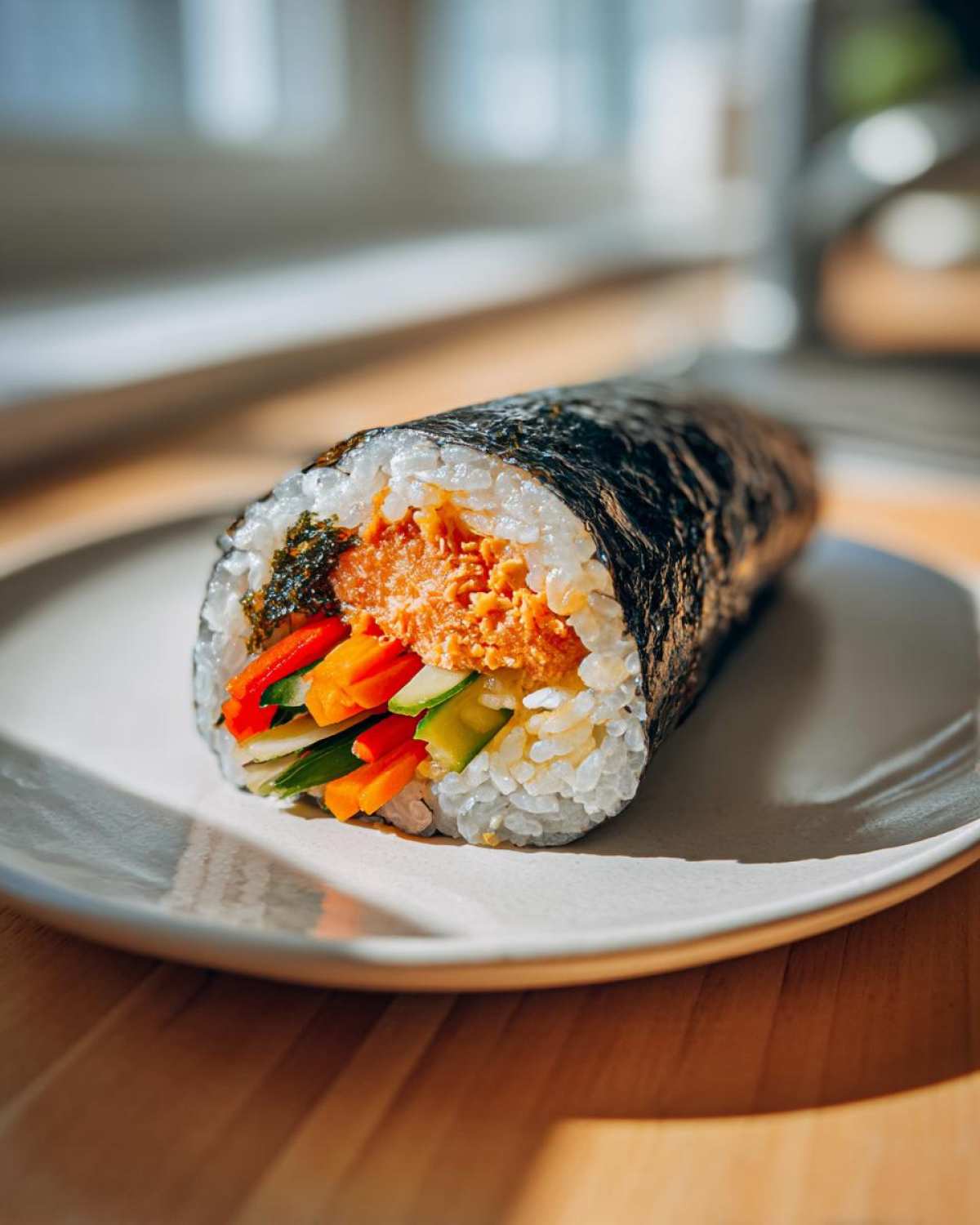
Gathering Authentic Kimbap Ingredients for Your Tuna Kimbap
Okay, David here, focusing on the structure we need to make sure this Tuna Gimbap recipe actually tastes authentic. When Zola first tried making homemade Kimbap, the ingredients were all over the place, and the rice just crumbled! We learned quickly that quality and precision matter massively, even in a quick roll. To nail this, every single component needs attention. You can check out our guide on perfecting foundations, though this isn’t bread yet, the principle is the same! See what I mean about foundations here.
Remember, the tuna must be drained well—we want creamy flavor, not a soggy mess. Also, for the authentic Kimbap ingredients list, don’t forget the optional veggies like yellow pickled radish and those beautiful, thinly sliced egg omelets we use for classic Chamchi Kimbap.
Rice Seasoning: The Foundation of Great Tuna Gimbap Recipe
This is non-negotiable science for me! You need about 4 cups of short-grain rice, and it must be slightly warm when you mix in the seasoning. Cold rice just won’t stick together. We mix in exactly 2 teaspoons of sesame oil and 1 teaspoon of salt. Stir it gently so you don’t smash the grains, but make sure everything is coated evenly. This seasoned rice is what keeps your seaweed rice wraps intact right up to that final bite!
Creating the Spicy Mayo Tuna Filling
If you love heat, this blending step is your favorite part! This is where we amp up the flavor for those Spicy Tuna rolls Korean style. Take your well-drained tuna and fold in 2 tablespoons of Kewpie mayonnaise—that tanginess is key! Then, add 1 tablespoon of Sriracha sauce. I always tell people to start small with the Sriracha because you can always add more heat, right? Mix in some finely chopped green onion for freshness. That’s our iconic spicy mayo tuna filling!
The Chamchi Kimbap Tutorial: Step-by-Step Rolling Instructions
Alright, we’ve got the rice seasoned perfectly and the spicy tuna filling waiting patiently. Now comes the part where Zola usually gets nervous and I have to apply my technical skills: the roll! This is the most crucial part of any Chamchi Kimbap tutorial, and honestly, it’s easier than it looks if you just follow the structure. You want a tight roll, not a loose log that falls apart when you slice it. Grab your bamboo mat—we’re rolling! If you want to become a real pro at making these, you can check out our full guide on how to make Kimbap at home; I break down the science of the roll even further there.
Setting Up Your Seaweed Rice Wraps
First things first, lay down your sheet of roasted seaweed, making sure the shiny side is facing down toward your rolling mat. If you’re adding that extra layer of flavor that Zola insists on—the perilla leaves—lay one of those right on top of the seaweed now. Next, take about one cup of your seasoned rice. You want to spread it evenly over the bottom two-thirds of the seaweed. Make sure you leave about a 1-inch clean strip across the top edge. That border is our seal, so don’t rice over it!
Now, place your filling down the center of the rice. If you are doing the full works, this is where you layer your pickled radish, carrots, spinach, and egg strips right next to that beautiful line of spicy tuna. Don’t overstuff it! That’s the beginner’s mistake, trust me.
How to Make Kimbap at Home: Tightly Rolling the Kimbap
This is where I channel my inner structural engineer for the best seal! Grab the edge of the mat closest to you and start rolling it up and over the filling. You want to pull that first layer snugly over itself so it just touches the rice on the other side. Press down firmly right along the roll line to compact everything. Keep rolling, maintaining that firm pressure. Before you get to that 1-inch dry top edge, moisten it slightly with just a dab of water—it acts like glue!
Finish rolling completely, pressing one last time to make sure it’s perfectly cylindrical. Once it’s sealed, brush the whole outside lightly with sesame oil and sprinkle those seeds on top. Oh, and here’s a neat trick I learned: wrap the whole finished log tightly in plastic wrap for about five minutes before slicing. It lets the rice set up, which makes getting those perfect slices for your homemade Kimbap much cleaner!
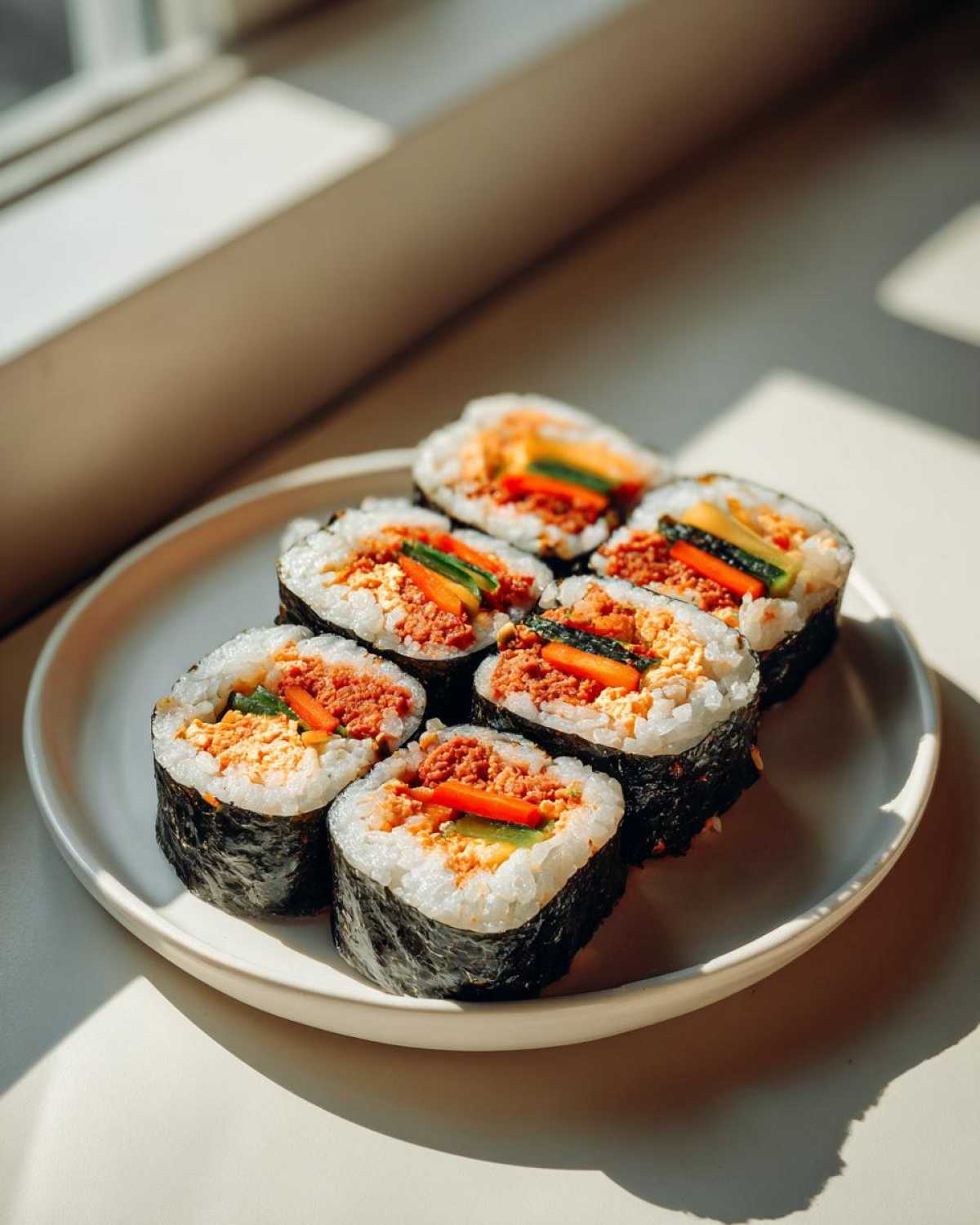
Tips for Success When Making Your Best Tuna Kimbap Recipe
Look, even with the best plan, sometimes these rolls can fight you a little bit. That’s okay! That’s part of the fun of making homemade Kimbap, and it’s where we teach everyone how to become an expert. I want you to feel confident making this the best Tuna Kimbap recipe, so let me share the little tricks I use to keep things tidy and tasty. If you’re looking for more general inspiration on mixing things up, you can always browse our general blog for more ideas!
Addressing Common Kimbap for Beginners Issues
If your rice is too wet, I swear on Zola’s cooking spatula that it is going to stick to everything—your hands, the rolling mat, even the table! If you notice your rice feels a little gummy, you might have accidentally used too much water when cooking it, or maybe you didn’t let it cool down quite enough before seasoning. Next time, start with a little less water, or just sprinkle a tiny bit of toasted sesame oil directly onto the seaweed before spreading, which creates a barrier against stickiness.
On the flip side, if your rice is too dry, the roll won’t seal. Remember that damp strip of seaweed we used? That moisture is key. If your final roll is splitting open when you try to slice it, it usually means the rice was too dry or you didn’t press firmly enough when you rolled it, so the grains didn’t adhere.
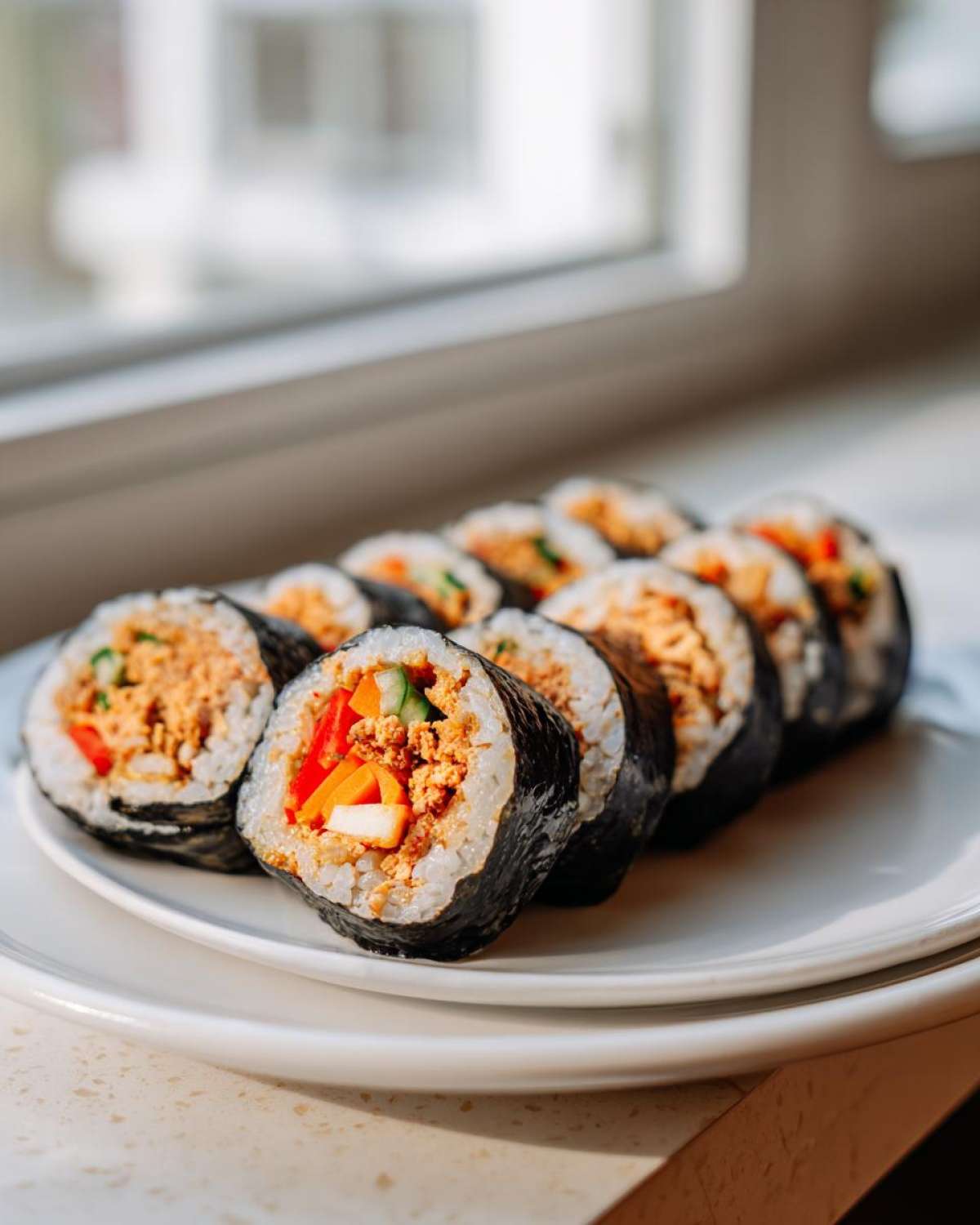
Now, for the cleanest slices possible—this is crucial for presentation—don’t just use any knife. You need a very sharp knife, and you must wipe the blade with a damp cloth between every single cut. Don’t use a saw motion! Press straight down firmly. If you followed my advice earlier and wrapped the roll tightly in plastic wrap for five minutes before slicing, you’ll get those beautiful, uniform pieces that make this seaweed rice wrap look professional, even though it was whipped up in 30 minutes!
Storage and Make Ahead Korean Meals with Tuna Kimbap
I know Zola wants to eat these Spicy Tuna Kimbap rolls instantly, but we totally test them out for future meals too! Since these seaweed rolls rely on fresh ingredients, they are best eaten the same day, honestly. If you’re planning these as make ahead Korean meals for lunch boxes the next day, you should definitely slice them right before you pack them up, or just before serving.
Don’t even think about reheating them; the seaweed gets soggy fast, which ruins the lovely texture. Pop any leftovers into an airtight container in the fridge, but try to eat them within 24 hours for the best experience. They are still good cold, but they truly shine when they are fresh. If you need make-ahead options that survive the fridge better, check out our egg bakes—those reheat like a dream!
Kimbap Variations and Fillings Beyond Classic Tuna Kimbap
One of the things I love most about making homemade Kimbap—and encouraging Zola to experiment—is how customizable these rolls are. While our Spicy Tuna Kimbap is absolutely top-tier, knowing how to switch up the fillings lets you keep things interesting every single time you make these savory Korean snack rolls.
We already talked about the classic fillings like that tangy pickled radish (danmuji) and thin strips of egg. If you want to switch up the protein but keep that convenient, slightly no-cook vibe, try swapping the tuna! Shredded chicken mixed with a bit of that spicy mayo is fantastic—it gives you a similar texture but a different flavor profile entirely. Or, if you are feeling a bit more classic Korean street food, use imitation crab sticks instead of tuna.
When Zola is feeling fancy, she sometimes makes a quick seafood salad by mixing imitation crab with a tiny bit of celery and a touch of that Kewpie mayo, just like we do in our creamy seafood salad recipe. She rolls that right in, and suddenly you have a completely updated version of this classic roll. See? It’s all about remixing the foundation until it tastes like your kitchen!
Frequently Asked Questions About Tuna Kimbap
I know when you start rolling for the first time, all sorts of questions pop up! Zola always has a list of things she needs to clarify before she trusts herself not to mess up the technique. We’ve gathered the top things people ask about these Tuna Kimbap rolls so you can feel super confident rolling your own seaweed rice wraps!
Can I use regular mayonnaise instead of Kewpie mayo for the tuna kimbap filling?
Absolutely, you can! Kewpie mayo is our preference because it’s got that signature rich flavor and slight sweetness that really elevates the classic Chamchi Kimbap taste, thanks to all that egg yolk. But if you only have regular mayo on hand, go for it. If you do use regular mayo, I actually recommend adding a tiny splash—like half a teaspoon—of rice vinegar to the mixture. It just brightens things up and gets it closer to that tangy profile we love.
What is the best way to transport these Korean seaweed rolls for a picnic?
This is a big one! Kimbap loves to be eaten fresh, but they are fantastic picnic food ideas Korean style. The trick is definitely to slice them right before you pack them, not ahead of time. I mean, you can slice them and put them in an airtight container, but place them right next to each other so they support each other’s shape. If they are loose, they can kind of flop over and get squished. Pack them nestled in tight, and keep them cool, especially if you used any veggies that might wilt.
How can I make the spicy tuna filling milder for kids?
Oh man, Zola’s niece can’t handle much heat, so we figured this out early! The easiest way to tone down the heat in that spicy tuna filling is just to use way less Sriracha. You could even switch it out entirely for just a tiny bit of gochujang, which gives you a deeper, sweeter chili flavor instead of the sharp burn of Sriracha. Or, if the kids just want that creamy texture, skip the spice altogether and just mix the tuna with the Kewpie mayo and maybe some finely chopped imitation crab for a classic, mild filling.
Nutritional Estimates for This Easy Kimbap Recipe
Okay team, let’s talk fuel! Since we are all about making this Easy Kimbap recipe our own, the final numbers are always going to shift slightly based on what you put in there—like, did you use tuna packed in water or oil? Are you heavy-handed with that spicy mayo tuna filling? Those things matter!
But based on the core recipe using tuna packed in oil and standard Kewpie mayo amounts, here is what we generally see per one slice (roughly one-sixth of a roll). Remember, this is just an estimate, but it’s great for figuring out portion sizes when you are prepping these for picnic food ideas Korean style or quick packing!
- Serving Size: 1 roll section
- Calories: About 280 per slice
- Fat: 12g (watch that tuna oil content, folks!)
- Saturated Fat: 2g
- Carbohydrates: 35g
- Protein: 12g
- Sugar: 2g
We keep the ingredients pretty clean, which is why the sugar stays low, and we are proud of that nice protein bump from the tuna! It proves that you don’t have to rely on heavy sauces when you’re making your own Tuna Kimbap.
Share Your Taste Edition of Tuna Kimbap
Whew! We made it through the whole process for the Ultimate Easy Korean Spicy Tuna Kimbap. I hope you feel totally ready to roll now! This recipe, like everything else on Taste Edition, is a starting point. It’s the solid foundation Zola and I set for a fantastic, quick, and deeply flavorful Tuna Kimbap.
But here’s the big question: What did you change? Did you double the Sriracha? Did you skip the egg and add some kimchi instead? I absolutely want to hear about it. When you make this, I truly hope you see it as your version now—your own special edition of this classic Korean seaweed roll.
If you tried it out, please leave us a star rating below! If it completely blew away your expectations, give us five stars! And if you have any questions or want to share photos of your delicious creation, please reach out to us directly on the contact page—we read everything. Let us know how you made this Tuna Kimbap your own! Happy rolling!
PrintUltimate Easy Korean Spicy Tuna Kimbap (Chamchi Kimbap)
Make homemade Korean seaweed rolls that beat store-bought versions with this easy recipe for Spicy Tuna Kimbap. It is perfect for quick lunches or picnics.
- Prep Time: 20 min
- Cook Time: 10 min
- Total Time: 30 min
- Yield: 4 rolls (about 24 pieces)
- Category: Lunch
- Method: Rolling
- Cuisine: Korean
- Diet: Vegetarian
Ingredients
- 4 cups cooked short-grain rice, slightly warm
- 1 teaspoon salt (for rice seasoning)
- 2 teaspoons sesame oil (for rice seasoning)
- 4 sheets roasted seaweed (nori or gim)
- 1 can (5.3 oz) tuna packed in oil, drained well
- 2 tablespoons Kewpie mayonnaise (or regular mayonnaise)
- 1 tablespoon Sriracha sauce (adjust for spice level)
- 1 tablespoon finely chopped green onion
- 4 large perilla leaves (optional, for wrapping)
- Sesame oil for brushing
- Sesame seeds for sprinkling
- For Classic Chamchi Filling (Optional Addition): 1/2 cup seasoned yellow pickled radish (danmuji), 1/2 cup cooked and seasoned spinach, 1/2 cup cooked carrot strips, 2 eggs cooked into thin omelets and sliced
Instructions
- Prepare the seasoned rice: In a large bowl, mix the warm rice with 1 teaspoon of sesame oil and 1 teaspoon of salt until evenly distributed. Let it cool slightly.
- Prepare the spicy tuna filling: In a separate bowl, combine the drained tuna, mayonnaise, Sriracha sauce, and chopped green onion. Mix well until you have a creamy, uniform filling.
- Prepare the vegetables and egg (if using classic fillings): Slice the pickled radish, cooked carrots, and egg omelet into thin strips.
- Assemble the roll: Lay one sheet of seaweed, shiny side down, on a bamboo rolling mat. If using perilla leaves, place one leaf on the seaweed first.
- Spread the rice: Take about 1 cup of seasoned rice and spread it evenly over two-thirds of the seaweed sheet, leaving a 1-inch border at the top edge.
- Place the fillings: Arrange a line of the spicy tuna mixture down the center of the rice. If making classic Chamchi Kimbap, layer the pickled radish, carrot, spinach, and egg strips alongside the tuna.
- Roll the kimbap: Moisten the top edge of the seaweed lightly with water to help it seal. Starting from the edge closest to you, tightly roll the mat over the fillings. Press firmly as you roll to create a compact cylinder.
- Finish the roll: Once fully rolled, brush the outside of the seaweed lightly with sesame oil and sprinkle with sesame seeds.
- Slice and serve: Use a sharp, damp knife to slice the roll into bite-sized pieces. Serve immediately or pack for lunch boxes.
Notes
- For easier slicing, wrap the finished roll tightly in plastic wrap for 5 minutes before cutting.
- If you prefer a milder flavor, reduce the Sriracha or substitute it with a small amount of gochujang for a different depth of flavor.
- You can substitute the tuna with cooked, shredded chicken mixed with the spicy mayo for a variation.
Nutrition
- Serving Size: 1 roll section
- Calories: 280
- Sugar: 2
- Sodium: 450
- Fat: 12
- Saturated Fat: 2
- Unsaturated Fat: 10
- Trans Fat: 0
- Carbohydrates: 35
- Fiber: 1
- Protein: 12
- Cholesterol: 35