

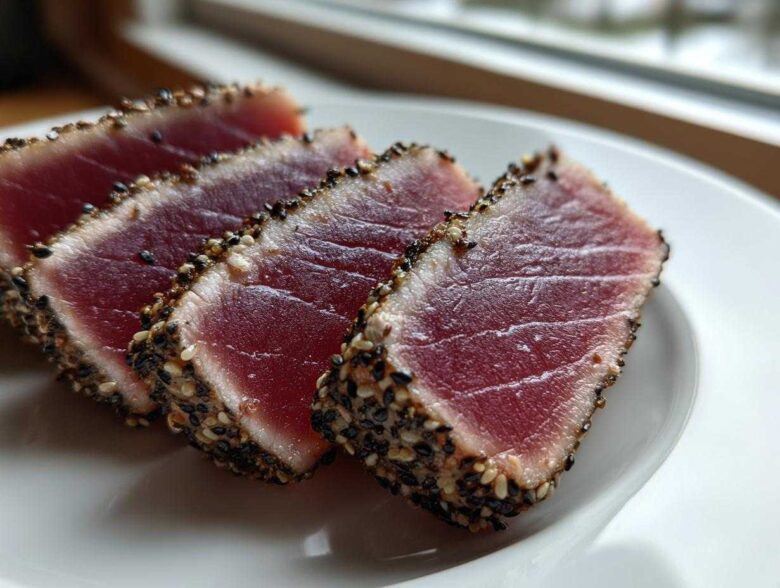
If you think restaurant-quality, melt-in-your-mouth fish is only achievable when you pay those insane prices, think again! I’m here to tell you that mastering the perfect sear on Seared Ahi Tuna is totally doable right in your own kitchen. Seriously, after a few messy attempts where I totally overcooked the middle—oops!—I finally nailed the high-heat technique. It’s all about timing and making sure you start with the best possible ingredient. Trust me, once you get that beautiful, crisp sesame crust against that cool, rare center, you won’t go back. But listen close: this only works if you buy the good stuff—we’re talking top-shelf, sushi grade tuna here. That quality makes all the difference!
Why This Perfect Seared Ahi Tuna Recipe Works
You might think searing fish this good involves complicated steps, but honestly, it’s the simplicity that shines through here. This method is designed to give you maximum flavor payoff with minimal risk of turning your expensive fish into shoe leather! We focus on three main things that make this dish a winner every time you make Seared Ahi Tuna. You can read more about my general kitchen adventures over at my blog if you want to see what else I’m messing around with lately.
- Incredible texture contrast in just minutes.
- Flavor explosion from just a few simple seasonings.
- It feels totally gourmet but takes no time at all!
Achieving the Ideal Rare Center with Seared Ahi Tuna
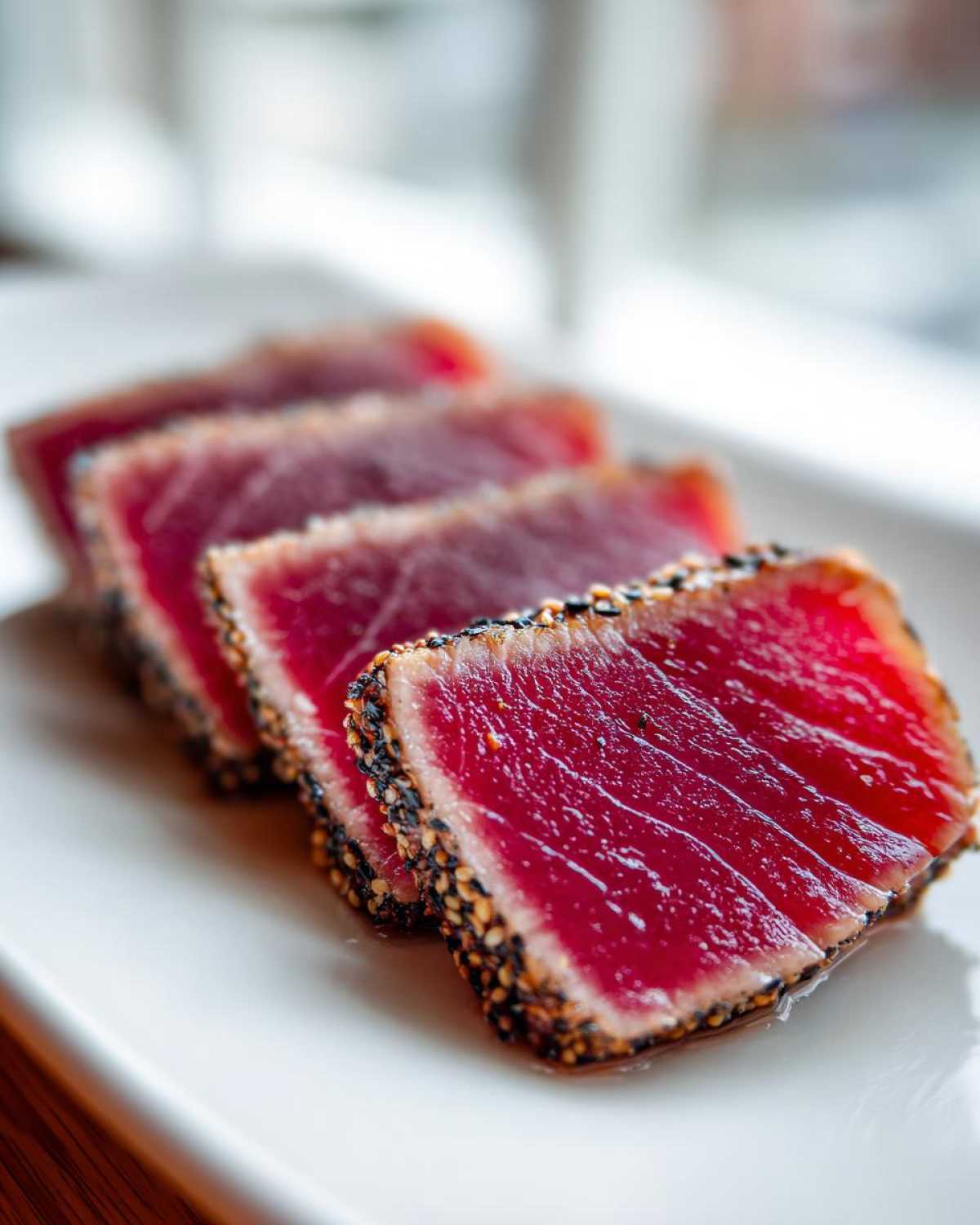
The magic is in the time. Because we are using that high heat, we only need about 60 to 90 seconds per side. That quick blast of heat creates that crunchy, seasoned crust you’re aiming for, while barely touching the interior. That’s how you lock in all the moisture and get that beautiful, cool, almost buttery center in your Seared Ahi Tuna. Don’t even think about crowding the pan!
Quick Seafood Recipe Ready in Under 20 Minutes
Seriously, this is one of my favorite weeknight lifesavers. If you factor in the 10 minutes for prep—which is mostly just patting it dry and tossing the marinade together—you are looking at dinner being on the plate in less time than it takes to order takeout. It makes getting a healthy dinner on the table honestly stress-free. You can even use those extra few minutes to whip up a quick dressing!
Essential Ingredients for Gourmet Tuna
Okay, let’s talk about what you need, because when you’re working with fish this special, the ingredients matter. This recipe keeps things simple so the quality of the tuna really shines through. You won’t need a massive shopping list, but you absolutely must pay attention to the quality! I’ve linked to my post about ginger-lime beef jerky bites, which also focuses on bold flavor, but here the flavor must be balanced by the main event: the tuna!
For our beautiful Seared Ahi Tuna, here’s the rundown. You’ll need:
- Two six-ounce pieces of top-quality sushi grade ahi tuna steaks.
- Two tablespoons of sesame oil—the toasted kind smells amazing!
- One tablespoon of regular soy sauce.
- One teaspoon of fresh ginger, grated—don’t even think about using the dried stuff!
- One clove of garlic, minced so tiny you can hardly see it.
- Half a teaspoon of freshly cracked black pepper.
- And my favorite: a quarter cup of mixed black and white sesame seeds for that awesome coating.
Selecting the Best Yellowfin Tuna Steaks
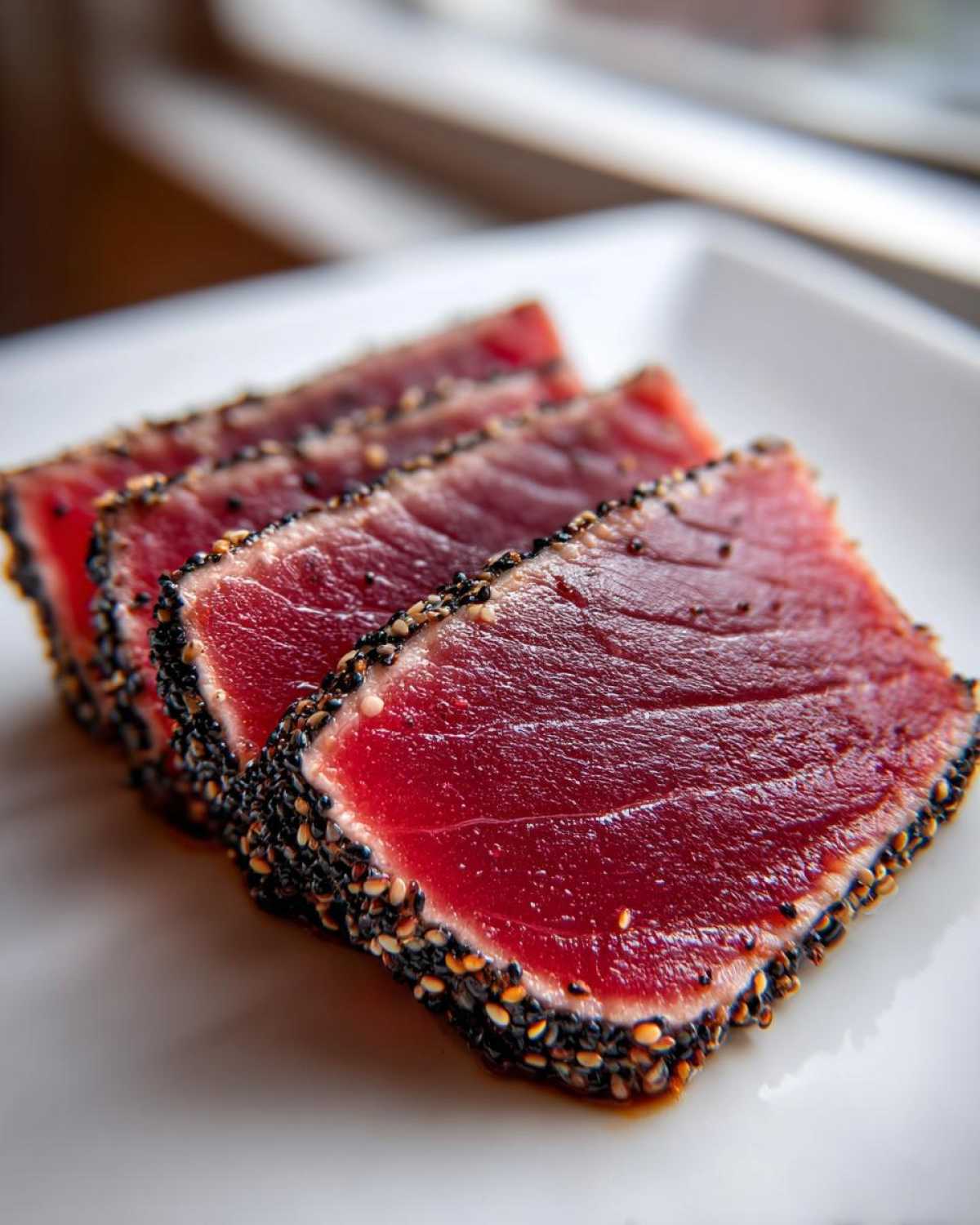
This is non-negotiable, friends. When you’re searing something this quickly, you need to know where it came from. We are looking for sushi grade tuna—that guarantees it’s safe to eat rare, which is the whole point! Look for bright red or pinkish-red color; if it looks dull or brownish, walk away. Fresh, high-quality yellowfin tuna will feel firm to the touch, almost bouncy. If you buy the cheap stuff, you’re just going to end up with dry, chalky fish instead of the tender result we want for perfect seared fish.
Step-by-Step Instructions for Perfect Seared Ahi Tuna
Getting this right is easier than you think, but you have to commit to the process! I always lay out my station first because once that pan gets hot, things move fast. We’re talking about a total cook time of maybe three minutes total, so efficiency is key here. Follow these steps exactly, and you’re going to love how this Seared Ahi Tuna turns out. If you need a refresher on quick seafood recipes, check out my honey garlic shrimp wraps for another fast dinner idea!
- First, this is massive: take those beautiful tuna steaks and pat them *completely* dry using paper towels. I mean bone dry! Moisture is the enemy of the sear, plain and simple.
- While you’re drying, whisk up your marinade—that’s the sesame oil, soy sauce, minced garlic, ginger, and pepper. Brush this all over those dried steaks, making sure every inch is coated.
- Next, get your sesame seeds ready on a flat plate. Press each side of the marinated tuna firmly into the seeds until you have a nice, even coating all around.
- Now, the heat! Put your heavy skillet, probably cast iron if you have one, over high heat. It needs to be screaming hot—seriously, wait until it almost smokes before you add the fish. Do NOT put any extra oil in the pan!
- Carefully place your sesame-crusted tuna into that ripping hot skillet. Sear the first side for just 60 seconds if you want it nearly raw, or 90 seconds if you like a *tiny* bit more cooked around the edge. Flip and repeat for the same time on the other side.
- Pull the tuna out immediately and put it on a clean plate. Don’t touch it for a full five minutes while it rests. Slice it against the grain into about a quarter-inch thick pieces just before serving.
Preparing the Tuna and Sesame Crust for Seared Ahi Tuna
Honestly, the drying step is what separates the pros from the newbies. If there’s any surface water left when it hits the pan, it steams instead of searing. So be aggressive with those paper towels! Once you’ve got the soy-ginger marinade brushed on, don’t just lightly toss the tuna in the sesame seeds. You need to *press* it in there, really working those seeds into the marinade so they stick during the high-heat cooking. A good, thick layer of sesame seeds makes for the best crust on your Seared Ahi Tuna, giving you that perfect crunch.
Mastering the High-Heat Pan-Searing Technique
This part requires focus! You need the pan hotter than you think it should be. If you put your fish in and it doesn’t immediately sizzle loudly, the pan isn’t ready. Remember, we aren’t trying to cook the inside here; we are just creating a quick, flavorful shell. For that beautiful rare center, count to 60 seconds, maybe 75 max, and flip. That 60 to 90 second window per side is where the magic happens for that gourmet tuna experience!
Tips for Success When Making Seared Ahi Tuna
When you’re dealing with quality Seared Ahi Tuna, a few little habits can save you from disaster. I learned these the hard way, trust me! You don’t want to spend good money on beautiful yellowfin only to botch the cook time. So, here are my biggest can’t-skip tips for getting that perfect sear every single time.
First off, let’s talk temperature again, because it’s the heart of this dish. Make sure your pan is hot—like, almost smoking hot—before that tuna even thinks about touching it. This aggressive heat contact is what creates the crust instantly. If you wait for the pan to warm up while the fish is sitting in it, you’ll end up simmering the outside instead of searing it properly.
Also, pay attention to the marinade time. You want enough time for the soy sauce, ginger, and garlic to flavor the outside layer (about 10 minutes is perfect), but you absolutely do *not* want to soak the tuna for an hour. Why? Because liquid ruins the sear, and the acid from the soy sauce starts to “cook” the edges, which we don’t want until it hits the heat!
And finally, resting is required, even for this quick cook! Just like a steak, pulling that gorgeous fish off the heat and letting it chill out for five minutes before slicing allows the internal temperature to even out gently. This keeps those juices exactly where they should be when you finally cut into your masterpiece. For another quick, flavor-packed recipe that uses fresh ingredients, you might enjoy my take on carrot ginger soup with coconut milk—it’s warming and totally different!
Variations on Your Asian Tuna Recipe
You’ve nailed the base recipe, which is fantastic, but maybe you want to shake things up next time? I totally get it; sometimes you just need to riff on a great idea. Since this is such a fast quick seafood recipe, we can play around with the coating and the marinade without adding much time at all. These swaps still feel cohesive, keeping that wonderful Asian vibe without making you run to the specialty store again.
If you’re craving heat, a tiny pinch of red pepper flakes added right into that soy sauce mix wakes everything up nicely. It gives the sesame seeds something extra to cling to, and the heat cuts through the richness of the fish beautifully. For a different flavor profile altogether, you could try swapping out the soy sauce for coconut aminos if you’re watching your sodium, though the flavor changes slightly.
For the outer crust, forget the sesame seeds just once and try a finely ground layer of dried seaweed (like furikake mix, but crush it finer). It adds a lovely minerality that pairs really well with this healthy dinner idea. Or, if you aren’t into the Asian theme for a minute, a simple dry rub of smoked paprika and brown sugar is surprisingly good, but you have to adjust your slicing!
Speaking of adjustments, I recently made a batch of Thai-inspired peanut noodle salad, and I swear, if you take just a tablespoon of that peanut sauce and use it instead of the soy sauce/oil mix, you get a totally different, slightly sweeter, and richer outer glaze. It browns up beautifully, too! Just remember, any extra sugar means you need to watch that searing time even closer because it burns fast.
Serving Suggestions for Seared Ahi Tuna
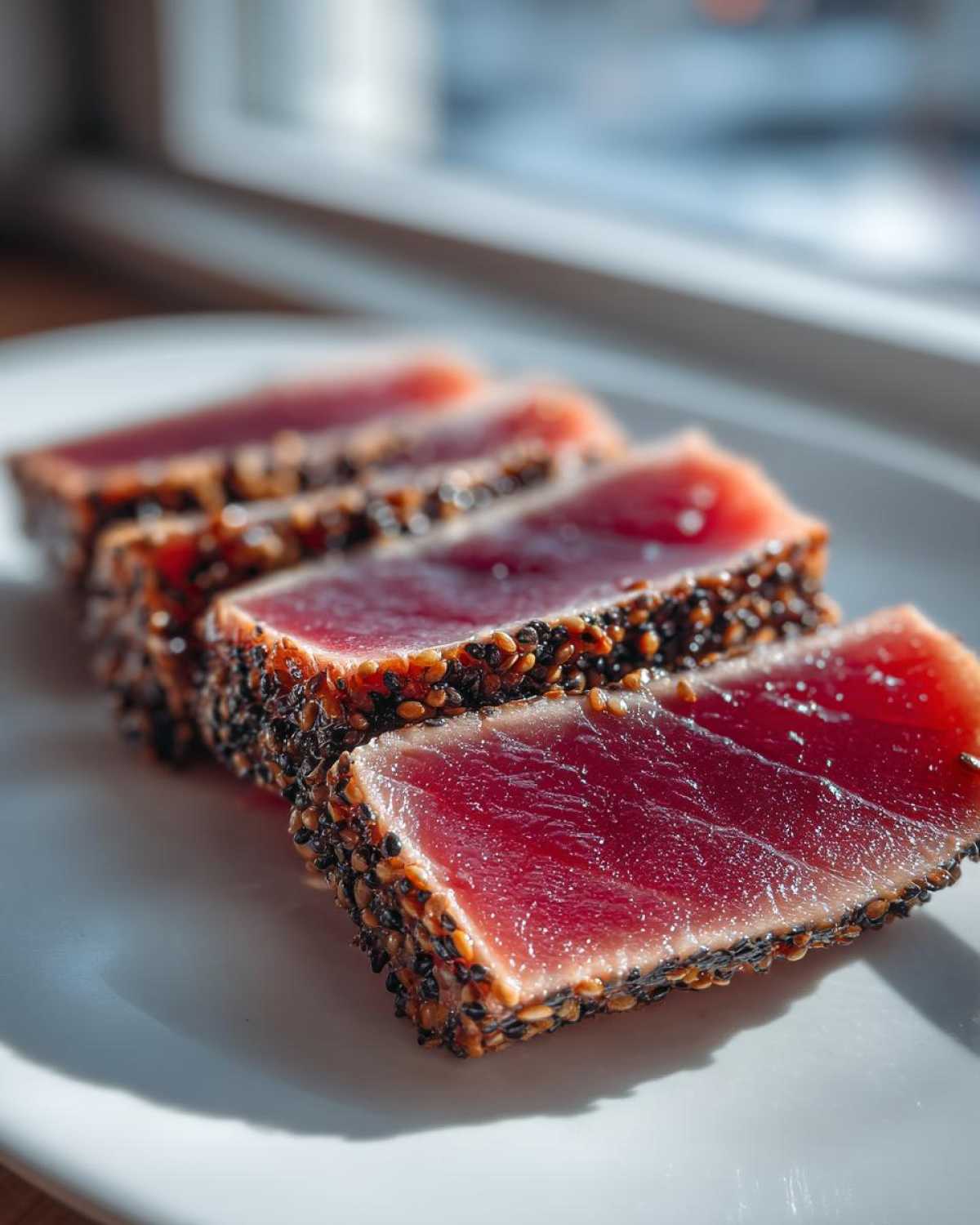
Okay, you’ve got this gorgeous, perfectly cooked Seared Ahi Tuna sitting on the cutting board, resting beautifully. Now comes the fun part: what are we eating this masterpiece with? Since this is such a quick seafood recipe, you don’t want to derail the whole process by spending an hour on elaborate sides. We want things that complement that light, savory Asian flavor profile without weighing the dish down.
For me, the absolute classic way to serve this is thinly sliced over a bed of perfectly fluffy white rice. That rice soaks up any little drips of marinade or flavor left on the plate, and it’s just satisfying. Sometimes I’ll mix a little rice vinegar and a dash of sugar into the rice right after it cooks—it gives it a slight sushi-rice tang, which pairs wonderfully.
If you’re looking for something lighter and need to bulk up your meal into a full, proper healthy dinner, you have to go with greens. That’s why I love making a big bowl of my quinoa, kale, and avocado salad—you can find the recipe for that supergreen bowl here! The creamy avocado and the light crunch of the kale hold up really well against the richness of the tuna.
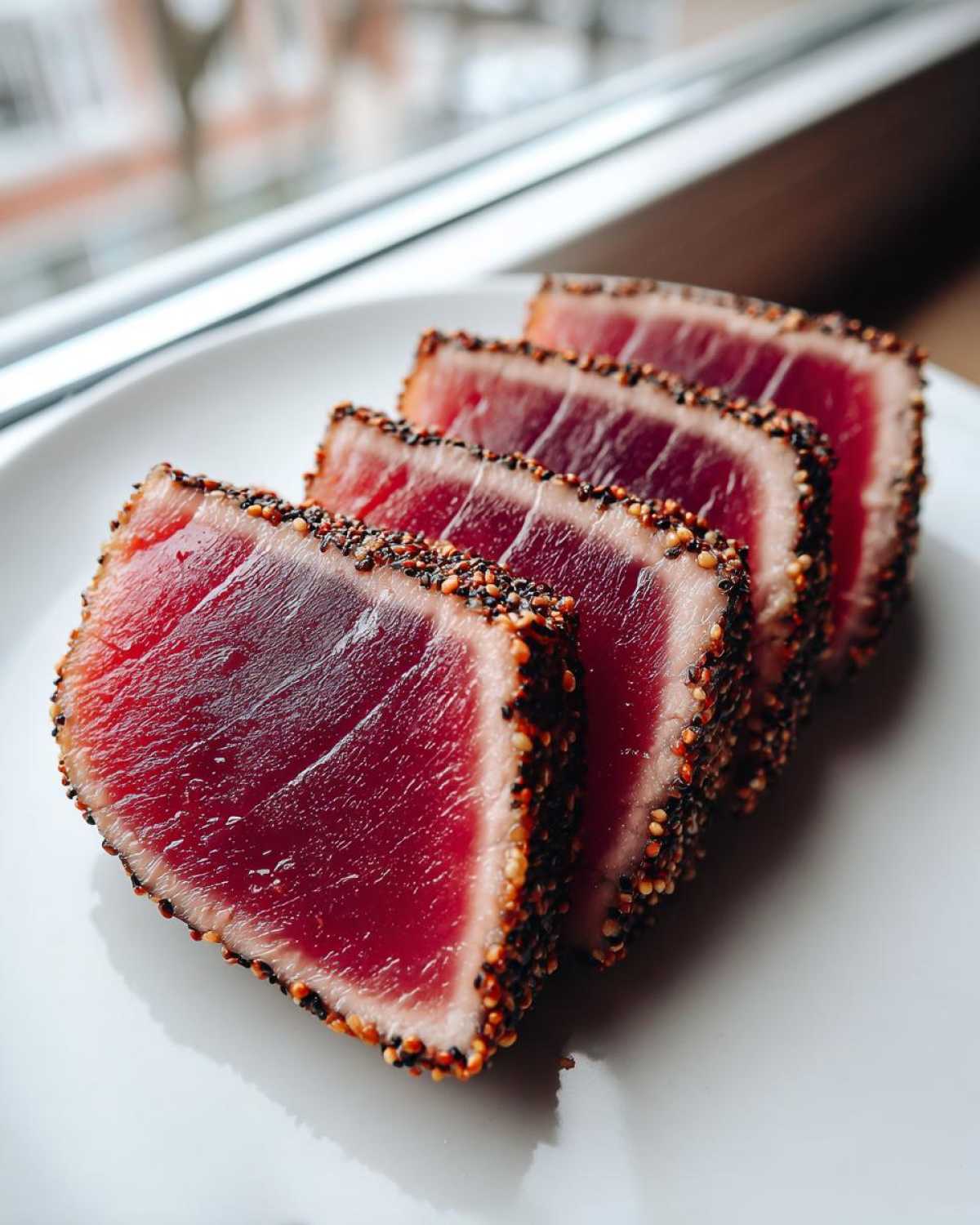
Another easy win is simply thinly sliced cucumber and maybe a sprinkle of scallions. Toss the cucumbers with a tiny bit of rice vinegar, a drop of sesame oil, and maybe a pinch of salt. It’s refreshing, cleanses the palate between bites of that flavorful crust, and it doesn’t steal the show from your lovely Seared Ahi Tuna. Don’t forget a little dish of extra soy sauce or maybe a drizzle of spicy mayo if you’re feeling indulgent!
Storage and Reheating Instructions for Leftover Seared Ahi Tuna
Look, ideally, this Seared Ahi Tuna is gone the minute it comes off the cutting board. It’s so light and wonderful when it’s freshly seared with that warm crust and cool center, right? But hey, life happens, and sometimes you end up with a slice or two left over. If that’s the case, you need to treat it right so it doesn’t turn into something sad and tough.
First things first: You absolutely must refrigerate any leftovers immediately. Get that tuna into an airtight container—a small glass container works perfectly—as soon as it has cooled down to room temperature, which shouldn’t take long since it’s served rare. Store it sealed up tight, and try to use it within one day, maximum two. The texture starts changing pretty quickly once it’s been cooked and cooled.
Now, here’s where I have to be firm with you: Do not, under any circumstances, try to reheat this fish! Seriously, don’t even think about throwing it back in the hot pan or microwaving it. Reheating already cooked tuna will instantly dry it out and destroy that delicate texture you worked so hard to achieve on the first go-around. It’ll turn rubbery faster than you can pour a drink.
So, how do you eat leftover Seared Ahi Tuna? You eat it cold! Pull it straight from the fridge and slice it thin, just like you would if you were making poke or a cold salad topping. It’s actually fantastic tucked into a roll, or mixed cold into some shredded cabbage with a bright lime vinaigrette. It loses the sexy sear, sure, but you maintain that great flavor, and it’s much better than forcing it back to life with heat!
Frequently Asked Questions About Yellowfin Tuna
I get so many questions about making this fish, especially since people worry about food safety when they hear ‘raw’ or ‘rare.’ It’s smart to ask! Cooking this dish safely and well is really about making smart choices from the start. If you’re interested in learning more about who we are and why we share these kitchen tips, you can always check out our About Us page!
Is it safe to eat raw or rare tuna?
This is the biggest question, and the answer is a big, enthusiastic YES—but only if you get the right stuff! You absolutely have to insist on buying sushi grade tuna. This designation means the fish has been handled and deep-frozen according to strict FDA guidelines designed to eliminate parasites. If you buy standard grocery store tuna, you should cook it all the way through. For this recipe, we are relying 100% on that high standard assurance to keep our quick seafood recipe a wonderfully delicious and safe healthy dinner option!
What is the difference between Ahi and Yellowfin?
This one confuses so many people, but it’s a simple answer! ‘Ahi’ is actually just the Hawaiian name for both Yellowfin tuna and Bigeye tuna. When you see recipes calling for Ahi steak, they almost always mean Yellowfin because it has that fantastic firm texture and beautiful, clean flavor that’s perfect for searing. They are basically synonyms in the culinary world, but knowing you’re buying yellowfin tuna is a good sign you’re getting the right cut for this fast and flavorful meal.
Estimated Nutritional Data for Seared Ahi Tuna
Alright, so since we used specific measurements for our marinade and crust, I wanted to give you a general idea of what you’re getting out of this fantastic dish. Keep in mind that because this recipe is so simple, much of the nutritional value comes straight from that beautiful fish! This data is purely an estimate based on our ingredients, so your results might vary slightly depending on the exact size of your tuna steaks and how much marinade soaks in.
If you’re looking for a lean, high-protein meal, this is absolutely it. This dish truly shines as a genuinely healthy dinner option. For more details on how we calculate these estimates and any caveats regarding nutritional information, feel free to check out our standard disclaimer page.
Here is the breakdown per serving (one steak, sliced, including sesame seed crust):
- Serving Size: 1 steak
- Calories: Around 300
- Protein: A whopping 30 grams! That’s what I call power food!
- Fat: Total fat around 18 grams, but most of that is the good stuff—the unsaturated fats from the sesame oil and the tuna itself.
- Saturated Fat: Very low, usually just 3 grams.
- Carbohydrates: Only about 5 grams total, mainly from the sesame seeds.
- Sugar: Seriously low, just 1 gram!
- Sodium: This one is a little higher, around 350mg, mostly due to the soy sauce. But gosh, it’s worth it for the flavor factor!
Perfect Seared Ahi Tuna Steaks
Learn how to sear sushi grade yellowfin tuna quickly for a tender, flavorful result.
- Prep Time: 10 min
- Cook Time: 3 min
- Total Time: 18 min
- Yield: 2 servings
- Category: Dinner
- Method: Pan-Searing
- Cuisine: Asian-Inspired
- Diet: Low Fat
Ingredients
- 2 (6-ounce) sushi grade ahi tuna steaks
- 2 tablespoons sesame oil
- 1 tablespoon soy sauce
- 1 teaspoon grated fresh ginger
- 1 clove garlic, minced
- 1/2 teaspoon black pepper
- 1/4 cup sesame seeds (mixed black and white)
Instructions
- Pat the ahi tuna steaks completely dry with paper towels.
- In a small bowl, whisk together the sesame oil, soy sauce, ginger, garlic, and pepper. Brush this mixture evenly over all sides of the tuna steaks.
- Spread the sesame seeds on a plate. Press each side of the tuna steaks into the seeds until coated.
- Heat a heavy skillet (cast iron works well) over high heat until very hot. Do not add extra oil to the pan.
- Carefully place the coated tuna steaks in the hot skillet. Sear for 60 to 90 seconds per side for rare to medium-rare. Adjust time for desired doneness.
- Remove the tuna from the skillet immediately. Let rest for 5 minutes before slicing against the grain into 1/4-inch thick pieces.
Notes
- For best results, use sushi grade yellowfin tuna.
- If you prefer a spicier flavor, add a pinch of red pepper flakes to the marinade.
- Serve this quick seafood recipe immediately with soy sauce or a light vinaigrette.
Nutrition
- Serving Size: 1 steak
- Calories: 300
- Sugar: 1
- Sodium: 350
- Fat: 18
- Saturated Fat: 3
- Unsaturated Fat: 15
- Trans Fat: 0
- Carbohydrates: 5
- Fiber: 1
- Protein: 30
- Cholesterol: 70