

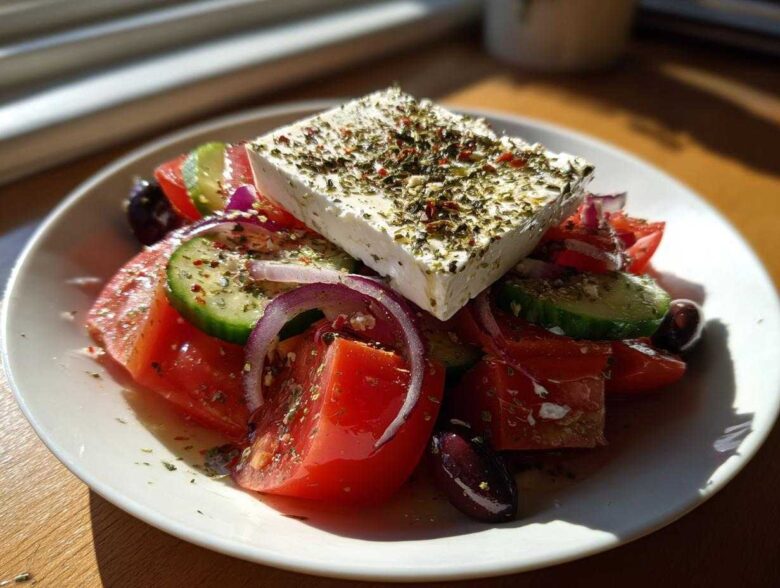
When the sun is blazing, you don’t want a heavy, fussy dish, right? You want something bright, crisp, and packed with summer flavor that screams ‘vacation.’ That’s exactly what this authentic Greek salad delivers! Forget everything you think you know about lettuce-heavy versions; we are making the real deal here—the Horiatiki. Seriously, this recipe is all about respecting a few truly fantastic ingredients, like those amazing cucumbers. It shows you that sometimes, the best cooking isn’t about complication; it’s about quality and technique. Once you master this simple vegetable salad, you’ll be tossing it together all season long. For more vibrant veggie inspiration, check out my tips for a zesty cucumber tomato salad!
I learned early on that making this salad shine means using the absolute best tomatoes and olive oil you can find. That’s the secret to making any Greek salad taste like it just came from a taverna patio overlooking the Aegean Sea. It comes together in minutes, and trust me, once you try it this way, you won’t look back at adding lettuce ever again!
Why This is the Best Greek Salad Recipe You Will Ever Make
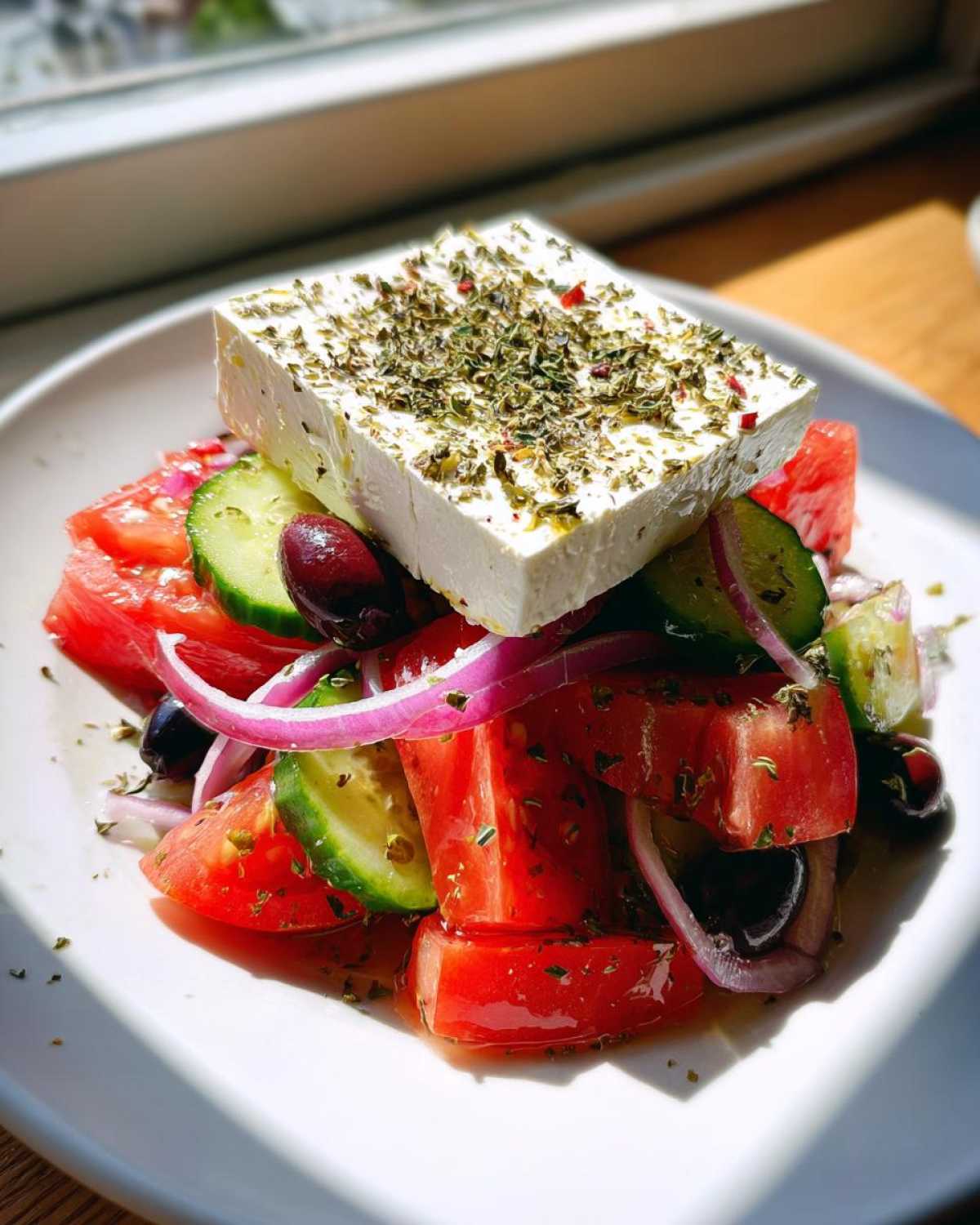
When I tell people this is the best Greek salad recipe, I’m not exaggerating! It’s all about the approach. Most salads drown their veggies in dressing; this one celebrates them. You will find zero lettuce here, just crisp, bold perfection. It truly highlights those classic greek flavors.
- The Feta: We use a solid block right on top. It steeps in the olive oil and oregano, creating that signature salty, creamy layer you expect.
- The Cuts: Thick cucumber chunks and sturdy tomato wedges hold up beautifully and absorb the dressing without getting mushy.
- The Dressing: It’s practically nonexistent! Just high-quality olive oil, oregano, and a tiny splash of vinegar if you fancy it. Simple is sensational!
Quick Prep Time for Your Summer Mediterranean Salad
Honestly, this whole thing takes about 15 minutes from chopping board to table. That’s the beauty of this easy greek side dish! You have ZERO cooking time—it’s a true no-cook wonder. So you spend maybe 15 minutes prepping and then you get to enjoy the perfect summer mediterranean salad right away. It’s the fastest way to get incredible flavor on your plate. If you’ve ever needed a quick side for grilled chicken, this is your answer! You should also check out my recipe for a chickpea salad with smashed cucumbers for another quick fix!
Essential Ingredients for an Authentic Greek Salad
To make this Greek salad taste like the real deal, you have to be honest about your ingredients. This isn’t a place where you skimp, honestly! We need robust flavors because the dressing is so understated. You’ll need three large, ripe tomatoes, cut right into generous wedges. Next up are the cucumbers—I like to peel mine and slice them thickly so they stay crunchy!
You want about half a red onion, sliced super thin—we don’t want giant, raw onion chunks overpowering everything, just a nice little bite. Don’t forget a full cup of Kalamata olives, make sure they’re pitted so nobody breaks a tooth! The star, though, is the cheese. You must get a good block of feta, around six ounces. Seriously, don’t swap it for those dry crumbles in a plastic tub; we need that creamy texture!
Ingredient Notes and Substitutions for Kalamata Olive Feta Salad
Let’s talk quality control for this kalamata olive feta salad. First, the olive oil. You absolutely must use good extra virgin olive oil. It’s practically half the dressing, so use the fruity, gorgeous stuff you usually save for dipping bread. That’s what gives you those incredible classic greek flavors.
About the feta: cut it into big, sturdy cubes or even leave the block whole on top of the vegetables. It’s meant to soak up that oregano and oil before you eat it! And that little bit of red wine vinegar? It’s totally optional. My Yiayia never used it, but sometimes when my tomatoes aren’t perfectly ripe, I add just a tiny drizzle for an extra pop. If you’re looking for other wonderful feta uses, you have to try my recipe for whipped feta with pomegranate and mint later!
How to Make Greek Salad: Step-by-Step Instructions
Okay, this is where the magic happens! Making an authentic Greek salad is mostly about the assembly order. You want to stack the flavors, not just dump everything in a bowl and shake it up. First, grab your big bowl—the one that can hold all those gorgeous, big-cut veggies. Gently tuck the tomato wedges, the thick cucumber slices, your thinly sliced red onion, and those salty Kalamata olives into the bottom layer.
Now, here is the big traditional move: don’t mix it yet! Place your beautifully cut block or cubes of feta cheese right on top of all the vegetables. This is important because we assemble before we drench it in the dressing. You want that feta to sit there, proudly waiting its turn.
Crafting the Simple Greek Vinaigrette Dressing
Now for the dressing, which is honestly barely a dressing at all! Grab a tiny little bowl. Whisk together your 1/4 cup of that wonderful extra virgin olive oil. If you’re feeling a little zingier, add a tablespoon of red wine vinegar, but remember, keep it light! Once that’s mixed, drizzle that oil mixture evenly over the vegetables and the feta sitting on top.
This is your moment to season. Sprinkle that dried oregano generously over the whole thing—I mean, you can’t use too much oregano in a Greek salad, trust me. Then, just lightly season with salt and pepper. Remember, the feta is salty, so go easy on the salt until you taste it later!
Tips for Success with Your Traditional Horiatiki Salad
Remember what I said earlier? Keep your hands off the lettuce because this is a traditional horiatiki salad, which means absolutely zero leafy greens creep into this mix! Once you’ve drizzled the oil and sprinkled the oregano, let it sit for about 10 minutes. This short time allows the cut vegetables to marry with the oil and herbs a tiny bit. It’s a step I learned that truly elevates the flavor.
For serving, you have two great options! You can serve it exactly as it is, with the feta beautifully crowning the vegetables, and instruct everyone to gently toss their own portion before eating. Or, for a really traditional presentation, serve the components separately on one big platter. If you’re looking for more amazing, super fresh flavors, check out my recipe for Greek orzo salad with lemon chicken!
Serving Suggestions for Your Easy Greek Side Dish
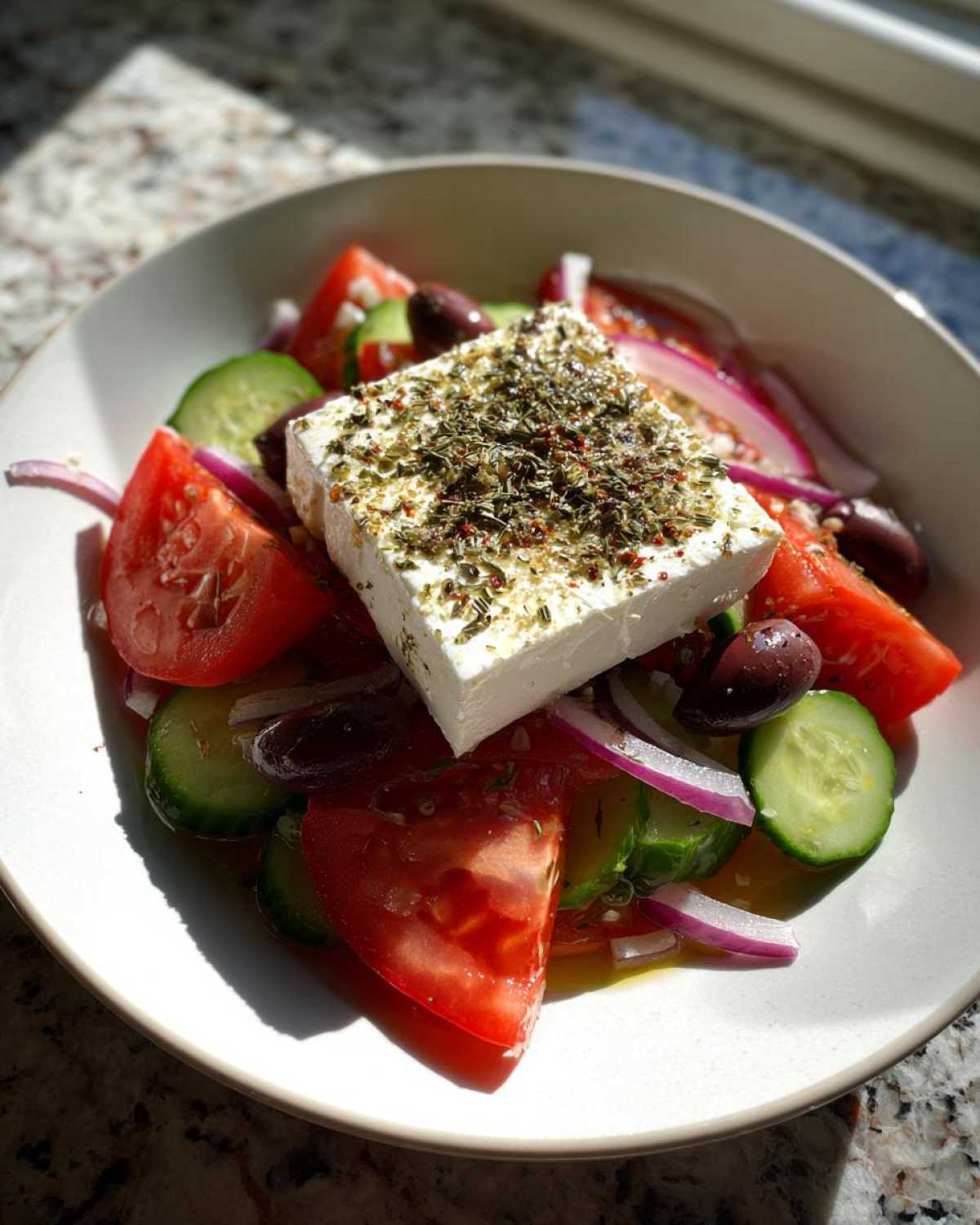
This amazing Greek salad is so versatile! Because it’s made with hearty vegetables and that brilliant feta, it works perfectly as a light lunch all on its own, especially when you need something satisfying but super fresh. It’s certainly my favorite way to use up garden tomatoes in the height of summer.
But as an easy greek side dish, it pairs beautifully with grilled meats. Think about serving it alongside some amazing lemon-herb chicken—that bright, tangy flavor profile is just divine together. We often serve it alongside grilled halibut or even some simple grilled pita until the main course is ready. The vibrant colors really make any plate look instantly better, showcasing those classic greek flavors superbly. If you love the chicken pairing, you absolutely must try my recipe for juicy greek chicken!
Storing and Reheating the Fresh Cucumber Tomato Salad
Okay, I’m going to be honest: this fresh cucumber tomato salad is one of those dishes that demands to be eaten right away. The moment the olive oil hits those cucumbers, the clock starts ticking on peak crispness! If you have leftovers, the best way is to store all the components separately.
Keep the drained vegetables and the block of feta in an airtight container in the fridge. Keep the dressing separate, too! If you try to keep it dressed, everything gets watery and sad fast. If you want to revive any leftovers later, toss them super quickly with a fresh drizzle of oil and maybe a sprinkle of oregano. For more crisp storage tips, see my guide on how to store easy crunchy cabbage salad!
Frequently Asked Questions About Making Greek Salad
I get so many questions every time I post this recipe! It makes sense; everyone wants to nail that perfect Greek salad taste. Here are the few things folks ask me most often when they’re trying to make this traditional horiatiki salad for the first time. If you’re interested in other ways to use fresh tomatoes, you might enjoy my recipe for ultra-creamy roasted tomato bisque later!
Is it okay to add lettuce to a Greek Salad?
This is the million-dollar question! If you are making Horiatiki, the answer is a definite no. The true, authentic Greek salad skips the lettuce entirely. It focuses only on those robust, sturdy vegetables—tomatoes, cucumbers, and onions—that can stand up to the olive oil. If you feel like you need greens, you’re making a different type of summer salad, but for this traditional recipe, keep the lettuce far away!
How do I keep the feta cheese from breaking apart?
Oh, that good feta is so crumbly, isn’t it? If you’re worried about it shattering when you try to cut a perfect block, here’s my tip: take the cheese out of the fridge about 20 minutes before you assemble the salad. It softens up just a touch, so when you cut it into those large cubes, they hold their shape much better. Remember, we put the cheese on top last, so it’s only getting gently dressed, not tossed vigorously!
What is the best olive oil to use for this simple vegetable salad?
For this simple vegetable salad, the olive oil is key because it’s the main flavor carrier! You absolutely need a high-quality, Greek extra virgin olive oil if you can find it. Look for one that has a nice, slightly peppery finish. Don’t use the cheap, mild stuff you might use for just sautéing—this oil is meant to be a major flavor component in your kalamata olive feta salad!
Can I make the Greek vinaigrette dressing ahead of time?
Yes, you definitely can whisk up your greek vinaigrette dressing early! I usually make enough for two days and keep it right in a little jar in the fridge. Just know that if you use red wine vinegar, it might solidify a tiny bit when it gets cold. If that happens, just let the jar sit on the counter for 15 minutes and give it a vigorous shake before you drizzle it over your veggies!
Nutritional Snapshot of This Low Carb Mediterranean Salad
I always get asked about nutrition when people find out how light and fresh this salad is. It’s a fantastic addition to any healthy eating plan, especially if you’re watching your carbs—this low carb mediterranean salad really keeps things clean! Based on the standard measurements in the recipe, one serving clocks in around 280 calories. That’s pretty impressive considering how satisfying it is!
You get a generous amount of healthy fats, about 25 grams, mostly coming from that gorgeous olive oil and the feta cheese. That’s what keeps you feeling full, too! We’re looking at about 10 grams of protein, mainly from the cheese, and it’s really low on the carb count at only 10 grams total. That fiber content is great, too, giving you 3 grams from all those fresh vegetables you’re eating!
Just a little heads-up, though: these numbers are solid estimates based on my ingredient measurements. If you decide to go heavy on the olive oil drizzle or use a bigger block of feta, things will shift slightly! If you’re into prepping healthy, lower-carb meals, you might want to bookmark my recipe for the cheeseburger bowl for later!
Share Your Perfect Greek Salad Experience
That’s it! You’ve made it. You’ve assembled the crunchiest, freshest, most satisfying Greek salad imaginable. I really hope you loved tasting those pure, classic greek flavors coming through—it’s seriously my favorite side dish to make all year long.
If this recipe hit the spot and brought some sunshine to your table, please, please take a second to leave me a star rating right below the recipe card. A quick review letting me know how you served it or what you paired it with helps other cooks know they can trust this authentic greek salad too!
I always love hearing from you folks! Tell me, did you go traditional and let guests toss their own plates? Are you already planning to try the recipe again this week? If you want to learn more about the passion behind these simple recipes, check out my About Us page!
PrintAuthentic Greek Salad (Horiatiki)
Make a traditional Greek salad featuring fresh vegetables, Kalamata olives, and a block of feta cheese, dressed simply with olive oil and oregano.
- Prep Time: 15 min
- Cook Time: 0 min
- Total Time: 15 min
- Yield: 4 servings
- Category: Side Dish
- Method: No Cook
- Cuisine: Greek
- Diet: Vegetarian
Ingredients
- 3 large ripe tomatoes, cut into wedges
- 1 large cucumber, peeled and sliced thickly
- 1/2 red onion, thinly sliced
- 1 cup Kalamata olives, pitted
- 1 block (about 6 oz) good quality feta cheese, left whole or cut into large cubes
- 1/4 cup extra virgin olive oil
- 1 teaspoon dried oregano
- 1 tablespoon red wine vinegar (optional)
- Salt and freshly ground black pepper to taste
Instructions
- Place the tomato wedges, cucumber slices, red onion, and Kalamata olives into a large bowl.
- Place the block or cubes of feta cheese on top of the vegetables. Do not mix it in yet.
- In a small bowl, whisk together the olive oil and red wine vinegar, if using.
- Pour the olive oil mixture evenly over the salad ingredients.
- Sprinkle the dried oregano over the feta and vegetables. Season lightly with salt and pepper.
- Serve immediately, allowing guests to gently toss the salad just before eating, or serve components separately for a more traditional presentation.
Notes
- Authentic Horiatiki salad does not include lettuce.
- Use high-quality, fruity olive oil for the best flavor.
- Let the salad sit for 10 minutes after dressing for the flavors to meld.
Nutrition
- Serving Size: 1 serving
- Calories: 280
- Sugar: 6
- Sodium: 450
- Fat: 25
- Saturated Fat: 8
- Unsaturated Fat: 17
- Trans Fat: 0
- Carbohydrates: 10
- Fiber: 3
- Protein: 10
- Cholesterol: 30